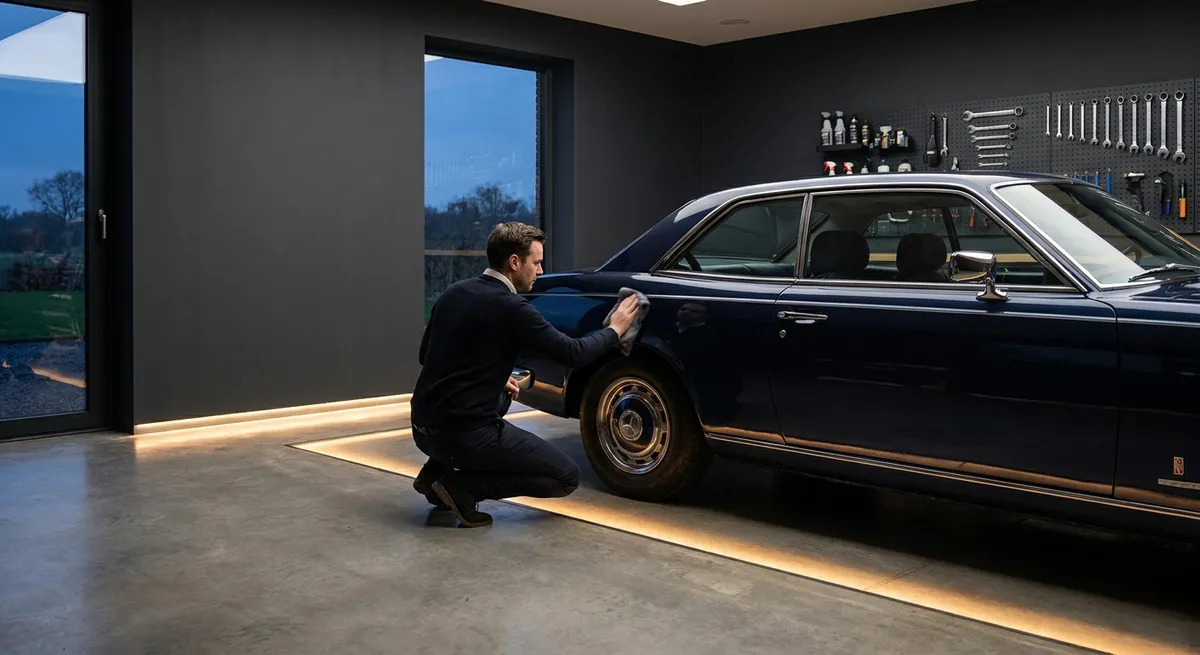
Even the most understated garage can quietly undermine an otherwise refined home. Doors that strain, openers that hesitate, or concrete that slowly crumbles are rarely dramatic failures; they are the subtle, incremental losses that erode comfort, safety, and long-term value. Thoughtful maintenance transforms the garage from a tolerated utility zone into a precisely tuned extension of the home—one that feels composed, dependable, and quietly luxurious.
This is not about over-polishing or over-spending; it is about cultivating a standard. Below are five exclusive, detail-driven insights for homeowners who expect their garage to perform with the same grace as the rest of their property.
1. Treat the Garage Door as a Load-Bearing System, Not a Moving Panel
A garage door is one of the largest moving assemblies in the home, yet it is often maintained as though it were a single object. In reality, it functions as an integrated load-bearing system: springs regulate counterbalance, tracks control geometry, and hinges manage alignment under constant stress.
Begin with a structural mindset. Watch a full open–close cycle from inside the garage, lights on, distractions off. Take note of any asymmetry: does one side lift slightly earlier, does the door rattle over a particular section of track, or does it pause momentarily before closing the final few inches? These are not quirks; they are early messages of imbalance, fatigue, or misalignment.
Instead of adding generic lubricant everywhere, apply care selectively. High-tension springs, center bearings, and steel rollers benefit from a light, controlled application of garage-rated lubricant. Hinges that show the faintest elongation around screw holes or minute cracking in the metal are not cosmetic flaws—they are structural vulnerabilities that can accelerate failure. Addressing those early with replacement hinges and upgraded fasteners is a quiet, high-return investment.
When you think of the door as a suspended, moving wall rather than a decorative panel, your maintenance shifts from casual tinkering to structural stewardship.
2. Calibrate the Opener as a Precision Instrument, Not a Convenience Gadget
For many homes, the opener is set once at installation and never revisited—until it misbehaves. Yet a well-calibrated opener should feel more like a well-tuned watch mechanism: discreet, precise, and utterly predictable.
Begin by testing the force and reversal settings. Place a piece of dense wood (such as a short 2x4) flat on the floor under the door’s path. As the door closes, it should reverse promptly upon contact; any hesitation or visible bending of the door surface indicates excessive force. From a safety and refinement standpoint, a door that crushes before it concedes is unacceptable.
Equally important is the speed profile. An opener that races to open and then slams to a stop is not a sign of power; it is the signature of wear waiting to happen. Many modern openers allow speed, soft-start, and soft-stop adjustments. A slightly slower open combined with a gentle deceleration near the limit positions reduces stress on the entire door system, while also creating a more composed auditory experience—no sharp jolts, no harsh closings, just a quiet, confident motion.
Finally, consider the opener’s power source. Dedicated circuits, clean wiring, and surge protection are not indulgences. They shield the motor and logic board from electrical inconsistencies that cause intermittent failures and mysterious behavior—the very issues that give garages an undeserved reputation for unreliability.
3. Elevate the Floor from Afterthought to Engineered Surface
Concrete in the garage is often treated as indestructible by default. In reality, it is a porous, vulnerable surface subject to thermal swings, moisture intrusion, and road salts that can slowly undermine its integrity. A premium garage experience begins underfoot.
Perform a deliberate survey of the slab. Look for hairline cracking that forms patterns rather than isolated lines, subtle settling along the perimeter, or faint white deposits (efflorescence) that signal moisture movement through the concrete. These early indicators matter: sealed while still modest, they prevent the need for invasive patching or slab replacement later.
The next refinement is selective protection. A high-quality, professionally installed coating—whether epoxy, polyaspartic, or another engineered system—does more than look clean. It seals microvoids, resists chemical attack from automotive fluids and de-icing salts, and creates a surface that can be swept and mopped rather than endlessly scrubbed. Even a more restrained approach, such as targeted sealing along the high-impact tire paths and entry zones, can dramatically slow wear.
Think of the garage floor as a working platform that deserves the same respect as a fine kitchen’s countertop. You would not accept a countertop that stains, crumbles, or sheds dust; your garage floor should be held to a similar, quietly uncompromising standard.
4. Design Ventilation and Climate Control to Protect Machines and Materials
Most garages evolve into complex ecosystems: vehicles, tools, stored belongings, and sometimes mechanical equipment such as water heaters or HVAC components. Without appropriate ventilation and climate control, this delicate mix is exposed to extremes that shorten lifespans and invite hidden damage.
Start with air movement and air quality. A garage that smells faintly of fuel, solvents, or stale air is signaling inadequate ventilation. Rather than simply opening the door for prolonged periods, consider a more controlled approach: a dedicated exhaust fan on a timer or humidity sensor, subtle trickle vents, or an upgraded weatherstripping strategy that balances sealing with controlled air exchange.
Humidity is a quiet saboteur in many garages. Elevated moisture encourages rust on tools, corrosion on vehicles, and mold on stored belongings. Even in moderate climates, a modest but high-quality dehumidifier can be transformative, especially if paired with insulated walls and a properly sealed door. Aim not for museum-level climate control, but for steady, moderated conditions that avoid dramatic swings.
Finally, be strategic about what you store. Oil-based finishes, fertilizers, and fuels should be contained, labeled, and kept away from ignition sources and HVAC intakes. Thoughtful zoning—chemicals in one ventilated corner, everyday access items in another—creates a garage that feels ordered, deliberate, and inherently safer.
5. Adopt a Maintenance Ritual with Measurable Standards, Not Vague Good Intentions
What truly distinguishes a refined garage from a merely functional one is not the hardware itself, but the discipline applied to it. Intentional maintenance becomes almost ritualistic—not in frequency, but in clarity and precision.
Replace the ambiguous goal of “keeping an eye on things” with a concise maintenance framework:
- Seasonal inspection passes: Once or twice a year, perform a methodical walkthrough. Examine fasteners, cables, springs, rollers, seals, and floor surfaces. Listen to the door with the opener disengaged, moved manually—it should glide, not drag.
- Performance baselines: Time your door’s full open and close cycles with a stopwatch once it is well-tuned. Record noise observations and any minor quirks. In subsequent checks, deviations from these baselines become early-warning signals rather than surprises.
- A concise log: Maintain a minimal but precise record—dates of lubrication, part replacements, opener adjustments, and environmental upgrades. This is not bureaucracy; it is a tool that reveals patterns, allows better decisions, and prevents redundant or misguided repairs.
- Professional calibration as a scheduled event: Much like a piano tuning or a heating system service, a periodic visit from a specialist—particularly for springs, cables, and opener logic updates—ensures that the system remains aligned with manufacturer specifications and current safety standards.
Over time, this measured approach transforms the garage from an unpredictable, occasionally troublesome space into one that behaves with familiar, trustworthy consistency. The result is not ostentatious; it is simply the quiet confidence that comes from a meticulously maintained environment.
Conclusion
A sophisticated garage does not call attention to itself. It opens and closes with assurance, protects what it holds, and resists the slow erosions of time and neglect. By treating the door as a structural system, the opener as a precision device, the floor as an engineered surface, the air as a managed asset, and maintenance as a disciplined ritual, you create a space that honors both your investment and your standards.
In a home where details matter, the garage should not be the exception. With deliberate, informed care, it becomes one more expression of quiet, enduring quality—out of sight from the street, but fully aligned with the elegance you expect everywhere else.
Sources
- U.S. Consumer Product Safety Commission – Garage Door Safety - Official guidance on garage door safety features, force settings, and reversal requirements
- International Association of Certified Home Inspectors – Garage Inspection Guidelines - Technical reference for structural, mechanical, and safety aspects of residential garages
- Clopay Garage Doors – Maintenance and Care - Manufacturer recommendations on door balancing, lubrication, and inspection intervals
- U.S. Department of Energy – Air Sealing and Insulating Your Home - Guidance on sealing, insulation, and moisture control strategies applicable to garages
- Concrete Network – Garage Floor Maintenance - Practical information on protecting, cleaning, and extending the life of concrete garage floors
Key Takeaway
The most important thing to remember from this article is that this information can change how you think about Maintenance.