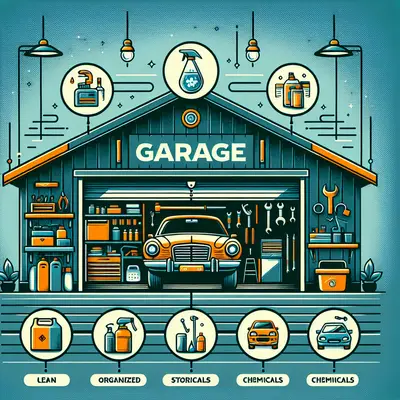
A well‑kept garage is less a utility room and more a private stage where reliability performs on cue. When maintenance is considered thoughtfully—not as a chore but as an ongoing refinement—the space ceases to be merely functional and becomes reassuringly predictable. For homeowners who expect their environment to work as gracefully as it looks, the garage is not an exception; it is a proving ground. This guide explores a more elevated approach to maintenance, offering five exclusive insights designed for those who treat their homes as finely tuned systems rather than collections of parts.
Seeing the Garage as a System, Not a Set of Problems
Many homeowners address the garage reactively: a door misaligns, a spring fails, a stain appears on the floor. A more refined approach is to view the garage as a single integrated system, where door, opener, floor, climate, and storage quietly inform one another.
When the door is balanced correctly, the opener motor is under less strain, which in turn reduces noise and prolongs the life of internal gears. Appropriate humidity control not only protects vehicles and tools but also prevents the steel components of the door and track from corroding prematurely. Even lighting plays a role; high‑quality, flicker‑free LED illumination makes it easier to spot early warning signs—subtle track wear, a frayed cable, or hairline cracks in the slab—while the issues are still inexpensive to correct.
Approaching maintenance as system stewardship leads to smarter scheduling. Instead of random repairs, you establish a seasonal rhythm: checking door balance when you change HVAC filters, inspecting weatherstripping when you rotate tires, and reviewing storage safety before holiday decorations come down. This orchestration yields a garage that behaves consistently, even as temperatures, use patterns, and vehicle weights change.
Precision in Motion: Treating the Garage Door as a Mechanical Instrument
A premium garage operates with the restrained confidence of a well‑tuned instrument. Your door’s movement—its speed, balance, and sound profile—reveals more than most homeowners realize.
One refined practice is to perform an annual “motion audit.” Stand back and observe a full open‑and‑close cycle. The door should glide, not lurch, maintaining consistent speed with no visible shuddering. Any asymmetry—one side lifting slightly faster, the door hesitating mid‑travel, cables winding unevenly on the drums—is a prelude to more serious failure. This visual check is especially valuable in homes with high‑lift or custom doors, where hardware tolerances are tighter and loads are higher.
Lubrication, too, benefits from a more elevated standard. Rather than indiscriminately spraying every visible part, focus only on hinge joints, roller bearings (if they are not sealed), and torsion spring coils—with a high‑grade silicone or lithium‑based garage lubricant, not general household oil that attracts dust. Tracks should be kept clean, not greasy; excess lubricant there simply collects debris and can impede smooth travel. Finally, test the door’s manual balance by disengaging the opener: a properly balanced door will hover calmly at mid‑height instead of slamming shut or drifting upward. If it does not, it is time to engage a professional to adjust spring tension—one of the few tasks that should never be attempted as a DIY experiment.
Silent Safeguards: Discreet Upgrades That Protect What You Store
For many households, the garage is an annex of the home’s most valuable possessions—vehicles, bicycles, specialty tools, seasonal items, even wine or archival storage. Yet protection in the garage is often treated as an afterthought. A more discerning maintenance strategy quietly fortifies this space without turning it into a fortress.
Upgrading the weather barrier is an understated but powerful step. High‑quality bottom seals and side weatherstripping do more than keep out drafts; they reduce dust infiltration, deter pests, and help stabilize the microclimate inside the garage. This stability matters if you store sensitive electronics, leather goods, or fine finishes that can suffer from recurring humidity swings. When combined with insulated doors and properly sealed wall penetrations, your garage becomes less vulnerable to condensation, corrosion, and mold—issues that often originate at the building envelope.
Security can remain elegant rather than obtrusive. Rolling‑code or encrypted openers, smart controls that allow instant deactivation of lost remotes, and discreet door position sensors add layers of protection without visual clutter. Maintenance here means more than replacing batteries; it involves periodic access audits—removing old remote codes, verifying that safety photo‑eyes are aligned and clean, and confirming that emergency release mechanisms function smoothly but remain secure from the exterior. The result is a space that quietly resists intrusion and environmental stress with a minimum of drama.
Environment by Design: Climate, Cleanliness, and Material Longevity
A sophisticated garage is curated not only through what you store but through the environment you create around it. Temperature, humidity, air quality, and cleanability each contribute to how gracefully the space ages.
Concrete, for instance, is not the inert monolith it appears to be. Unsealed slabs absorb moisture and road salts, which gradually break down the surface, leading to pitting, dusting, and structural micro‑damage. Applying an appropriate concrete sealer, and renewing it as recommended, can dramatically improve durability and ease of cleaning. This is especially relevant in regions with freeze–thaw cycles or heavy de‑icing chemicals. A sealed, gently sloped floor allows contaminants to be washed away rather than absorbed.
Ventilation is another subtle but potent tool. Even a premium HVAC system struggles if the garage traps fumes from fuel, solvents, or off‑gassing from stored items. Thoughtful maintenance includes keeping vents unobstructed, periodically cleaning exhaust fans, and—where feasible—installing or evaluating dedicated ventilation solutions. Dehumidifiers, particularly in coastal or humid climates, help safeguard metal tools, fasteners, and hardware from corrosion. A space that smells neutral and feels dry underfoot is not just more pleasant; it is demonstrably kinder to every component stored or installed within it.
Curated Routines: Turning Maintenance into a Predictable Luxury
The most discerning homeowners do not chase problems; they orchestrate routines. The difference is subtle but profound: instead of reacting to failures, you fold garage care into the natural cadence of your home’s upkeep.
Constructing a refined maintenance calendar begins with grouping related tasks into short, repeatable sessions. For example, at the beginning of each season, you might: visually inspect springs, cables, and hinges; test the auto‑reverse and photo‑eye safety systems; wipe down sensors and LED fixtures; check weatherstripping integrity; and note any new stains or cracks on the slab. None of these actions is individually complex, but together they create a living diagnostic record of your garage’s health.
Digital tools can elevate this further. Smart openers often log error codes and cycle counts; leveraging these logs allows you to anticipate component fatigue before it manifests as a failure. A simple shared document or home management app, updated with dates, observations, and professional service notes, turns what many perceive as “garage trouble” into a well‑managed portfolio of small, predictable interventions. The result is a sense of calm continuity: doors that open, systems that respond, and a space that remains resolutely composed—even when the rest of your day is not.
Conclusion
A cultivated garage is defined less by visible upgrades and more by the invisible discipline behind them. When you treat this space as a finely balanced system—where motion is observed, materials are protected, climate is managed, and routines are thoughtfully curated—maintenance becomes an understated luxury rather than an emergency expense. The reward is not only a quieter, more reliable garage, but a home ecosystem in which every component, from the door tracks to the concrete slab, participates in a shared standard of excellence.
Sources
- U.S. Department of Energy – Insulated Garage Doors - Explains energy and comfort benefits of insulated doors and weatherstripping
- International Association of Certified Home Inspectors – Garage Inspection Guidelines - Details best practices and safety considerations for garage components
- Consumer Product Safety Commission – Garage Door Safety - Provides guidance on automatic reverse features, photo‑eyes, and safe operation
- Portland Cement Association – Concrete Slab Maintenance - Covers durability, sealing, and care for garage concrete floors
- Harvard T.H. Chan School of Public Health – Indoor Air Quality - Discusses the importance of ventilation and humidity control in enclosed spaces like garages
Key Takeaway
The most important thing to remember from this article is that this information can change how you think about Maintenance.