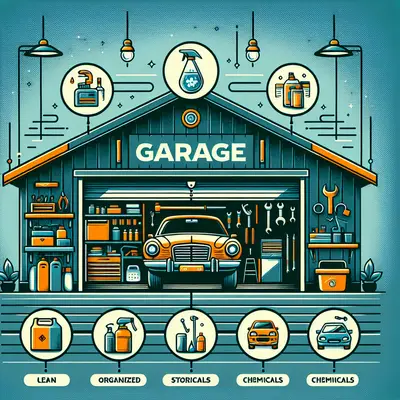
In a well-kept home, the garage should feel less like a forgotten utility space and more like a quietly competent steward of daily life. Thoughtful maintenance is what transforms it—from a source of noise, leaks, and frustration into a calm, reliable extension of the house. Rather than dramatic overhauls, it’s the measured, precise care of small details that protects your investments, preserves safety, and elevates every arrival and departure. This article explores a refined approach to garage maintenance, with five exclusive insights that discerning homeowners rarely hear from standard how‑to guides.
Maintenance as Risk Management for the Rest of the House
Most homeowners treat garage upkeep as an isolated chore. In reality, the garage is a primary gateway for risk: moisture intrusion, temperature swings, pests, and fumes all begin there and migrate inward. When maintenance is approached as risk management, you stop asking “Is the door working?” and start asking “What is this space quietly doing to my home every day?”
A door that doesn’t fully seal is not just an annoyance—it is a year‑round invitation for humid air, dust, and insects that gradually undermine finishes, stored belongings, and even indoor air quality. Likewise, neglected weatherstripping and uninsulated walls allow temperature extremes that stress HVAC systems in rooms above or adjacent to the garage. Frayed opener wiring and overtaxed extension cords introduce potential fire hazards woven into a space you enter multiple times daily. Thoughtful maintenance reframes your priorities: are joints sealed to prevent exhaust fumes from reaching interior living spaces? Are floor cracks and slab movement monitored as early indicators of drainage issues outside? A premium garage isn’t only tidy—it is strategically defended, with each maintenance task calibrated to protect the rest of the home.
The Five Percent Rule: Small Adjustments, Outsized Longevity
Premium garages rarely look dramatically different from ordinary ones, but they feel different because of the subtle, consistent attention devoted to small adjustments—the “five percent rule.” These are the seemingly minor tasks that, when maintained, add years of life to mechanical systems and dramatically reduce emergency repairs.
A gentle quarterly adjustment of torsion spring tension by a qualified professional, for example, keeps the door balanced so the opener motor is never straining against excess load. The result is quieter operation and significantly extended opener life. Lubrication of hinges, rollers, and bearing plates with the proper non‑silicone, garage‑rated lubricant avoids the grit‑attracting film that many general-purpose sprays leave behind. Even minimalist alignment checks—ensuring photo-eye sensors are perfectly level, track brackets are neutrally tensioned, and fasteners are snug but not overtightened—keep vibration from working parts loose over time. This philosophy is simple: invest modest, recurring effort into the small five percent of tasks that determine ninety‑plus percent of long‑term reliability.
Exclusive Insight #1: The “Operational Signature” of Your Garage
Every refined mechanical system has a signature—a characteristic sound, pace, and motion when it operates correctly. One of the most undervalued maintenance practices is learning the operational signature of your own garage door and opener.
Stand in the garage with the door closed and activate the opener. Listen to the sequence: the initial motor engagement, the transition from static to motion, the rhythm of the rollers in the track, and the final seal as the door closes. Note the pitch and volume when everything is freshly serviced. Over time, the earliest signs of misalignment or wear are not visible—they are audible or tactile. A slight hesitation after the motor engages, a new vibration felt in the wall, or a barely perceptible stutter in the lift can signal imbalance or track deviation long before it becomes a costly breakdown.
Homeowners who train themselves to recognize these subtle changes can call for targeted maintenance the moment the operational signature drifts from normal. This approach is both luxurious and practical: you’re no longer reacting to failure, but curating the smooth, precise movement of what is essentially the largest moving component of your home.
Exclusive Insight #2: Climate Zoning the Garage Like a Fine Storage Room
Most garage maintenance advice stops at “insulate the door.” A more refined approach is to treat the garage as its own climate zone, especially if it shares walls or ceilings with conditioned interior space—or stores valuable items like wine fridges, high-end tools, or collector vehicles.
Instead of aiming for full indoor comfort, the goal is stability and moderation: keeping temperature and humidity within a controlled band that protects finishes, electronics, and mechanicals. This starts with sealing air leaks at the sill plate, door thresholds, and penetrations for plumbing and electrical conduits. From there, evaluate whether a modest, dedicated mini-split or dehumidifier is justified, particularly in humid or coastal climates where corrosion and mold can quietly degrade door hardware, springs, and stored materials.
Even ventilating strategy matters. A well-positioned, timer-controlled exhaust fan that purges the garage after parking can dramatically reduce lingering exhaust and moisture from wet vehicles. The result is a space less prone to rusted components, swollen wood, musty odors, and condensation on tools and fasteners. Climate zoning doesn’t mean making the garage lavishly comfortable—it means treating it with the same environmental respect you give to closets, pantries, and storage rooms that protect your most-used belongings.
Exclusive Insight #3: Load Mapping Your Storage to Protect Structure and Floor
Garage floors and framing are often quietly overburdened. Heavy appliances, safes, gym equipment, stacked tile boxes, and tool chests are frequently clustered in one convenient corner. Over time, this concentrated weight can exacerbate slab cracking, induce subtle settling, or compromise lightweight shelving systems that were never engineered as true load-bearing structures.
“Load mapping” is the practice of deliberately planning where weight lives in your garage. The most resilient zones for heavy items are usually near structural walls and on direct slab support—not on elevated platforms or anchored solely to drywall without proper backing. Adjustable steel shelving properly lagged into studs, heavy-duty wall-mounted tracks with known weight ratings, and rolling tool cabinets that distribute weight through multiple casters all contribute to a safer, more durable space.
In terms of maintenance, periodic review of your load map is essential. Look for new cracks radiating from concentrated loads or small shifts in level of shelves and platforms. By redistributing weight—moving that safe closer to a foundation wall, relocating bulk materials off lightweight lofts—you are silently extending the life of both the floor and the storage systems you rely on daily.
Exclusive Insight #4: Treating the Floor as a Working Surface, Not a Backdrop
Most garages are maintained as though the floor is a passive backdrop. In a thoughtfully maintained space, the floor is treated as an active working surface—engineered for traction, cleanability, and long-term integrity.
Begin with inspection: hairline cracks, efflorescence (a white, chalky residue), or areas that remain damp longer than others after rain are not merely cosmetic—they are map points in the story your slab is telling about drainage, vapor pressure, and load. A premium maintenance regime addresses these early: sealing minor cracks with appropriate concrete repair compounds, ensuring downspouts discharge away from the foundation, and adjusting grading or trench drains where necessary.
If you opt for coatings or tiles, maintenance becomes purposeful rather than decorative. High-solid epoxy or polyaspartic coatings demand immaculate surface prep and disciplined cleaning to avoid abrasives that gradually dull the finish. Interlocking tiles or mats require regular lifting and cleaning beneath to prevent trapped moisture that can deteriorate the substrate. In effect, you’re curating the floor as a tool: a surface that supports rolling equipment smoothly, offers safe footing even when wet, and withstands drips, salt, and chemicals without silently eroding the concrete beneath.
Exclusive Insight #5: Building a Service Dossier for Your Garage
High-end vehicles and luxury properties are often accompanied by impeccably maintained service records. Applying that same discipline to the garage itself is an underrated but powerful maintenance strategy.
Create a dedicated “Garage Dossier”—digital, physical, or both—that records every adjustment, replacement, and service call related to the door, opener, flooring, storage systems, electrical additions, and climate equipment. Include part numbers for springs, roller types, opener model and firmware, paint or coating systems used on the floor, and ratings or manuals for shelving and lifts. Log key dates: when torsion springs were last replaced, when tracks were last realigned, when weatherstripping was upgraded, and when GFCI outlets or dedicated EV circuits were added.
This record transforms service from guesswork into precision. Technicians can arrive prepared, with the correct parts on hand. You can schedule preventive maintenance by interval rather than by memory. If you sell the home, this dossier becomes a premium feature in its own right—demonstrating that the garage, often a buyer’s unspoken concern, has been managed with the same seriousness you’d expect for a fine automobile.
Conclusion
A sophisticated garage is rarely defined by dramatic remodels; it is defined by the invisible confidence you feel when you press the opener and everything works with quiet precision. When you treat maintenance as risk management, cultivate an ear for your garage’s operational signature, manage climate and load intelligently, respect the floor as a working surface, and maintain a detailed service dossier, you move beyond basic upkeep into stewardship. The result is not only fewer repairs and longer-lasting equipment, but an everyday luxury: a garage that supports your routines discretely, reliably, and with a level of refinement aligned with the rest of your home.
Sources
- U.S. Department of Energy – Air Sealing Your Home - Authoritative guidance on sealing gaps and cracks to control drafts, moisture, and energy loss, directly relevant to garage-envelope maintenance.
- U.S. Department of Energy – Insulation and Air Sealing in the Garage - Discusses attached garages, insulation, and indoor air protection, including exhaust and fumes considerations.
- Occupational Safety and Health Administration (OSHA) – Walking-Working Surfaces - Provides principles on safe floors, slip resistance, and surface conditions that inform premium garage floor maintenance.
- Consumer Product Safety Commission – Garage Door Safety - Outlines best practices for garage door and opener safety, reinforcing the importance of proper maintenance and balance.
- Portland Cement Association – Concrete Slab Maintenance and Repairs - Explains causes of cracking, moisture issues, and suitable repair strategies for residential slabs, applicable to garage floors.
Key Takeaway
The most important thing to remember from this article is that this information can change how you think about Maintenance.