A well‑executed garage upgrade is less about spectacle and more about intelligence. It’s the quiet shift from “storage afterthought” to “precision space” that works hard every day—protecting vehicles, simplifying routines, and subtly elevating the way you live at home. When done well, upgrades don’t shout; they simply make every interaction with the garage feel more deliberate, more efficient, and more composed.
Below are five exclusive, detail‑driven upgrade insights tailored for homeowners who expect their garage to perform at a higher standard—mechanically, visually, and functionally.
Strategic Zoning: Designing the Garage to Match How You Actually Live
Most garages fail not because they’re too small, but because they’re undefined. The upgrade begins with a deliberately zoned layout, not with a shopping list of products.
Start by mapping how the space must behave: daily vehicle parking, seasonal storage, workshop, sports gear, or utility hub. Give each function a defined “territory” and protect those boundaries ruthlessly. For example, a dedicated vehicle zone might be framed by wall‑mounted wheel guides and overhead lighting focused directly over the car footprint, while the “transit corridor” from house door to driveway remains absolutely clear.
Deep shelving or cabinetry belongs along the longest wall, but only in a consistent depth so nothing protrudes into vehicle swing arcs. Frequently accessed items should live at chest to eye level; heavier items reside below the waist. Rarely used items migrate either up (overhead racks) or away (a separate shed or storage solution).
The sophistication is in restraint: a zoned garage doesn’t overwhelm with fixtures, but instead feels intuitively navigable. Every hook, bin, and shelf supports a pre‑planned path of movement so there is no guesswork at 6 a.m. in work attire or late at night in the rain.
Performance‑Oriented Storage: Beyond Basic Shelves and Bins
Not all storage is an upgrade. True performance storage refines safety, accessibility, and longevity of the items you trust the garage to protect.
Consider wall systems that integrate structural rails or tracks secured into studs, rather than freestanding racks that can rack or tip. This allows heavy items—ladders, tools, even bicycles—to mount vertically with proper load distribution. For households with children, establishing a visible “safe zone” with lockable cabinets for chemicals, power tools, and automotive fluids is non‑negotiable and should be treated as a core upgrade, not an accessory.
For those who maintain vehicles or equipment seriously, modular drawer systems with full‑extension, ball‑bearing slides transform how tools are accessed and protected. Lined drawers, clear labeling, and consistent tool layout are not aesthetic indulgences; they reduce time lost to searching and decrease the risk of improper repairs due to missing or improvised tools.
Overhead storage should be treated like a structural element, not décor. Racks must be anchored into joists with manufacturer‑specified fasteners and loaded well under their rated capacity. Storing light but bulky items—holiday décor, camping gear, seasonal sports equipment—overhead preserves floor space without compromising safety. The result is a storage system that behaves predictably and remains stable even under daily use and environmental changes.
Intelligent Surfaces: Floors and Walls That Work as Hard as the Mechanics
Surface upgrades often start as an aesthetic impulse, but the most successful ones prioritize performance: durability, cleanability, and safety.
On the floor, high‑quality coatings or tiles should be selected for chemical resistance, abrasion resistance, and slip performance when wet—especially in climates where snow, road salt, or heavy rain enter the garage. Professional‑grade epoxy systems with proper mechanical surface preparation (diamond grinding or shot blasting) adhere more reliably than DIY kits applied over unprepared concrete. In high‑traffic garages, polyaspartic topcoats add UV stability and faster cure times, meaning less downtime.
Wall finishes deserve equal attention. Moisture‑resistant drywall or cement board near exterior walls or utility zones can prevent subtle damage in humid or coastal environments. Where tools and equipment mount, a plywood or engineered panel backing beneath the finished wall surface allows secure, flexible anchoring for hooks, rails, and cabinets without “chasing studs” every time you modify the system.
Even small detailing decisions—like using light‑reflective, neutral wall colors—pay dividends. A brighter yet understated palette amplifies existing lighting, improves visibility during repairs, and reduces eye strain when working on fine mechanical tasks. The garage starts to feel less like a dim annex and more like a quiet, capable workspace.
Precision Comfort: Lighting, Climate, and Acoustics as Functional Upgrades
Comfort upgrades are often dismissed as luxuries, but in a high‑performance garage they are functional necessities that protect both people and equipment.
Lighting should be approached as a layered system, not a single overhead fixture. Uniform, high‑CRI LED lighting across the ceiling ensures accurate color rendering when inspecting fluids, paint, or wiring. Task lighting—under‑cabinet strips, adjustable workbench fixtures, or focused spots over tools and machinery—allows detailed work without shadows. A dedicated occupancy sensor or smart switch ensures instant illumination when entering with full hands, adding safety and convenience.
Climate management is where many garages quietly underperform. Insulated doors, sealed wall penetrations, and weatherstripping around the perimeter all work together to reduce temperature swings and moisture intrusion, which can corrode tools, damage finishes, and degrade stored materials. In more demanding climates, a properly sized mini‑split heat pump can transform the space into a genuinely usable year‑round workshop, gym, or hobby area.
Acoustic refinement—through insulated doors, insulated walls shared with living spaces, and soft‑close hardware—delivers two advantages: it reduces operational noise for the home and neighbors, and it creates a calmer environment when working with tools or machinery. The garage becomes a controlled environment, not an echo chamber.
Upgrade with Foresight: Future‑Ready Infrastructure for Vehicles and Power
The most sophisticated garage upgrades anticipate the next decade of needs, not just today’s repairs. This is where infrastructure becomes the quiet hero.
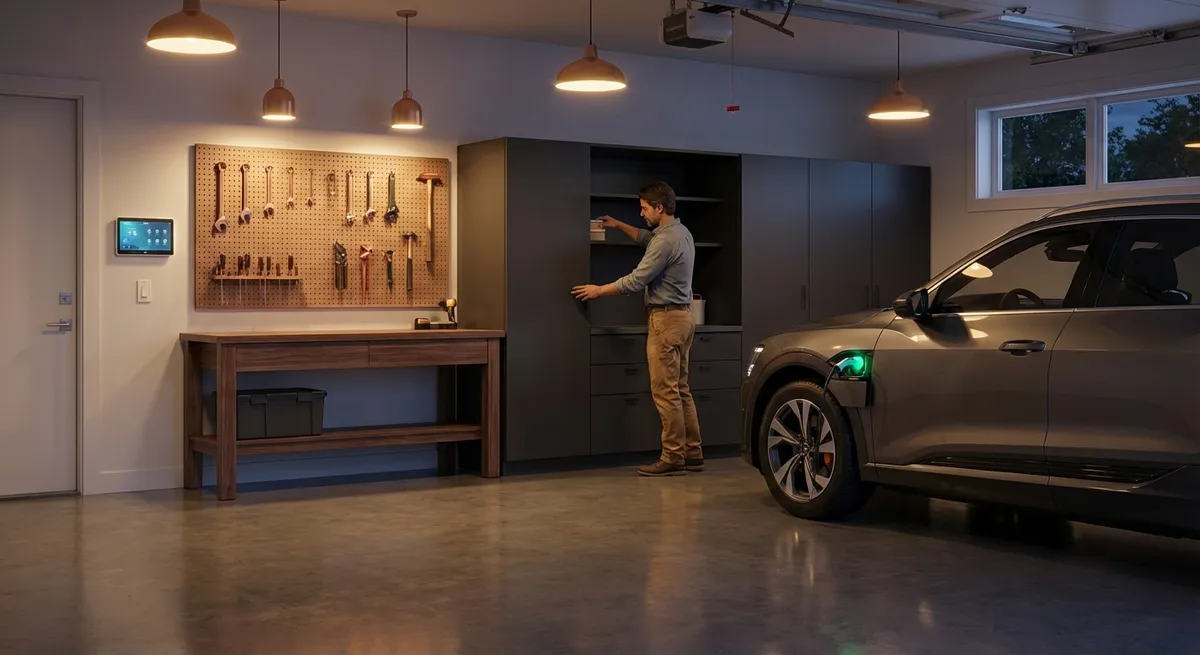
If an electric vehicle—or even a plug‑in hybrid—is in your current or future plans, pre‑wiring for a 240‑volt circuit near the preferred parking location is wise. Running conduit and reserving panel capacity during a broader garage upgrade is significantly more cost‑effective than retrofitting later. Even if the EV charger is installed in a future phase, the infrastructure is waiting, cleanly integrated and code‑compliant.
Similarly, if backup power or solar integration is part of the home’s roadmap, the garage can house critical junction points: a subpanel, transfer switch, or battery storage system. Planning clear wall space, proper ventilation, and service access around these components avoids the cramped, improvised installations that often occur when they’re an afterthought.
Finally, consider discreet low‑voltage wiring pathways for Wi‑Fi access points, security cameras, or smart door and sensor systems. Concealed conduits, properly labeled junction boxes, and service loops behind finishes allow for upgrades without tearing into completed walls or ceilings. The result is a garage that can accept new technology and power demands cleanly and safely, rather than being driven by improvisation.
Conclusion
A truly upgraded garage is not defined by glossy surfaces or showpiece gadgets, but by coherence. Every element—from zoned layout and storage to surfaces, comfort, and infrastructure—aligns to support how you live and what you expect your space to accomplish.
When each decision is made with precision and foresight, garage issues become rarer, maintenance becomes more predictable, and daily use feels effortless. The garage shifts from being the most overlooked square footage in the home to one of its most quietly capable assets—engineered not just to store, but to serve.
Sources
- U.S. Department of Energy – Insulation and Air Sealing - Guidance on improving building efficiency, relevant to insulated doors and envelope upgrades in garages
- U.S. Fire Administration – Garage Fire Safety - Federal recommendations on safe storage of flammables, tools, and equipment in garages
- Occupational Safety and Health Administration (OSHA) – Lighting Standards - Baseline requirements and best practices for safe, effective task and area lighting
- U.S. Department of Energy – Electric Vehicle Charging at Home - Official guidance on planning and installing EV charging infrastructure in residential garages
- Penn State Extension – Epoxy Garage Floor Coatings - Technical overview of epoxy floor systems, preparation requirements, and performance considerations
Key Takeaway
The most important thing to remember from this article is that this information can change how you think about Upgrades.