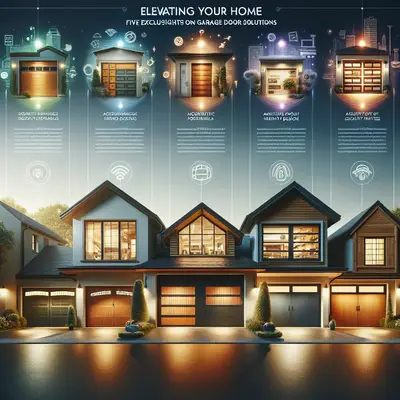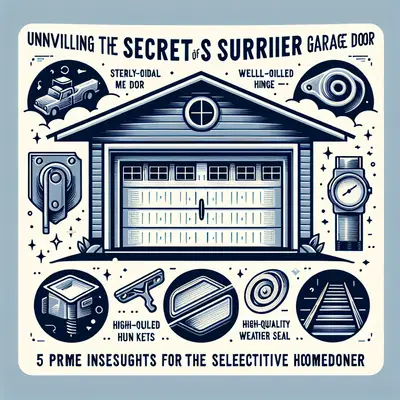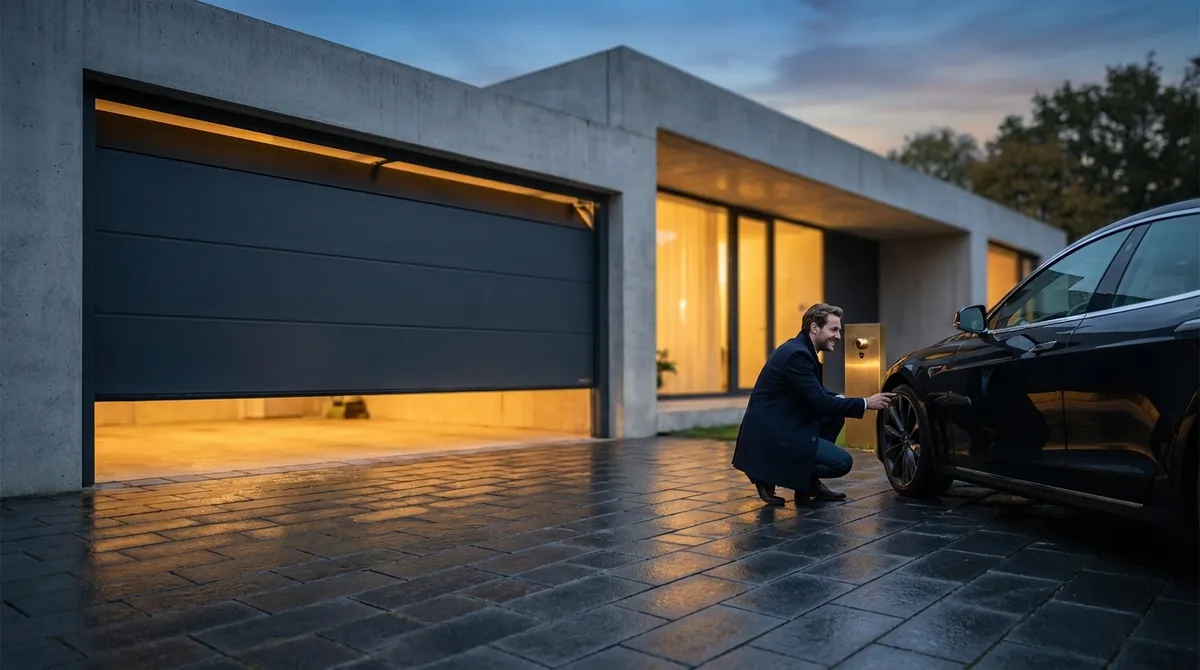
In refined homes, the garage door is no longer a mere utility panel that rises and falls on command. It is a moving façade, an acoustic filter, a security gate, and a daily litmus test for craftsmanship. When it misbehaves—jerking, groaning, leaking air or light—it does more than inconvenience; it diminishes the character of the entire residence. This guide explores garage doors from a more exacting perspective, uncovering understated, high‑impact decisions that discerning homeowners quietly insist upon.
When Silence Becomes a Standard, Not a Luxury
The sound your garage door makes is one of the first indicators of its engineering quality and the precision of its installation. A harsh, rattling open/close cycle often points to a combination of metal-on-metal contact, insufficient vibration isolation, and an opener operating at its mechanical limits.
Upgrading to a belt‑drive or direct‑drive opener paired with properly balanced torsion springs transforms the experience from an industrial clatter to a controlled, muted motion. Nylon rollers, precision‑aligned tracks, and rubber isolation mounts for the opener further refine this effect. These elements do not simply “quiet things down”; they remove micro‑vibrations that accelerate wear on fasteners, brackets, and panels.
Homeowners who treat silence as a design requirement, not an afterthought, quickly notice secondary benefits: fewer late‑night disturbances, less structural resonance through framing members, and a more composed feel every time the door moves. This is the difference between a door that merely works and one that behaves with the restraint you expect from the rest of your home.
Exclusive Insight #1:
Truly quiet operation is rarely about a single upgrade. It is the cumulative result of drive type, spring balance, roller material, track alignment, and vibration isolation all working in concert. Ask your technician to tune all five, not just “replace the opener.”
The Art of Balance: Why a Door’s Weight Should Never Be Your Problem
A well‑balanced garage door can be lifted by hand with two fingers, even if it weighs hundreds of pounds. If the door feels heavy, slams closed, or shoots upward when released from half‑open, the spring system is incorrectly calibrated. This is more than a nuisance—it is a direct safety and longevity issue.
An opener should guide the door, not wrestle it. When springs are mis‑tensioned or mismatched to the door’s actual weight (including added insulation, windows, or hardware), the opener motor is forced to compensate. Over time, this causes burned-out motors, stripped gears, and premature failure of drive components. It can also create erratic motion—hesitation, stuttering, or a door that stops mid-cycle.
A refined approach involves weighing the door, selecting springs with the correct torque rating, and then fine‑tuning tension so the door stays in place when stopped at mid‑travel. This quiet calibration session is one of the most underappreciated services in the entire garage ecosystem, yet it determines how effortlessly everything else will perform.
Exclusive Insight #2:
Many “mysterious” opener issues—overheating, nuisance reversing, or inconsistent closing—originate from poor door balance, not electronics. Insist on a balance test before replacing high‑end openers or logic boards.
Climate Control at the Threshold: Comfort You Can Feel but Not See
In premium homes, thermal comfort is curated, not left to chance—and the garage is often the weakest link. Thin, uninsulated doors function as giant radiators, pulling conditioned air from the home and inviting exterior temperatures to dominate. Even if the garage is not fully finished, its temperature directly affects adjacent spaces, including bonus rooms and utility areas.
Modern insulated doors with polyurethane or polystyrene cores provide far more than a marketing‑friendly R‑value. They stabilize the microclimate of the garage, protect vehicles and stored goods, and reduce condensation that can corrode tracks, springs, and fasteners. When combined with perimeter weatherstripping, bottom seals, and properly insulated adjoining walls, the garage becomes part of your home’s thermal envelope instead of an unregulated void.
This has tangible benefits: more predictable HVAC performance, improved energy efficiency, and a noticeable reduction in drafts and cold floors in rooms above or next to the garage. The right door and sealing strategy effectively remove the sensation of standing “outside” when you’re in the garage—even in harsh climates.
Exclusive Insight #3:
Garage door insulation is only as effective as its weakest seal. A high‑R‑value door paired with worn bottom gaskets, misaligned side seals, or a warped header can perform like a budget panel. Have a technician perform a light and air‑leak inspection around the entire perimeter, not just in the center of the door.
Security as Discretion: Sophisticated Protection Without Visual Noise
Homeowners with elevated standards rarely want their security measures to announce themselves. The garage door must therefore perform a subtle dual role: visually harmonize with the property while quietly serving as a critical barrier to unauthorized entry.
Modern openers equipped with rolling‑code technology significantly reduce the risk of code‑grabbing and replay attacks, while “vacation lock” features disable external keypad access when you are away for extended periods. Smart openers introduce another level of refinement—activity logs, remote close confirmations, and real‑time alerts if the door is left open—all accessible without cluttering the interior with extra hardware.
Physical details matter as much as electronics. Reinforcement brackets at the top panel, properly secured hinges, and track fasteners anchored into structural framing—not just drywall or thin sheathing—turn the door from a flexible sheet into a resistant plane. Emergency release cords can be discretely shielded to prevent fishing from the outside, a subtle yet important enhancement in certain layouts.
Exclusive Insight #4:
The most effective garage security upgrades are often invisible: upgraded fasteners into framing, reinforced top sections, and properly adjusted opener force limits. Ask for a “physical hardening” review in addition to any smart‑home integrations.
The Precision Maintenance Ritual: Small Interventions, Exceptional Lifespan
In well‑maintained homes, breakdowns are the exception, not the rule. Garage doors respond exceptionally well to a quiet, deliberate maintenance routine—one that prioritizes condition over crisis and precision over quick fixes.
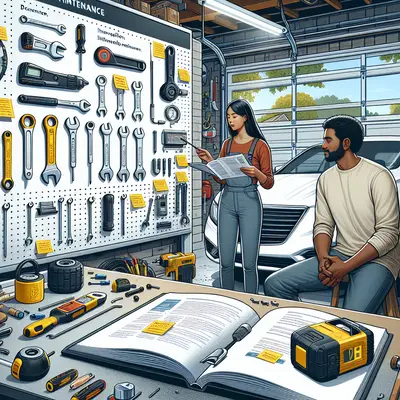
A considered maintenance schedule includes: annual spring and cable inspections, torque checks on critical fasteners, track plumb and level verification, opener force and travel limit calibration, and lubrication using the correct formulations (silicone or light lithium for metal-on-metal, not general‑purpose grease that attracts debris). It also means evaluating door alignment relative to the floor as slabs settle over time, and adjusting seals or bottom rails rather than tolerating gaps.
Documented service history becomes an asset: your technician learns the door’s behavior across seasons, can predict wear patterns, and can recommend discreet upgrades—like transitioning from builder‑grade rollers or hinges to commercial‑grade components—before failures occur. The result is not only fewer emergencies, but a door that feels consistently composed year after year.
Exclusive Insight #5:
Consistent technician continuity matters. Working with the same qualified professional or company over time yields better outcomes than sporadic, lowest‑bid repairs. Familiarity with your specific door, opener, and home environment allows for precise, proactive adjustments rather than reactive fixes.
Conclusion
A garage door that simply opens and closes on command is acceptable for ordinary properties. Homes that demand more, however, benefit from a door system curated with the same intentionality reserved for kitchens, façades, and interior finishes. When silence is engineered, balance is perfected, climate is controlled, security is discreet, and maintenance is treated as a refined ritual, the garage door becomes an extension of the home’s overall standard—not an exception to it.
For homeowners experiencing garage issues, the path forward is not a patchwork of isolated fixes but a thoughtful re‑evaluation of how the door functions as a whole. With the right insights and the right experts, even a problematic door can be transformed into a quietly exceptional component of a truly considered home.
Sources
- U.S. Department of Energy – Insulated Garage Doors and Home Energy – Discusses how garage doors influence home energy performance and comfort
- International Association of Certified Home Inspectors – Garage Door Safety – Details proper garage door balance, safety components, and inspection practices
- Consumer Product Safety Commission – Garage Door Opener Safety – Provides safety guidelines for automatic garage door openers and entrapment protection
- The Family Handyman – How to Maintain a Garage Door – Practical overview of lubrication, tightening, and inspection best practices
- LiftMaster Official Site – Security+ 2.0 and Smart Garage Technology – Explains rolling‑code technology and advanced security features in modern garage door openers
Key Takeaway
The most important thing to remember from this article is that this information can change how you think about Garage Doors.