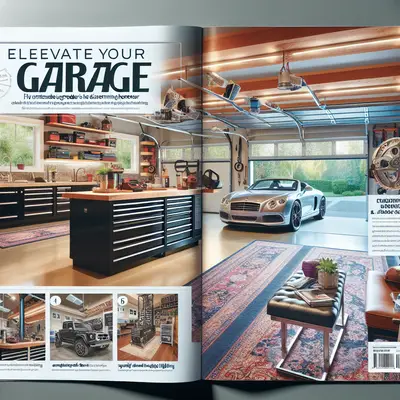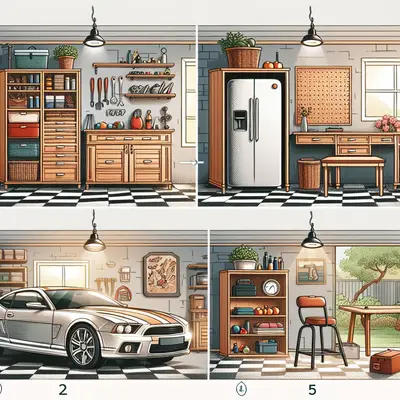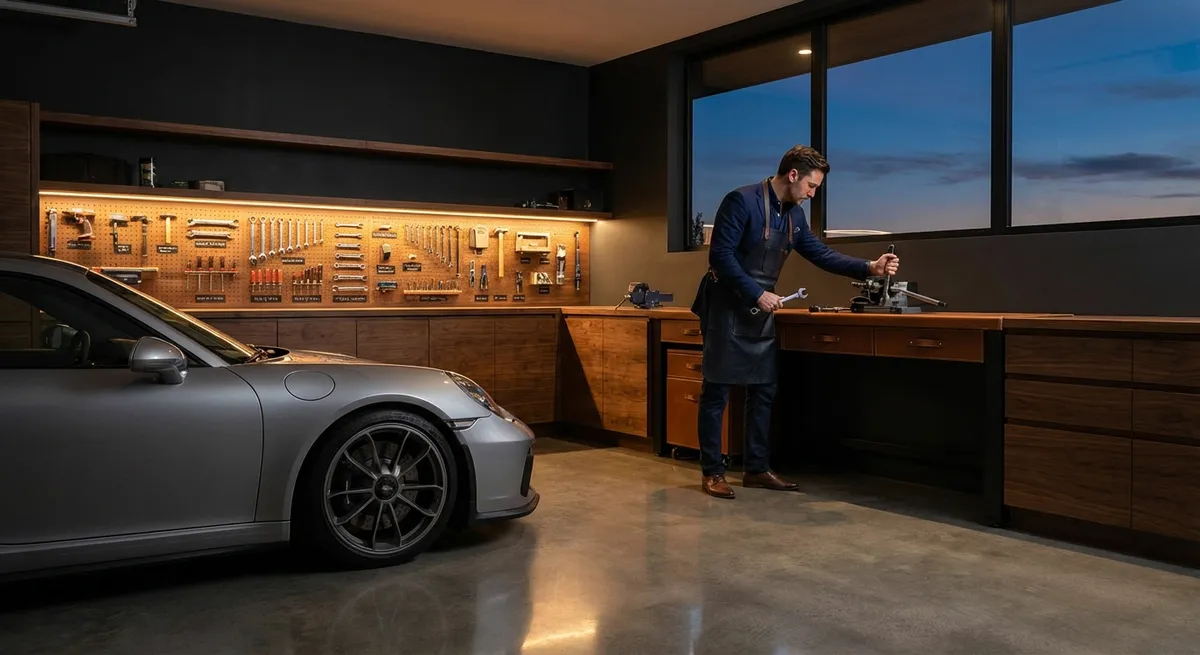
The most satisfying garage is not the largest or the most expensive—it is the one that has been thoughtfully curated. When upgrades are chosen with intention, your garage stops being a catch‑all and becomes a quietly efficient extension of your home’s best habits. This is where engineering meets aesthetics: strategic lighting, acoustics, storage, and climate considerations that feel less like “home improvement” and more like tailoring a suit to fit you perfectly.
Below, you’ll find five exclusive, detail‑driven insights that go beyond the usual advice. Each one is designed for homeowners who expect their garage to function impeccably, protect their investments, and reflect a more refined standard of living.
Designing Light With Purpose, Not Just Brightness
Most garage upgrades start with “more light,” but discerning owners know that the real luxury is in controlled light. Rather than a single harsh overhead fixture, think in layers: diffused ambient lighting for general visibility, targeted task lighting for workbenches, and soft perimeter lighting that makes entering and exiting the garage feel composed rather than clinical.
LED fixtures with high color rendering index (CRI 90+) not only make tools and finishes easier to identify—they also help you spot leaks, hairline cracks, and surface imperfections that dim bulbs conceal. Consider installing linear LED strips along walls or under shelves to eliminate deep shadows where clutter tends to accumulate. Integrating motion sensors at strategic zones (pedestrian door, vehicle entry, and workbench area) creates an effortless experience: illumination appears where you are, not everywhere at once.
For a truly elevated touch, align fixture placement with the geometry of your space: center lights over vehicle bays, keep task lighting within easy reach but outside potential impact zones, and use warm-to-neutral white temperatures (3000K–4000K) to avoid the cold warehouse look. The result is a garage that feels intentional, not improvised.
Rethinking the Floor: From Afterthought to Architectural Anchor
A premium garage begins at ground level. The floor is often treated as an inevitable eyesore, but when upgraded thoughtfully, it becomes the anchor that visually and functionally organizes the entire room. High‑quality epoxy, polyaspartic coatings, or well‑engineered modular tiles do more than look polished—they simplify cleaning, reveal issues early, and protect the underlying slab.
Opt for a light, matte or satin finish with subtle flakes or speckling. This surface reflects light gently, making the space feel larger and less cave‑like, while camouflaging minor dust and tire marks between cleanings. Just as importantly, a properly prepared and coated floor resists chemical staining from automotive fluids, road salts, and moisture—small luxuries that accumulate into long‑term slab preservation.
Attention to edging and transitions is where the upgrade becomes truly refined. Slightly raised thresholds at the garage door can help divert wind‑driven water. Color‑matched base cove along the walls smooths the joint between floor and wall, preventing grime buildup and making mopping genuinely effortless. Marking tire‑landing zones with a barely perceptible graphic or tone-on-tone shift adds a subtle “valet bay” feeling that is more boutique hotel than suburban storage.
Storage as Architecture, Not Just Hardware on the Wall
Most garages struggle not from a lack of space, but from a lack of orchestration. Off‑the‑shelf racks and random cabinets tend to create visual chaos and inefficient circulation. Treat storage as part of the architecture instead: a continuous, visually coherent system that guides how the room is used.
Start by separating storage into three categories:
Permanent (seasonal décor, archives)
Rotational (sports gear, gardening tools)
Immediate (daily drivers—tools, chargers, frequently used supplies)
Permanent items belong in ceiling-mounted or high-wall zones, out of the everyday field of view. Rotational items work best in tall cabinets with adjustable shelves, ideally with doors that close softly to maintain a calm visual line. Immediate‑use items deserve prime real estate: a well-organized wall panel or rail system near the door to the house, with each tool and accessory having a deliberate, reachable place.
Choose materials that echo interior finishes—powder‑coated steel, wood-toned cabinet faces, or minimalist flat-panel fronts—to avoid the “industrial back room” aesthetic. Align cabinet heights, maintain consistent handle styles, and keep open storage limited to items that are inherently attractive or frequently used. When everything has a designated, intuitive home, the garage ceases to feel like storage and begins to feel like a curated workspace.
Acoustic and Air Quality Upgrades That Quietly Transform Daily Use
The finest garages are not only visually refined; they sound and smell different. Two upgrades in particular are often overlooked: acoustic control and air quality engineering. Together, they determine whether your garage feels like an extension of your living space or a loud, fumes‑laden annex you rush through.
On the acoustic side, pay attention to surfaces that amplify sound: bare drywall, concrete, and metal doors. Upgraded insulated garage doors, insulated walls, and even strategically placed soft panels (such as pin boards above a bench or fabric‑wrapped acoustic tiles in targeted locations) absorb reverberation. This doesn’t just make power tools less abrasive—it prevents noise from bleeding into adjacent rooms and elevates the comfort of anyone working or relaxing nearby.
Air quality is equally crucial. A refined garage should evacuate fumes quickly and control humidity quietly in the background. Consider:
- A dedicated, quiet exhaust fan—ideally near where vehicles idle or where you perform finishing/painting tasks.
- An energy‑efficient, properly sized dehumidifier to protect tools, finishes, and stored items from moisture and rust.
- Weatherstripping and door seals that reduce drafts and pollutants drifting into the home.
For owners who frequently charge EVs, install ventilation planning that accounts for heat and off‑gassing from batteries and electronics, ensuring the space remains fresh and safe. These are not flashy upgrades, but they define the difference between a merely functional garage and a space that genuinely feels well‑engineered.
Intelligent Power and Charging: Quiet Infrastructure for Modern Habits
Truly elevated garages anticipate how you will use them in five or ten years, not just today. The most powerful upgrades are often invisible: robust electrical infrastructure designed to support evolving technology—EV charging, power tools, backup systems, and smart controls—without strain or improvisation.
Begin with an electrical assessment. Many older garages were never designed for high‑demand devices, leading to nuisance breaker trips or unsafe daisy‑chained extensions. Upgrading to dedicated 240V circuits for EV charging or large tools, additional 120V circuits for outlets along workbenches, and properly placed GFCI/AFCI protection modernizes the space to current safety and performance standards.
Layer in thoughtful details:
- Outlets at waist height along work areas so cords don’t drape across the floor.
- A designated charging zone with a shelf or docking drawer for cordless tools, bike batteries, and portable electronics.
- Conduit runs or spare capacity in the panel to allow future expansions without destructive work.
Integrating smart controls—such as app‑controlled lighting scenes, monitoring for the garage door, and energy‑use tracking for EV charging—keeps everything coordinated without feeling gimmicky. The goal is subtle convenience: power is simply where you need it, when you need it, delivered without drama.
Conclusion
A sophisticated garage upgrade is not about conspicuous luxury; it is about coherence, foresight, and restraint. When lighting respects how you move, flooring protects and elevates the space, storage is treated as architecture, acoustics and air are deliberately managed, and power is quietly future‑ready, your garage stops being a compromise.
Instead, it becomes a place where every entry and every task feels deliberate and well supported—a technical space with the calm, composed character of a finely finished room. For homeowners who expect their surroundings to work as precisely as they look, these upgrades are less about prestige and more about living with well‑engineered ease.
Sources
- U.S. Department of Energy – LED Lighting - Overview of LED benefits, efficiency, and selection guidance for residential spaces
- U.S. Environmental Protection Agency – Indoor Air Quality - Principles and best practices for maintaining healthy air quality in enclosed spaces
- U.S. Department of Energy – Ventilation - Guidance on exhaust fans, air exchange, and moisture control for garages and utility areas
- Occupational Safety and Health Administration – Garage Ventilation & Fumes - Technical recommendations on managing fumes and airflow in vehicle-related workspaces
- National Fire Protection Association – Home Electrical Safety - Safety considerations and best practices for residential electrical systems and upgrades
Key Takeaway
The most important thing to remember from this article is that this information can change how you think about Upgrades.