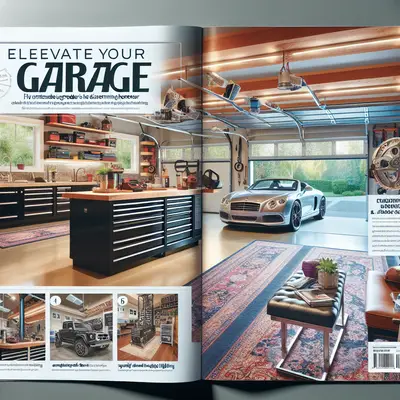
A garage upgrade does not need to announce itself with neon lighting or glossy gimmicks. The most compelling transformations are often the quietest ones—measured not in spectacle, but in how effortlessly the space supports your life. For the homeowner who expects more from a garage than bare concrete and rattling hardware, thoughtful upgrades become less about “nice-to-have” features and more about a discreet standard of living.
Below, we explore a curated set of upgrades and five exclusive insights designed for homeowners who face real garage frustrations—noise, clutter, temperature swings, unreliable operation—and prefer solutions that feel considered, enduring, and elegantly understated.
Elevating the Foundation: Floors That Work as Well as They Look
Most garages are betrayed by their floors. Dusting concrete, oil stains, and minor cracks quietly erode both appearance and function. Upgrading the garage floor is not merely an aesthetic indulgence; done correctly, it becomes a technical enhancement that improves safety, maintenance, and long-term durability.
A professionally installed epoxy or polyaspartic coating, for example, offers a seamless, non-porous surface that resists chemicals, tire marks, and moisture intrusion. When paired with a properly prepared substrate—cracks filled, moisture checked, and surface mechanically ground—the floor becomes easier to clean, more resistant to delamination, and less prone to harboring dust. For homes in colder climates, a higher-quality coating helps protect against salt damage from winter roads; in warmer regions, UV-stable formulations avoid yellowing or chalking.
Thoughtful details matter: integrating subtle anti-slip texture, choosing a restrained color palette (warm greys, stone-inspired tones, or speckled finishes that discreetly mask minor dirt), and ensuring the coating returns slightly up the wall base for easier cleaning. The result is a floor that looks composed yet quietly handles the abuse of daily use, from muddy tires to the occasional dropped tool.
Exclusive Insight #1 – Floor prep is the real upgrade. The elegance of a premium garage floor is determined less by the coating chemistry and more by the preparation beneath it. Moisture testing, crack injection, and mechanical grinding dramatically extend coating life; skipping these steps is the fastest way to a peeling or blistering surface. If a quote doesn’t detail the prep process, you’re not comparing true like-for-like quality.
Silent Strength: Insulation, Sealing, and Temperature Control
Garage discomfort often presents as vague irritation: a space that’s too hot to work in by mid-afternoon, too cold to cross in winter, or filled with drafts and dust. Upgrades in insulation and air sealing may be visually understated, but they deliver a profound daily improvement.
Wall and ceiling insulation, properly specified for your climate, helps regulate temperature and can reduce energy transfer to adjacent living spaces. When combined with an insulated garage door and sealed door jambs, you gain a quieter, more thermally stable environment. This matters not only if you use the garage as a workshop or gym, but also if bedrooms or living areas are located above or adjacent to the space.
Air sealing is often overlooked: weatherstripping that actually compresses properly, bottom seals that fully contact the floor, and careful sealing around electrical penetrations and attic access. These reduce dust, pollen, and exhaust fumes drifting into the home. In humid climates, a compact, well-sized dehumidifier or a controlled ventilation solution can protect tools, stored items, and vehicles from corrosion and mold.
Exclusive Insight #2 – The garage is a buffer zone that can work for—or against—you. Treating the garage as part of your home’s thermal and air envelope (rather than a detached afterthought) can reduce temperature swings in nearby rooms, improve indoor air quality, and lower the burden on your HVAC system. Upgrading door insulation and sealing can be a remarkably cost-effective way to refine overall comfort.
Intelligent Storage: Systems That Respect Both Space and Objects
Clutter is rarely just a storage problem; it is a design problem. A refined garage storage upgrade begins with a clear hierarchy: what belongs on the floor, on the walls, suspended from the ceiling, and within closed cabinetry. The goal is not to fill every surface, but to create a deliberate order.
Wall-mounted track systems, modular shelving, and heavy-duty slatwall panels allow you to elevate tools, seasonal décor, sports equipment, and yard tools off the floor. Closed cabinetry protects sensitive items—paints, finishes, cleaning products—from dust and temperature extremes, while also maintaining visual calm. Ceiling-mounted racks, used judiciously, are ideal for infrequently accessed items like holiday décor or luggage.
The premium touch is in the planning. Grouping items by frequency of use and weight, placing daily-use items at chest height, and reserving low positions for heavy, stable objects softens both visual clutter and everyday strain. Matching finishes (powder-coated steel, clean composite panels, or wood accents) create a sense of continuity rather than the patchwork effect of random add-ons.
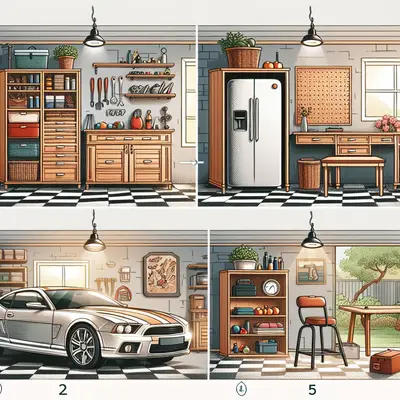
Exclusive Insight #3 – Vertical zoning discreetly solves chaos. Instead of beginning with “What shelves should I buy?”, begin with a vertical zoning plan:
- Floor: vehicles and very heavy, stable items
- 0–4 ft: heavy tools and occasionally moved equipment
- 4–6 ft: daily-use items and hand tools
- 6 ft and above: seasonal or rarely accessed storage
Designing storage around this framework yields a calm, intuitive layout—and dramatically reduces the “where did I put that?” frustration.
Refined Operation: Door Systems That Disappear Into the Background
For many homes, the garage door is both a primary entry and a dominant façade element. Yet its operation is often an afterthought until it begins to grind, rattle, or fail. Upgrading the door system—door, opener, and hardware—can simultaneously enhance security, silence, safety, and curb presence.
Modern belt-drive openers with DC motors and soft-start/soft-stop technology operate with a subdued hum rather than a harsh clatter. Paired with properly tensioned torsion springs, quality rollers, and well-aligned tracks, the door’s movement becomes smooth and controlled. This is not simply a convenience; a quieter, softer-operating system reduces stress on the door panels and hardware, extending service life.
Smart openers with integrated cameras, Wi‑Fi control, and battery backup introduce a new level of reliability. Remote monitoring confirms whether the door is closed, while automatic close-timers and access logs provide added security. For safety, modern photo-eye sensors and force-sensing technology are essential, especially in homes with children or pets.
From an aesthetic standpoint, a modest upgrade to the door itself—insulated steel with wood-look finishes, clean panel lines, or understated windows—can recalibrate the visual balance of the entire exterior without shouting for attention.
Exclusive Insight #4 – Quietness is a diagnostic, not just a luxury. A well-tuned garage door system is inherently quiet. Grinding, jerking, or resonance through the structure are early-warning signs of improper spring balance, worn rollers, misaligned tracks, or an overworked opener. Addressing these issues as part of an upgrade is less about “pampering” and more about preventing catastrophic failure and expensive emergency repairs.
Environmental Control: Light, Power, and Air That Respect the Way You Live
If the floor is the foundation and the door system the gatekeeper, then lighting, electrical infrastructure, and air quality define how usable the garage feels in daily life. Treating these as integrated upgrades yields a space that feels deliberate, not improvised.
Lighting is the first and most transformative change. High-CRI LED fixtures, thoughtfully placed to avoid harsh shadows around vehicles and work surfaces, turn the garage into a practical and inviting environment. Linear LED strips or low-glare flat panels provide diffuse, uniform illumination; task lights over benches and tool areas add precision where needed. Choosing a neutral white color temperature (around 4000K) balances clarity and comfort.
Electrical upgrades complete the transformation. Dedicated circuits for heavy equipment, well-placed outlets along the perimeter, and provision for EV charging future-proof the space. If you have or anticipate an electric vehicle, installing a properly sized Level 2 charger on a dedicated circuit can significantly reduce charging times and prevent overloading existing wiring.
Finally, air quality is not merely a comfort issue; it’s a health consideration. A simple upgrade to include a high-quality exhaust fan, a controlled fresh-air vent, or a dedicated area for solvent use with localized extraction can dramatically reduce fumes entering the home. Even a well-placed, quiet fan and disciplined door-opening routine contribute to a safer environment.
Exclusive Insight #5 – Plan for tomorrow’s equipment, not just today’s habits. When upgrading electrical and environmental systems, consider your likely future needs: EV charging, power tools, air compressors, or even backup power integration. Adding capacity and strategic conduit pathways now is far more elegant—and cost-effective—than retrofitting under duress later.
Conclusion
A truly refined garage upgrade is not a catalogue of flashy add-ons; it is a series of thoughtful decisions that allow the space to quietly support your life, protect your investments, and reduce the frictions you once accepted as inevitable. By addressing the foundational elements—flooring, insulation, storage, door systems, and environmental control—with intention, the garage evolves from a neglected zone into a calm, capable extension of the home.
For the discerning homeowner, the measure of success is simple: the garage no longer demands attention. It simply works—reliably, quietly, and with a degree of composure that feels quietly luxurious every time the door opens.
Sources
- U.S. Department of Energy – Insulation and Air Sealing – Guidance on selecting and installing insulation, plus the benefits of proper air sealing
- U.S. Department of Energy – Residential Lighting – Overview of efficient lighting options and considerations for upgrading to LEDs
- U.S. Environmental Protection Agency – Indoor Air Quality Basics – Explains how garages and attached spaces can affect indoor air quality in homes
- International Association of Certified Home Inspectors – Garage Inspections – Details common garage safety, door, and structural issues that upgrades can address
- National Renewable Energy Laboratory (NREL) – Electric Vehicle Charging at Home – Technical insight into home EV charging infrastructure and planning considerations
Key Takeaway
The most important thing to remember from this article is that this information can change how you think about Upgrades.