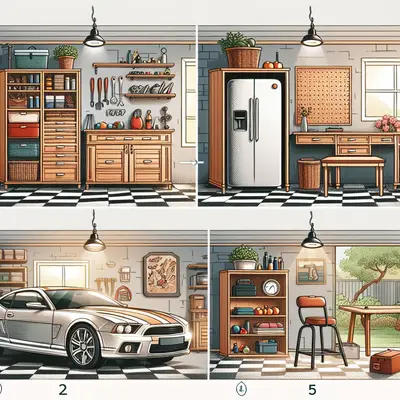
A well‑considered garage upgrade never shouts; it whispers refinement. Beyond simple storage or parking, your garage can function as a quiet extension of your home’s architecture—orderly, resilient, and effortlessly practical. When thoughtfully upgraded, it influences how you begin and end every day: the first space you encounter when leaving and the last you see when returning.
This guide explores sophisticated, high‑impact garage upgrades that don’t rely on spectacle, but on precision, durability, and calm functionality. Within it are five exclusive insights designed for homeowners who expect their garage to operate with the same poise and reliability as the rest of their residence.
Reframing the Garage as a Gentle Transition Space
Most garages are treated as an afterthought, yet they are the true threshold between public and private life. Reimagining the garage as an intentional transition space reshapes every upgrade decision—from materials to lighting to layout.
Begin with how you move through the space. Where do you step when you enter from the car? Is there a clear visual path to the interior door, free from clutter and visual noise? Introduce a “quiet corridor” that remains unobstructed: tools, storage, and equipment live outside this subtle passageway. A consistent floor tone, soft wall color, and neatly aligned storage lines all reinforce an atmosphere of calm.
This transition mindset also guides the selection of materials. Smooth, easily cleaned surfaces, concealed storage, and hardware that feels deliberate rather than improvised all contribute to a refined impression. The goal is not minimalism for its own sake, but coherence: a space that functions with the intuitive ease of a well‑designed foyer, just with the resilience of a workshop.
Insight 1: Engineering‑Grade Flooring That Quietly Resists Chaos
Flooring is often treated as a purely aesthetic decision, yet it is the mechanical heart of a working garage. An upgrade here can reduce noise, manage dust, and dramatically extend the life of the space. Premium solutions such as high‑solids epoxy, polyaspartic coatings, or professionally installed tiles offer not only a cleaner appearance but a carefully engineered surface that resists chemicals, hot‑tire pickup, and impact.
The refined approach is to balance performance with understated design. A low‑gloss finish with subtle marbling or a muted, uniform color palette prevents glare and hides minor debris between cleanings. Integrated texture—rather than aggressive grit—provides slip resistance without feeling industrial underfoot. Edge work is critical: neatly finished transitions at the garage threshold and sidewalls prevent chipping and water intrusion, and coved base detailing can make cleaning spills both easier and more thorough.
Pay attention to curing times and environmental conditions during installation. Rushing this process leads to bubbling, peeling, or trapped moisture that can silently compromise the surface from below. When installed correctly, a well‑chosen floor transforms daily use: less dust tracked into the home, quieter footfalls, rainwater that channels toward the door instead of pooling in corners, and an overall sense of quiet order every time the car pulls in.
Insight 2: Discreet Power and Data Infrastructure, Not Extension‑Cord Chaos
Modern garages often serve as charging hubs—for vehicles, tools, backup power, and even data‑heavy home systems. Yet many remain dependent on a tangle of extension cords and power strips that feel more temporary than intentional. A premium upgrade involves rethinking the electrical and data backbone of the garage so that power appears exactly where it is needed, without visible clutter.
Start with a dedicated circuit assessment by a licensed electrician. Strategically located outlets at bench height, along sidewalls, and near storage zones avoid draped cords and overloaded receptacles. Ceiling‑mounted outlets above where you park can discreetly power overhead storage lifts, retractable cord reels, or an electric vehicle charger, eliminating cords crossing the floor.
Consider integrating a structured conduit for data and smart‑home integration: a small, protected channel for Ethernet, sensor cables, and any future low‑voltage lines. This quietly prepares the space for advanced monitoring—temperature and humidity sensors, smart openers, cameras, or occupancy‑based lighting—without retrofitting visible cables later. The result is an infrastructure that feels invisible but powerful, supporting both present conveniences and future upgrades with technical elegance.
Insight 3: Layered, Purpose‑Built Lighting for Precision and Calm
Lighting in many garages swings between two extremes: harsh overhead glare or inadequate dimness. A sophisticated solution treats lighting as layered and task‑specific, creating zones of clarity and warmth rather than a single blunt source.
Begin with uniform ambient lighting using high‑quality LED fixtures with a color temperature in the 3500K–4000K range. This strikes a balance between clinical brightness and domestic warmth. Long, low‑profile fixtures aligned with the length of vehicles ensure even light distribution without deep shadows. Dimmable drivers and occupancy sensors allow the space to ramp gently to full brightness when you enter, rather than snapping on abruptly.
Next, add task lighting in critical areas: above workbenches, near tool walls, and over frequently used storage zones. Slim under‑cabinet LEDs or wall‑mounted adjustable fixtures provide focused light where precision matters, without flooding the entire room. Finally, consider a soft, lower‑level light source (such as a low‑watt wall sconce or toe‑kick lighting near steps) for nighttime arrivals, so you’re not met with full brightness when simply retrieving one item. The interplay of these layers delivers both functionality for detailed work and a serene visual experience for everyday comings and goings.
Insight 4: Storage That Conceals, Protects, and Anticipates Movement
Most garage storage is reactive—things are placed where there is space, not where they logically belong. A refined upgrade is proactive storage: designing systems based on flow, frequency of use, and long‑term protection of tools, seasonal items, and mechanical components.
Wall‑mounted cabinet systems with clean lines and soft‑close hardware instantly elevate the space, but the real sophistication is in their internal logic. Frequently used items should be stored at chest to eye level within one or two steps of the main garage entry. Heavy tools and bulk supplies live lower, behind doors that open fully without colliding with vehicles or steps. Rarely used seasonal items can migrate to upper cabinets or ceiling‑mounted racks that are structurally anchored into joists, not merely lagged into drywall.
Open storage has its place, but sparingly: a carefully organized tool wall or a limited number of open shelves can function almost like a display, provided they remain neat. Everything else benefits from being concealed. This doesn’t just improve aesthetics; it protects items from dust, moisture, and accidental impact. The refined test: when the garage door is open, the space should feel composed, not exposed—even if you haven’t “straightened up” in weeks.
Insight 5: Sound, Sealing, and the Hidden Comfort of a Quiet Envelope
Many homeowners focus on the obvious mechanics of their garage door while overlooking the subtle envelope that surrounds it: seals, insulation, sound management, and microclimate control. Enhancing this envelope yields a surprising upgrade in comfort and longevity.
High‑quality perimeter weatherstripping and a well‑fitted bottom seal on the garage door can dramatically reduce drafts, dust, pests, and even street noise. Insulated doors and properly insulated adjoining walls stabilize temperature, which protects stored items and reduces stress on both the car and the home’s HVAC system. If you spend any significant time working in the garage, this can quietly transform it from a harsh, echo‑prone box into a space you can occupy for hours.
Acoustic considerations matter, too. Adding sound‑absorbing surfaces—such as insulated doors, acoustic panels near echo‑prone walls, or even thoughtfully placed rugs on walkways—reduces reverberation. A quieter garage lessens mechanical noise transmission into living areas, making early‑morning departures and late‑night arrivals less disruptive. The result is subtle but profound: a garage that doesn’t feel detached and harsh, but integrated, insulated, and gentle in use.
Conclusion
A truly elevated garage doesn’t rely on showy gadgets or overt displays. It succeeds through well‑chosen materials, precise infrastructure, calm lighting, disciplined storage, and a carefully controlled envelope. Each upgrade described here is less about spectacle and more about a quiet, enduring quality—spaces that perform beautifully over years, not just look impressive on day one.
When you treat your garage as a deliberate extension of your home rather than a utilitarian afterthought, every arrival becomes smoother, every departure more composed, and every repair or project unfolds in an environment that supports focus instead of frustration. Refined garages are not accidental; they are engineered—thoughtfully, subtly, and with an eye toward the daily rituals that define modern living.
Sources
- U.S. Department of Energy – Insulation and Air Sealing - Guidance on insulation and air sealing principles that apply directly to garage walls and doors
- Energy Star – Residential Garage Doors - Information on insulated, energy‑efficient garage doors and their performance benefits
- UL – Garage and Workshop Electrical Safety - Best practices for safe electrical upgrades, outlets, and tool usage in garages
- Lighting Research Center (Rensselaer Polytechnic Institute) - Technical overview of LED lighting performance, efficiency, and quality considerations
- Occupational Safety and Health Administration (OSHA) – Walking-Working Surfaces - Standards and recommendations relevant to safe, slip‑resistant garage floors and pathways
Key Takeaway
The most important thing to remember from this article is that this information can change how you think about Upgrades.