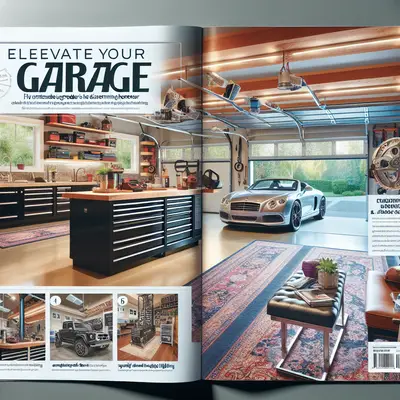
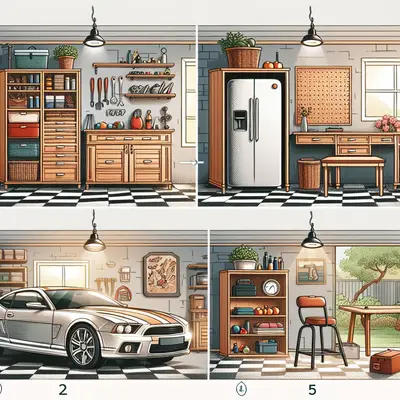
A garage, in a discerning home, is never just a storage bay or a place to park. It is the threshold between the public and the private, a technical space that quietly supports daily life while safeguarding vehicles, tools, and investments. When thoughtfully upgraded, the garage becomes a polished extension of the home’s architecture and performance—engineered for comfort, safety, and long-term value rather than mere utility.
This guide explores refined upgrade strategies and five exclusive insights for homeowners who expect their garage to work as impeccably as the rest of their residence.
Reconsidering the Garage as a Performance Space
For many properties, the garage is the hardest-working square footage on the lot: it endures temperature swings, vehicle weight, chemical spills, dust, and constant movement. Treating it as an afterthought is a quiet way of degrading the entire property’s experience.
Begin by reframing the garage as a performance space. Beyond sheltering vehicles, it manages noise, energy transfer, security, and even indoor air quality. Poorly insulated walls, misaligned doors, or aging openers do more than inconvenience you—they waste energy, introduce moisture, and compromise comfort. A strategic upgrade plan focuses on three pillars: structural integrity, mechanical performance, and daily usability. When these are elevated together, the garage stops being a weak link and becomes a precisely tuned asset.
Insight 1: Precision Door Balancing as a Long-Term Upgrade
Most homeowners focus on the garage door’s exterior finish or opener horsepower, but the hidden determinant of durability and quiet operation is balance. A properly balanced door can be lifted by hand with minimal effort and stays in place when halfway open. When it is even slightly out of balance, the opener strains, hardware wears prematurely, and noise increases.
Treat door balancing not as a “repair” but as a foundational upgrade. A qualified technician can recalibrate torsion or extension springs to match the exact weight of your door, re-check track alignment, and verify cable tension. This process often reveals subtle issues: a warped panel adding weight, a bent hinge point, or a fatigued spring nearing failure. The result is a smoother, more controlled motion that preserves the opener, reduces vibration transmitted into the home, and extends the life of every moving component. For homes that value refinement, this level of mechanical precision is non-negotiable.
Insight 2: Thermal Zoning the Garage for Comfort and Preservation
Insulation is often discussed as a single decision—insulated or not—but sophisticated garages benefit from thermal zoning: deliberately treating different surfaces based on their role and exposure. The goal is not to turn the garage into a living room, but to stabilize conditions enough to protect vehicles, stored goods, and adjacent interior spaces.
Start with the shared walls and ceiling between the garage and conditioned areas of the home. These surfaces deserve insulation and air sealing comparable to the rest of the house, reducing heat loss, noise bleed, and the risk of fumes migrating inward. Next, consider an insulated garage door with proper weatherstripping and a well-sealed threshold; this stabilizes temperature swings and limits dust and pests. Finally, if you use the space for a workshop or gym, a modest, well-controlled heating and cooling solution—such as a ductless mini-split or ceiling-mounted electric heater—can be added. The result is a garage that feels composed in winter and summer, protecting finishes, electronics, and the vehicles you rely on every day.
Insight 3: Upgrading to Intelligent, Low-Noise Drive Systems
Modern garage door openers now sit at the intersection of mechanical precision and digital intelligence. For a premium home, the upgrade is less about novelty and more about performance: quiet operation, robust security, and long-term dependability.
Belt-drive or direct-drive systems are markedly quieter than older chain drives and transmit fewer vibrations into framing and nearby rooms. Look for models with soft-start and soft-stop functions; these reduce stress on the door, hardware, and mounting points. Integrated backup batteries keep the door operable during power outages—a critical advantage for security and emergency access. When paired with encrypted wireless remotes and smartphone controls, the system can provide real-time alerts when the door is left open, log access events, and allow secure temporary access without sharing physical keys or remotes. For households that travel frequently or manage deliveries, this combination of mechanics and security tech is an essential modernization rather than a luxury.
Insight 4: Elevated Floor Systems That Work as Hard as They Look
Garage floors carry the visual weight of the space, yet unfinished concrete often telegraphs dust, stains, and age. Upgrading the floor is both an aesthetic and functional decision: the right system resists chemicals, reduces dust, and makes cleanup effortless.
High-quality epoxy, polyaspartic, or polyurethane coatings—when installed with proper surface preparation and moisture testing—offer a dense, seamless surface that resists oils, road salts, and tire marks. For a more architectural aesthetic, polished concrete with densifiers and penetrating sealers can deliver a refined, low-sheen finish that is both durable and understated. Incorporate subtle texture or flakes where needed for slip resistance, especially near entrances or drainage points. The payoff is immediate: light reflects more evenly, storage zones appear more organized, and any spill or debris is quickly visible and easily removed. For premium properties, the floor stops feeling like an unfinished slab and becomes a deliberate design element.
Insight 5: Structured Storage and Power Planning for Modern Lifestyles
The most elegant garages are not necessarily minimalist—they are meticulously structured. As vehicles have become more sophisticated and households have accumulated more tools, sports equipment, and seasonal items, the garage has quietly become the de facto storage center of the home. Upgrades that anticipate this reality create a sense of control rather than clutter.
Start with verticality. Wall-mounted systems—track rails, slatwall, or modular panel systems—convert the perimeter into flexible storage for tools, ladders, hoses, and seasonal gear. Overhead racks reclaim otherwise wasted space above vehicles for infrequently used items, provided load ratings and clearances are respected. Integrate lockable cabinets for chemicals or expensive equipment to maintain both safety and visual order.
Equally important is power planning. With the rise of electric vehicles, battery-powered tools, and home backup systems, adding dedicated circuits, 240V outlets, and well-positioned receptacles is no longer optional in a forward-looking garage. Plan for task lighting at work areas, low-glare general illumination, and charging zones that do not interfere with vehicle doors or traffic paths. When storage and power are intentionally designed together, the garage transitions from “overflow” to a precisely organized, highly functional environment.
Conclusion
For homeowners who expect their property to perform as impeccably as it appears, the garage is an unavoidable focal point. Upgrades that emphasize mechanical precision, thermal control, intelligent automation, durable finishes, and disciplined organization do more than add convenience—they protect investments, enhance daily comfort, and align the garage with the standards of the rest of the home.
By treating each improvement as part of an integrated performance system rather than a cosmetic patch, you create a garage that feels composed, quiet, and thoroughly modern—an engineered extension of the home that serves without drawing attention to its effort.
Sources
- U.S. Department of Energy – Insulated Garage Doors and Energy Efficiency – Overview of how insulated doors and proper sealing affect energy performance and comfort.
- Energy Star – Air Sealing and Insulation Guidance – Technical context for air sealing and insulation strategies relevant to garage-to-house boundaries.
- International Association of Certified Home Inspectors – Garage Door Safety and Inspection – Detailed look at balancing, components, and safety considerations for garage doors.
- UL – Safety Considerations for Residential Garage Door Operators – Information on safety standards and modern operator features.
- U.S. Department of Energy – Heating and Cooling With a Ductless Mini-Split – Explains performance and appropriate use cases for ductless systems often used to condition garages.
Key Takeaway
The most important thing to remember from this article is that this information can change how you think about Upgrades.