The most interesting garages today are not the flashiest—they are the ones that think several steps ahead. They operate quietly, protect valuable vehicles and equipment, and feel as intentional as a well-designed kitchen. For discerning homeowners, the real luxury lies in upgrades that are structurally sound, technically refined, and visibly restrained. This is where the garage stops feeling like an afterthought and starts performing like an integral component of a high‑value home.
Below are five exclusive, strategy‑driven insights that move beyond cosmetic tweaks and into serious, future‑proof upgrades.
1. Structural First: Reinforcing the Envelope Before the Aesthetics
The smartest upgrades begin where most people never look: the bones of the garage. Before thinking about sleek cabinetry or new floor coatings, it is worth evaluating the structural envelope—walls, ceiling, and slab—for hidden weaknesses.
A professional assessment can uncover hairline slab cracks telegraphing settlement, moisture migration through foundation walls, and insufficient anchoring between the garage and the main structure. Upgrading might include installing a proper vapor barrier system at the base of walls, adding engineered anchors at critical connection points, or specifying a surface-applied moisture mitigation system prior to any floor finish.
Why this matters: any premium finish applied over a flawed structure becomes a very expensive bandage. By investing in reinforcement and moisture control first, you dramatically extend the life of every subsequent upgrade—from floor coatings to built-in storage—and reduce the risk of uneven floors, peeling finishes, and premature corrosion of tools and vehicles.
For many homes, the most elegant garage is the one whose structural discipline you never see but always benefit from.
2. Thermal and Acoustic Zoning: Making the Garage Work Like a Smart Buffer
Garages often sit between conditioned interior space and the outdoors, yet they are frequently treated as neither. A sophisticated approach is to treat the garage as a “smart buffer zone,” carefully tuned for temperature and sound rather than simply left exposed.
Upgrading here can include insulated, air‑sealed garage doors with high R‑values, properly sealed and insulated common walls between the garage and living space, and airtight recessed lighting or surface‑mounted fixtures that avoid penetrating the air barrier. Thoughtful homeowners also specify high‑performance weatherstripping around the door perimeter and upgrade the door's bottom seal to a more durable, compressible design.
Acoustically, strategic use of high‑density insulation in shared walls and the ceiling below occupied rooms can significantly reduce noise transfer from garage doors, compressors, or hobby tools. The result is a garage that feels detached in terms of sound and temperature impact, while remaining physically integrated with the home.
This type of zoning elevates comfort and energy efficiency, and it also reads as quality: doors operate quietly, temperature swings are moderated, and the home’s main living areas feel more insulated—both literally and figuratively—from garage activity.
3. Power, Charging, and Future Loads: Electrical Upgrades with Intent
Electrical capacity is increasingly the defining factor between a “basic” garage and a future‑ready one. Instead of adding outlets ad hoc, a refined upgrade strategy considers not only today’s needs but tomorrow’s probable loads—particularly electric vehicles, power tools, and backup systems.
For many properties, that begins with a dedicated subpanel in the garage, sized generously to accommodate:
- One or more 240‑V circuits for current or future EV charging
- A dedicated circuit for a high‑capacity air compressor or workshop tools
- Circuits for ceiling‑mounted heaters (in cold climates) or ventilation systems
- Pre‑wiring for security cameras, access control, or smart openers
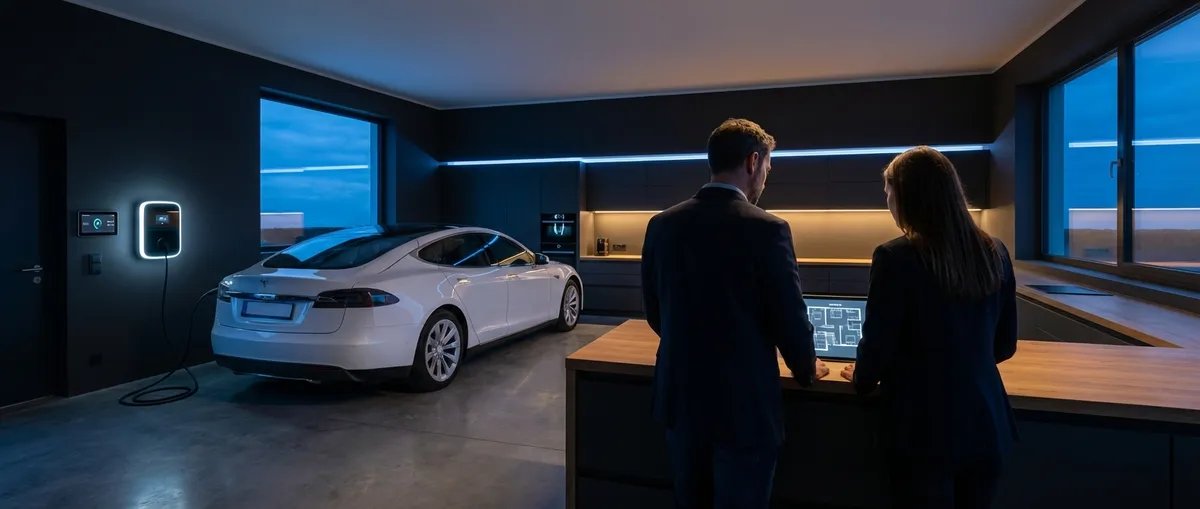
An EV‑ready or EV‑equipped garage is no longer a niche luxury—it is quickly becoming a core expectation in higher‑value markets. Installing a properly rated Level 2 charger (or at minimum, a 240‑V receptacle in an optimal location) adds functional value with relatively little visual disruption.
The refinement here is in the planning: locating outlets to avoid cord clutter, coordinating charger placement with parking patterns, and integrating controls with the home’s existing smart ecosystem. This transforms the garage from a patchwork of extension cords into a clean, reliable power environment built to handle both current demands and future technologies.
4. Environmental Control: Humidity, Air Quality, and Corrosion Defense
For homeowners with high‑end vehicles, precision tools, or sensitive equipment, environmental control inside the garage is not optional—it is asset protection. Temperature alone is only part of the picture; humidity and air quality are equally critical.
Upgrades that distinguish a serious garage from a merely updated one include:
- A right‑sized, appropriately vented exhaust fan to clear fumes and reduce pollutants
- A humidity‑controlled ventilation or dehumidification system, especially in coastal or humid climates
- Thoughtful placement of intake and exhaust points to prevent stagnant air zones
- Positive separation between garage air and interior living air via self‑closing, gasketed doors and maintained pressure differences
By managing humidity, you dramatically reduce the risk of surface rust on tools, corrosion on exposed metal components, and mold growth on stored materials. When combined with well‑sealed slab and wall surfaces, this creates a microclimate that protects both mechanical systems and finishes.
The result feels different: air is cleaner, odors dissipate quickly, and vehicles and equipment age more gracefully. It is a subtle but unmistakable signal that the garage has been designed as a technical space, not just a storage room.
5. Precision Organization and Floor Systems That Truly Work
Most garage “makeovers” begin and end with organization systems and floor coatings, but in a refined upgrade strategy, these are the final, carefully specified layers—not the starting point.
On the floor side, a premium approach respects both substrate and usage. That might mean:
- Mechanical surface preparation (e.g., diamond grinding) before any coating
- High‑solids or 100% solids epoxy or polyaspartic systems, selected based on climate and UV exposure
- Clear slip‑resistance strategy, balancing cleanability with safety
- Consideration of tire pick‑up, hot‑tire resistance, and chemical resilience for specific vehicles or equipment
For organization, a discerning homeowner favors systems that fit the architecture, not just the catalog: shallow-depth cabinets near parking zones to avoid door impacts, deeper storage along secondary walls, and ceiling systems that respect door tracks and opener clearances. Track‑based or modular wall systems can allow flexible reconfiguration as needs evolve, while closed cabinetry helps maintain visual calm and control dust.
The most elevated garages are visually quiet: tools have a logical home, seasonal items are properly stowed, and floor surfaces remain open and unobstructed. This isn’t about showroom gloss; it’s about a space that operates as smoothly as it looks—where every upgrade has been chosen with both longevity and daily usability in mind.
Conclusion
A sophisticated garage upgrade is less about dramatic before‑and‑after photos and more about disciplined, layered decisions that will still make sense a decade from now. Structural reinforcement, thoughtful thermal and acoustic separation, future‑ready electrical planning, controlled environmental conditions, and precise organization form a cohesive strategy rather than a collection of isolated improvements.
For homeowners who expect their properties to perform at a high level, the garage is no longer the weak link on the side of an otherwise well‑composed home. It becomes a quiet asset: structurally serious, mechanically competent, and refined enough to match the standards set everywhere else.
Sources
- U.S. Department of Energy – Insulation and Air Sealing – Guidance on effective insulation strategies and air sealing, relevant to treating the garage as a buffer zone
- U.S. Department of Energy – Electric Vehicles: Charging at Home – Overview of residential EV charging considerations, including electrical capacity and circuit planning
- Occupational Safety and Health Administration (OSHA) – Ventilation – Principles of mechanical ventilation and indoor air quality, useful when planning exhaust and air movement in garages
- Concrete Foundations Association – Control of Cracking in Concrete Structures – Technical background on slab and foundation cracking and mitigation strategies
- U.S. Environmental Protection Agency – Moisture Control Guidance for Building Design – In‑depth discussion of moisture management in building envelopes, directly applicable to long‑term garage durability
Key Takeaway
The most important thing to remember from this article is that this information can change how you think about Upgrades.