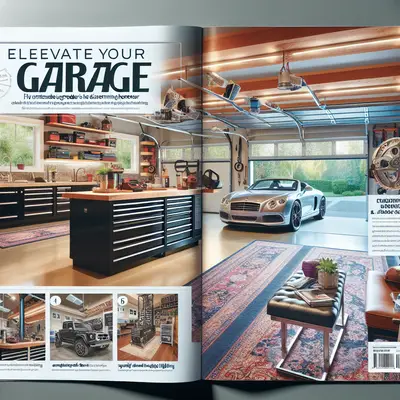
Your garage is often the first and last space you encounter each day—yet for many homes, it remains the least considered. Upgrading it isn’t about spectacle; it’s about orchestrating a space that functions with the quiet confidence of a well-run hotel and the precision of a private workshop. Done properly, even “invisible” improvements can alter the entire rhythm of your home.
For homeowners who demand more than basic fixes, the garage becomes an opportunity: to refine sound, light, climate, and workflow so that every interaction—parking, storing, repairing—feels intentional. The following insights go beyond surface-level upgrades and focus on enhancements that solve real problems with a distinctly elevated finish.
1. Acoustic Refinement: Tuning Out Noise Without Losing Function
A refined garage doesn’t sound like a loading dock. If you can hear every clang, door cycle, and tool drop in your living room or bedroom, your garage is broadcasting more than it should. Strategic acoustic upgrades can dramatically reduce noise without turning the space into a recording studio or compromising practicality. Start with the garage door itself: insulated steel or high-density composite panels dampen exterior and mechanical noise better than hollow doors, while rubber isolation brackets can soften vibration transfer into the framing.
Inside, consider adding acoustic panels—not the cheap foam tiles found in hobby rooms, but high-density mineral wool or fabric-wrapped panels placed on shared walls and the ceiling near the opener. These absorb the high-frequency chatter of tools and the low-frequency hum of motors. Seal gaps around jambs and thresholds with high-quality weatherstripping and a brush or rubber bottom seal; this doesn’t just keep out drafts, it also blocks sound leaks. The result is a garage that feels powerful yet hushed, where machinery does its work without announcing itself to the entire home.
2. Precision Zoning: Creating Distinct “Departments” Within One Bay
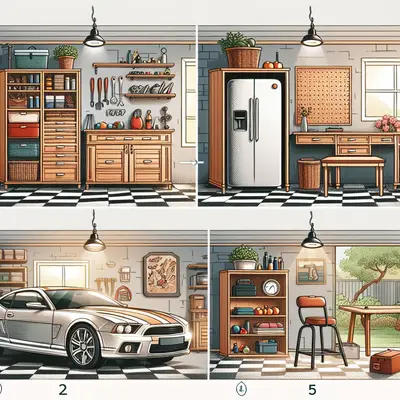
Most garages collapse multiple roles—storage, parking, workshop, staging area—into one chaotic field. High-end upgrades begin with zoning, not decor. Instead of treating the garage as a single room, organize it into distinct, purpose-built “departments” that guide both your movement and your maintenance routines. For example, a clean landing zone near the interior door can serve as a mini-mudroom, with integrated shoe drawers and concealed hooks that keep clutter from migrating indoors.
Adjacent to that, delineate a “mechanical” or “service” wall with dedicated power, lighting, and tool storage tailored to your actual habits. Wall-mounted rail systems, custom pegboard layouts with metal accessories, and shallow-depth cabinetry keep tools visible but orderly—nothing buried, nothing leaning. Seasonal storage can be elevated into a ceiling grid or overhead racks designed with load ratings that exceed your needs, limiting visual noise at eye level. By clearly defining these zones with flooring changes, lighting variations, or even subtle color shifts, you engineer a garage that feels intuitive to use, dramatically reducing the frustration that often leads to deferred repairs and neglected maintenance.
3. Climate Mastery: Controlling Temperature and Humidity for Longevity
A garage that swings from freezing in winter to suffocating in summer quietly damages everything in it: tools rust, finishes crack, lubricants degrade, and electronics age prematurely. Elevated garages treat climate as a critical system, not an afterthought. Start with the envelope: insulated walls, a properly rated insulated door, and a sealed attic or ceiling cavity create a stable shell. Even a modest upgrade from builder-grade fiberglass batts to higher-density insulation, coupled with sealed electrical penetrations, can significantly reduce temperature swings.
For true control, pair a compact, high-efficiency mini-split system with a dedicated dehumidifier or humidity-controlled exhaust fan. This keeps the space within a narrow temperature and moisture band, ideal for both vehicles and equipment. Sensitive items like power tools, paints, and finishes benefit enormously from this stability, as does your garage door hardware—springs, tracks, and rollers last longer when not exposed to extreme fluctuations. The comfort is noticeable, but the real luxury lies in how gracefully your materials age when the environment is no longer working against them.
4. Task-Driven Illumination: Layered Lighting for Work, Storage, and Safety
Lighting is one of the fastest ways to elevate a garage from “utility room” to “precision environment.” Instead of relying on a single, harsh overhead fixture, think in layers: ambient, task, and accent. High-CRI LED fixtures mounted in a grid provide even, shadow-minimized general light so you can read labels, spot leaks, and inspect finishes accurately. Opt for color temperatures in the 4000–4500K range—crisp but not sterile, ideal for both mechanical work and visual inspections.
Then add targeted task lighting: under-cabinet LEDs above workbenches, magnetic rechargeable lights for under-hood work, and directed spots near storage zones. Motion-activated low-level lights near steps, the garage entry door, and tool zones reduce accidents and make late-night entries effortless. Smart controls can introduce scene presets—“Arrival,” “Workshop,” “Clean-Up”—adjusting brightness and zones with a single tap. This level of intentional lighting turns repairs and maintenance into precise, almost ceremonial activities rather than dimly lit chores you’d prefer to rush through.
5. Service-Ready Infrastructure: Built-In Provisions for Future Repairs
The most sophisticated garages are designed not only for today’s needs, but for the next decade of repairs and upgrades. Instead of repeatedly improvising with extension cords and temporary setups, invest in infrastructure that anticipates what you’ll eventually want to do. This might mean adding dedicated, correctly spaced 20-amp circuits along your primary work wall, a 240V outlet for future EV charging or heavy tools, and strategically placed ceiling outlets for openers, air filtration, or retractable cord reels.
Compressed air lines, even in a compact system, can be concealed within walls or neatly routed overhead with quick-connect fittings at key stations, turning tire inflation, dust-blowing, and light pneumatic work into quick, controlled tasks. A floor drain or subtly sloped area paired with a high-quality epoxy or polyaspartic floor coating transforms washing, snow melt, and spill cleanup into clean, contained routines rather than waterlogged frustrations. By thinking in terms of service infrastructure—power, air, drainage, data—you create a garage that welcomes repairs and upgrades rather than resisting them, aligning the space with the standards of a professional shop while remaining visually restrained and residentially appropriate.
Conclusion
A truly elevated garage is not defined by spectacle, but by quiet competence. It is the absence of jarring noise, the ease with which you find the right tool, the comfort of a stable climate, the clarity of excellent light, and the confidence that your space is ready for whatever project or repair arises next. These upgrades don’t merely make the garage look better; they reframe it as a finely tuned extension of the home.
For homeowners who view maintenance as part of a refined lifestyle rather than a burden, investing in these nuanced enhancements turns the garage from a neglected afterthought into one of the most thoughtfully engineered rooms on the property—discreet, capable, and impeccably prepared.
Key Takeaway
The most important thing to remember from this article is that this information can change how you think about Upgrades.