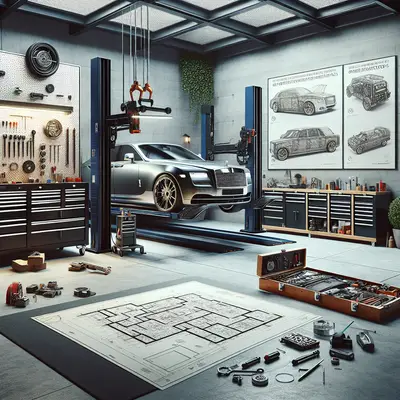
A well‑kept garage is rarely loud about its excellence. It simply works—doors glide without protest, tools sit exactly where your hand expects them, and every surface feels intentional rather than improvised. Repairing a garage at this level is less about frantic fixes and more about quiet, strategic upgrades that prevent future emergencies.
For homeowners who expect their spaces to perform as beautifully as they look, the garage should be no exception. The following repair insights move beyond quick patches and into the realm of thoughtful, enduring solutions—subtle to the eye, but unmistakable in daily use.
1. Treat the Garage Door as a Precision Machine, Not a Heavy Lid
Most homeowners see a garage door as a slab that goes up and down; skilled repair treats it as a calibrated mechanism. Before replacing anything, a premium repair begins with a balance test: disconnect the opener and raise the door manually to check if it holds position at mid‑height. If it slams or drifts, the springs are mis‑tensioned, which accelerates wear on both the opener and the door panels.
A refined repair plan replaces guesswork with measurement—spring wire size, coil count, and door weight are all matched properly rather than “close enough.” Hardware upgrades, such as high‑cycle torsion springs and sealed, heavy‑duty rollers, transform the door from a noisy obligation into a smooth, controlled motion every time you arrive home. The goal isn’t merely to “get it working,” but to ensure every movement feels deliberate, balanced, and reassuringly solid.
2. Upgrade the Track, Don’t Just Lubricate the Noise Away
When a door squeals, rattles, or scrapes, the usual response is a generous blast of lubricant. A more elevated approach begins with alignment, not oil. Over time, tracks can drift out of plumb, fasteners can loosen into subtle misalignment, and the tiniest bend in a track can cause roller chatter that no lubricant will truly fix.
A meticulous repair starts with a full track inspection: measuring reveal gaps, checking vertical and horizontal plumb, tightening lag bolts into solid backing, and replacing any subtly warped sections. Low‑friction, nylon‑coated rollers with precision bearings can be introduced only after the track is corrected, not as a shortcut. Rather than masking the symptom, you eliminate the cause—leaving you with a door that glides quietly because the geometry is right, not because it’s been drowned in spray.
3. Turn the Floor from a Problem Surface into a Repair Asset
Cracked, dusty, or stained concrete is usually treated as a cosmetic frustration, but a premium repair mindset treats the floor as part of the garage’s performance. Hairline cracks, spidering, and flaking (spalling) are early indicators of moisture and age that will eventually compromise both appearance and structural integrity. Addressing them properly means more than filling gaps with an off‑the‑shelf patch compound.
A thoughtful solution begins with diagnosis: Is the cracking due to settlement, poor drainage, or surface wear? From there, a staged repair can include moisture testing, crack chasing (opening and cleaning the crack before repair), and a professional‑grade epoxy or polyaspartic system tailored to your climate and usage. The result is not only a floor that resists stains and impacts, but one that supports rolling tool chests, creepers, and vehicles without catching or crumbling. You move from “don’t look down” to a floor that feels like an intentional, high‑performance surface—one that quietly supports every other repair you make.
4. Engineer Your Storage Around Access, Not Just Capacity
Standard garage “solutions” often aim to maximize how much you can cram into the space. A more refined repair approach asks a better question: How elegantly can you access what you actually use? That shift changes everything—especially when repairing or upgrading existing storage.
Instead of adding more generic shelving, examine how often each item is used and where you naturally stand, park, and walk. Then, repair and reorganize with access in mind: adjustable rail systems for tools you reach daily, ceiling‑mounted racks reserved for seasonal or rarely used items, and shallow, well‑lit shelves that prevent items from disappearing into shadows. Reinforcing wall studs, upgrading anchors, and adding soft‑close hardware to cabinets elevate storage from “makeshift” to architectural. The end result is a space where everything feels purpose‑placed—repairs, projects, and daily routines all become faster and calmer because the garage supports your movements rather than fighting them.
5. Solve Moisture and Air Intrusion Before They Become Structural Problems
Many garage issues are traced back to one subtle culprit: uncontrolled air and moisture. Rusted tools, swollen door frames, flaking walls, and musty odors are symptoms of a deeper problem that a premium repair strategy confronts directly. Instead of endlessly repainting or replacing damaged materials, refined repairs focus on the building envelope.
This means inspecting weatherstripping at the door perimeter, the bottom seal at the threshold, and the often‑ignored stop molding at side and rear entry doors. Cracked seals are replaced with high‑quality, UV‑stable options rather than bargain materials that fatigue quickly. Gaps between framing and masonry are sealed with appropriate backer rod and flexible sealants, not just caulk smeared over the surface. In more demanding climates, adding a quiet, efficient exhaust fan or dehumidifier transforms the environment, protecting stored items and finishes. By stabilizing the air and moisture conditions, you’re not just preserving comfort—you’re extending the lifespan of every repair, coating, and component in the garage.
Conclusion
A truly refined garage doesn’t advertise itself with flashy gadgets or chaotic storage systems; its excellence reveals itself in the way everything works without strain. Repair, in this context, is not an emergency response but a series of deliberate choices: correct alignment before lubrication, precision hardware over generic parts, moisture control before cosmetic fixes.
When you approach garage repairs with this level of intention, the space evolves from a utility zone into a reliable, almost invisible partner in your day. Quiet doors, stable floors, accessible tools, and a controlled environment add up to something more than convenience—they create a garage that feels composed, capable, and worthy of the rest of your home.
Key Takeaway
The most important thing to remember from this article is that this information can change how you think about Repair Solutions.