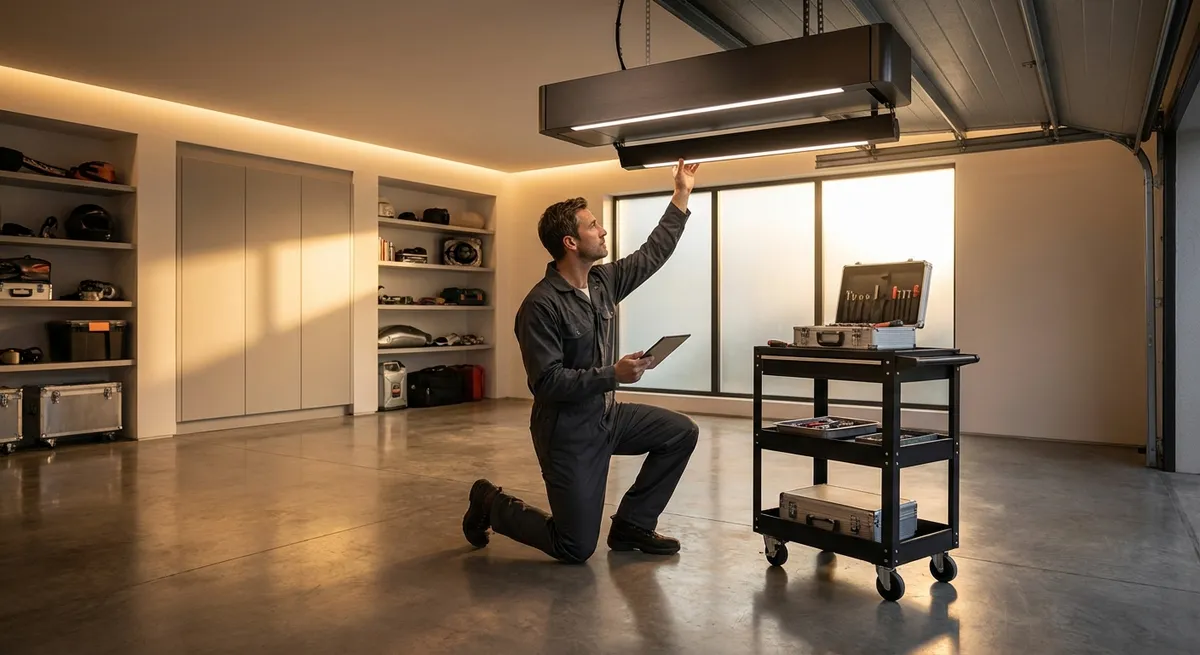
The most refined homes are defined not only by what guests see, but by what they never notice—doors that glide without protest, mechanisms that perform without drama, and a garage that simply works. When a garage system begins to hesitate, shudder, or complain, it disturbs more than convenience; it disrupts the quiet confidence of a well-run home. Repairing that equilibrium calls for more than quick fixes. It requires an intelligent, meticulous approach to every moving part.
This guide explores elevated repair strategies for garage systems—door mechanisms, openers, tracks, and supporting components—designed for homeowners who expect solutions that are both technically correct and discreetly elegant. Within it are five exclusive insights that move beyond basic troubleshooting and into the realm of deliberate, precision repair.
Understanding the Garage as a Mechanical Ecosystem
A garage door system is not a single device; it is an ecosystem of interdependent components. Springs counterbalance the door’s weight, cables transfer that energy, tracks orchestrate smooth travel, rollers translate motion, and the opener becomes the conductor of it all. When even one element is slightly misaligned, the entire system begins to signal its distress through noise, vibration, or inconsistent operation.
Approaching repairs through this ecosystem lens changes how you respond to issues. Instead of addressing only the symptom—such as a loud opener—you trace the disturbance back to its origin. Is the noise from the motor itself, or is the opener compensating for a poorly balanced door? Is a “weak” opener the problem, or are worn springs forcing the motor to perform outside its design parameters?
Sophisticated repair work always starts with an assessment of the whole system: visual inspection of tracks, observation of the door’s movement by hand (with the opener disengaged), listening for irregularities, and testing the balance and travel of the door before touching a tool. This mindset prevents you from over-replacing components and instead refines the garage back to equilibrium.
Exclusive Insight 1: Treat Door Balance as the Diagnostic Starting Point
For discerning homeowners, there is one diagnostic test that should precede almost any garage repair: the balance test. A beautifully functioning garage door should feel nearly weightless when lifted by hand with the opener disconnected; it should stay in place when raised halfway, without drifting up or crashing down.
When the door is out of balance, nearly every other component is forced to compensate. The opener strains, nylon gears wear prematurely, chains and belts begin to chatter, and even perfectly aligned tracks will start to reveal stress. Noise, hesitation, and uneven closing are often downstream effects of this single imbalance.
While adjusting torsion or extension springs is a task best left to a qualified professional due to the extreme stored energy involved, understanding that balance is the system’s foundation allows you to make smarter decisions. If your opener has been replaced more than once, or if a “stronger” opener was recommended to solve performance issues, it is often a sign that the door’s counterbalance has been neglected. A premium repair strategy insists on correcting the workload first, rather than repeatedly upgrading the worker.
Exclusive Insight 2: Elevate Hardware, Not Just Mechanics
Most repair conversations focus on mechanical functionality—will the door open and close reliably? In a refined home, the bar is higher. Hardware should be quiet, visually cohesive, and engineered for longevity under daily use. This is where a repair becomes an upgrade in disguise.
Standard steel rollers with metal bearings, even when lubricated, tend to telegraph vibration into the track and structure. Upgrading to high-quality, sealed-bearing nylon rollers during a repair can dramatically reduce noise and friction, while also prolonging the life of the tracks and opener. Similarly, track fasteners and brackets should be inspected not only for tightness but for the quality of their attachment. Loose lag screws into compromised framing are an invitation to rattling, flexing, and eventual failure.
Door hinges, struts, and reinforcement brackets deserve the same scrutiny. Thicker-gauge, corrosion-resistant hardware that is properly aligned treats every open/close cycle as a stress-managed event rather than a small structural gamble. When a repair call includes a careful hardware review, the result is a door that sounds and feels as though it belongs in a curated, not merely functional, space.
Exclusive Insight 3: Recalibrate, Don’t Just Replace, the Opener
The modern garage door opener is effectively a programmable control system. Yet many repair interventions treat it as a black box to be swapped rather than a device to be tuned. For homes that demand quiet excellence, recalibration is often the most overlooked refinement.
Travel limits (how far the door opens and closes), force settings (how much resistance the opener will tolerate before reversing), and speed settings (on some models) should all be evaluated after any repair involving springs, cables, or door weight. When these settings are left in their factory default state, the opener may be subtly misreading the door’s behavior—closing too hard against the floor, stopping short and leaving light seeping in, or failing to reverse quickly enough when encountering resistance.
Soft-start and soft-stop profiles, available on many contemporary openers, can significantly reduce mechanical impact and extend the life of the entire system when properly configured. A premium repair solution includes not only installing or fixing an opener, but integrating it thoughtfully with the nuanced behavior of your specific door: its weight, size, insulation, and even how it interacts with your garage floor over time.
Exclusive Insight 4: Listen to the Door—Sound as a Diagnostic Tool
The status of a refined garage system can often be heard long before it is visible. Different failure modes have distinct sonic signatures, and learning to recognize them allows you to intervene gracefully, well before a dramatic breakdown.
A low, rhythmic thumping as the door travels often points to flat-spotted or damaged rollers. Sharp, metallic pops when opening might indicate torsion springs binding or cables shifting under misaligned drums. A grinding or rasping tone from the opener can signify worn internal gears, a misadjusted chain, or the motor overworking due to door imbalance.
A sophisticated repair process involves deliberately listening to a full open-and-close cycle with the opener and then repeating it manually with the motor disengaged. Differences between the two experiences reveal much: if the door is smooth by hand but noisy with the opener, the motor drive or mounting is suspect. If both are rough, the problem lies in the door, springs, or tracks. In high-end homes, where subtle mechanical disruptions feel especially intrusive, sound becomes a precise diagnostic tool rather than a tolerated annoyance.
Exclusive Insight 5: Prioritize Safety Systems as a Core Repair, Not an Afterthought
In many garages, safety features are treated as mere compliance—photo eyes cleared, wall button replaced, done. In a home where every detail is curated, safety is not just about meeting the minimum standard; it is about building quiet confidence that the system will protect both people and property.
The photoelectric sensors near the floor should be accurately aimed, firmly mounted, and tested with more than a casual hand wave. A considered repair visit includes cleaning the lenses, checking wiring for degradation, and confirming that the door reverses promptly when the beam is interrupted at various stages of travel. Equally important is the auto-reverse pressure safety: placing a modest, resilient obstruction on the floor and confirming that the door detects resistance and reverses gracefully, not begrudgingly.
Emergency release mechanisms—often ignored until a power outage—should be inspected for ease of operation and clearly understood by the homeowner. In a refined context, safety systems are integrated into the overall experience: reliable, unobtrusive, and never an afterthought. A truly premium repair solution leaves you with a sense not just of restored function, but of restored trust.
When to Insist on Professional Precision
While discerning homeowners often take pride in hands-on stewardship of their homes, the garage system is one area where restraint is a mark of wisdom. High-tension springs, heavy moving panels, and elevated mechanical loads make certain tasks unsuitable for even the most capable DIY enthusiast.
Engage a professional when springs require adjustment or replacement, cables are frayed or off-drum, the door is visibly out of level or twisted, or structural elements (header, track supports, jambs) show signs of distress. The role of the homeowner in a premium repair relationship is not to perform every task, but to recognize subtle early warning signs and to demand a standard of work that respects both the complexity of the system and the quality of the home it serves.
A well-chosen specialist will not simply “get it working again,” but will recalibrate, refine, and future-proof the system. The objective is simple: a garage that once more disappears into the background of daily life, performing with such consistency and quiet precision that you rarely think of it at all.
Conclusion
A garage repair can be either a temporary correction or a carefully orchestrated return to mechanical harmony. For homeowners who value discretion, durability, and quiet excellence, the difference lies in the details: door balance as the first question, hardware as a long-term investment, opener calibration as a craft, sound as a diagnostic language, and safety as a central design principle.
When these elements are addressed with intention, a garage ceases to be the most industrial part of the home and becomes another expression of its overall standard—measured not in spectacle, but in the near-silent assurance that every cycle, every motion, and every closure has been considered with precision.
Sources
- U.S. Consumer Product Safety Commission – Garage Door Safety - Provides official guidance on garage door safety features, including auto-reverse and photoelectric sensors
- International Door Association – Homeowner Garage Door Safety Tips - Offers best practices for inspecting and maintaining garage door systems safely
- Clopay Garage Doors – How to Test Your Garage Door’s Balance - Explains proper methods for checking door balance and why it matters
- LiftMaster – Garage Door Opener Owner’s Manuals & Support - Contains technical documentation on opener adjustments, travel limits, and safety settings
- Cornell University EHS – Machine and Mechanical Safety - Discusses general mechanical and stored-energy hazards relevant to understanding spring and moving-part risks
Key Takeaway
The most important thing to remember from this article is that this information can change how you think about Repair Solutions.