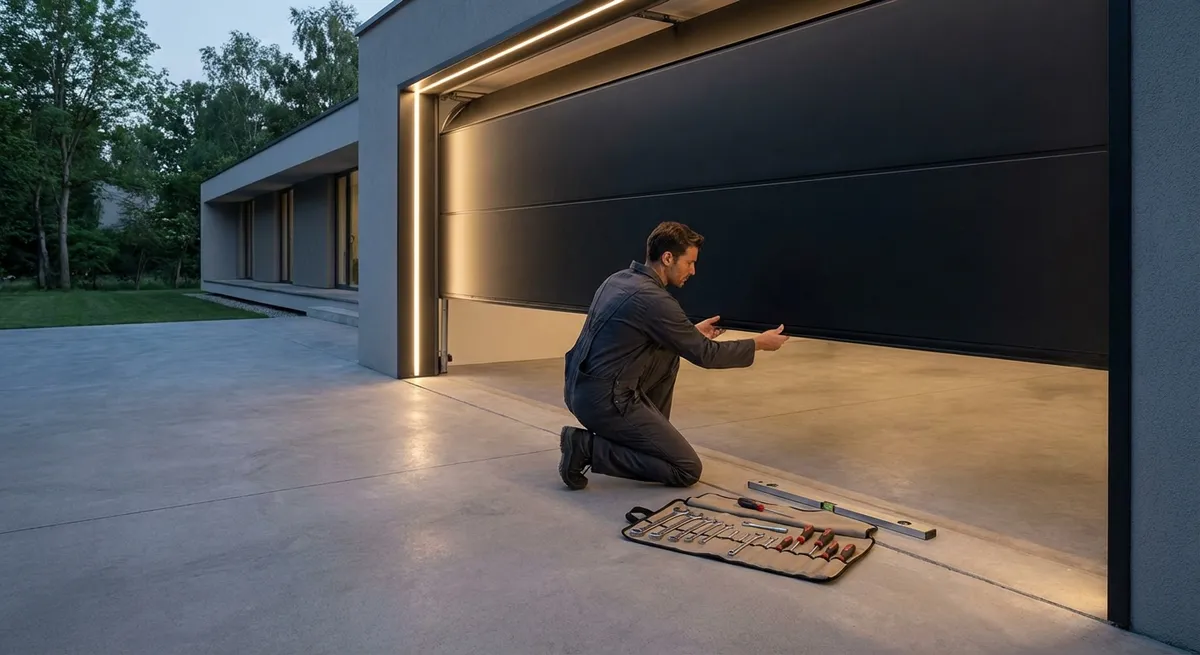
The garage door is often the largest moving element of a home, yet it rarely receives the same considered attention as a kitchen appliance or bespoke fixture. When it fails, the disruption is immediate: a grating screech in the early morning, a door that hesitates halfway, or a sudden refusal to open when you’re already running late. This guide approaches the garage door not as a mere utility, but as a precision system worthy of meticulous care. For homeowners who expect quiet reliability, subtle refinement, and long-term durability, the difference lies in how you understand, maintain, and—when necessary—repair this complex assembly.
Understanding the Garage Door as a Mechanical Ecosystem
A garage door is not a single component; it is an ecosystem of interdependent parts. Torsion or extension springs counterbalance the weight. Cables transfer that force. Tracks guide the door. Rollers and hinges articulate each panel. The opener merely orchestrates the movement; it does not bear the true load. When any one element is neglected, stress quietly accumulates across the system, resulting in noise, misalignment, or sudden failure.
Approaching your door as a system shifts how you respond to issues. A squeak is not just “annoying”; it is information about friction and wear. A door that no longer closes evenly is rarely an opener problem—it is often an indication of track alignment, spring fatigue, or cable stretch. This mindset allows you to intervene early, protect high-value components, and avoid the cascade of secondary damage that follows a single neglected fault.
Insight 1: The Sound Profile of Your Door Is a Diagnostic Tool
Most homeowners treat noise as a nuisance; in reality, it is a sophisticated diagnostic cue. A refined garage door should operate with a low, consistent mechanical hum—no grinding, no sharp clacks, no metallic scraping. Each distinct sound tends to map to a particular issue:
- A high-pitched squeal often indicates dry metal-on-metal contact at hinges or rollers with worn bearings.
- A rhythmic thumping can suggest a flat spot on a roller or a panel that is binding at one point in the track.
- A deep grinding or dragging sound may reveal a misaligned track or debris embedded along the roller path.
- A staccato rattling usually points to loose fasteners in tracks, hinges, or opener mounting brackets.
By listening intentionally, you can pinpoint not just that something is wrong, but where to begin. The key is to establish a baseline. Take one quiet morning, deliberately operate the door, and absorb its sound profile when properly maintained. This mental “reference recording” becomes invaluable in detecting subtle deviations over time.
Insight 2: Precision Spring Care Is the Hidden Guardian of Safety
Springs are the unsung heroes of the garage door system—and the single most critical element for both performance and safety. A well-calibrated torsion spring quietly offsets the weight of the door, allowing it to glide as if nearly weightless. When springs lose tension or become imbalanced, the opener is forced to work beyond its design intent, leading to premature motor wear, stripped gears, and, in extreme cases, failed lifting attempts.
Homeowners should never attempt to adjust torsion springs themselves; the stored energy can be dangerous. However, there are sophisticated, non-invasive ways to evaluate spring performance:
- Perform a balance test: With the opener disengaged (using the emergency release), manually lift the door to the halfway point. A properly balanced door should hover in place with minimal effort. If it falls or rises significantly, the springs may be out of calibration.
- Observe travel consistency: If the door accelerates noticeably near the floor or slows dramatically near the top, spring tension may be uneven or poorly matched to the door weight.
- Inspect for asymmetry: Any visible gap in a torsion spring coil, or a door that hangs lower on one side, signals an urgent need for professional attention.
The most refined solution here is proactive rather than reactive. Instead of waiting for a spring to break, schedule periodic professional evaluations—every 3–5 years for frequently used doors—so tension can be adjusted before failure. This approach preserves both quiet operation and safety, while shielding the opener from chronic overload.
Insight 3: Track Geometry and Roller Quality Define the Door’s “Feel”
Homeowners often obsess over horsepower ratings on openers while ignoring the much more consequential interface between door and track. The geometry and condition of the track—and the quality of the rollers within it—determine whether your door glides with elegance or shudders with protest.
Subtle misalignments of just a few millimeters can translate into jarring motion and noise. Look for these refined indicators:
- Tracks should be plumb and parallel, with even spacing from the door edge. Visually inspect from the inside, standing back and sighting down each track. Any visible inward bowing, twisting, or uneven gap should be corrected.
- The door should not drift laterally during travel. If it appears to “walk” toward one side, roller stems may be binding or tracks may be out of true.
- Nylon or upgraded ball-bearing rollers can dramatically reduce vibration and noise compared with basic rigid plastic or worn metal rollers.
An advanced, homeowner-level refinement is to combine minor track alignment with selective roller upgrades. When a technician is on-site, you can specify premium rollers, confirm secure lag bolts at every bracket, and have the vertical and horizontal tracks tuned as a matched set. The resulting improvement in smoothness and audible refinement is often more noticeable than replacing the opener itself.
Insight 4: Intelligent Opener Configuration Is as Important as the Unit You Choose
Once the door and hardware are in good order, the opener becomes the conductor of a well-tuned system. Many homeowners invest in a new opener, then live with default settings that are neither optimal nor particularly gentle on the hardware. Intelligent configuration yields a quieter, more reliable experience and extends the life of the full assembly.
Consider these nuanced adjustments:
- Travel limits: If the door slams the floor or crushes the top seal against the header, the limit settings are off. Precisely calibrated limits allow the door to seal without excessive force, preserving weatherstripping and reducing structural stress.
- Force settings: Modern openers allow adjustment of the upward and downward force. Set too high, they mask mechanical issues and can create safety concerns. Set thoughtfully, they protect both the door and anything in the path of its travel.
- Speed and soft-start/soft-stop features: Where available, a gentle ramp-up and slowdown at the beginning and end of travel reduce shock loads on the system and noticeably refine the sensory experience of using the door.
- Vibration isolation: Upgraded mounting brackets and rubber isolation pads between the opener and ceiling joists can materially reduce transmitted noise—particularly in homes where living spaces sit directly above the garage.
A premium approach is to treat opener programming as a commissioning step, not an afterthought. After any major repair or door replacement, insist on a full recalibration: travel, force, and safety reversal tests, combined with a short observation period where you and the technician evaluate movement, sound, and responsiveness together.
Insight 5: Environmental Control and Finish Care Extend Structural Integrity
While mechanical parts draw the most attention, the door panels themselves—whether steel, wood, aluminum, or composite—quietly bear the brunt of weather, humidity, and temperature swings. Structural integrity and surface finish influence not just aesthetics, but long-term reliability.
A more sophisticated care strategy considers the following:
- Moisture management: For wood doors, consistent sealing and periodic refinishing prevent warping, swelling, and delamination that can distort panel alignment. Even steel doors benefit from touch-up paint on chips to deter corrosion at edges and seams.
- Thermal behavior: Insulated doors reduce thermal stress on the panels and hardware, especially in climates with extreme seasonal swings. Consistent internal temperature also benefits openers and electronics, lowering failure rates.
- Weatherstripping and thresholds: High-quality bottom seals, side seals, and, where appropriate, threshold seals do more than keep drafts out. They also keep water from pooling at the base of the door, reducing the risk of swelling, rust, and premature wear at the lowest panels and hardware.
- Light infiltration and UV exposure: For doors with windows, UV-resistant glazing and proper caulking help preserve seals and frame components, preventing air and water intrusion that can subtly compromise the structure over time.
The most effective solution is a calm, seasonal ritual: a brief inspection at the change of each major season, combined with targeted cleaning, lubrication of moving parts, seal inspection, and touch-up of any exposed or vulnerable surfaces. This modest investment pays dividends in both appearance and mechanical harmony.
Conclusion
A truly refined garage door experience does not happen by accident. It emerges from an understanding that sound, movement, balance, and finish are all intertwined. When you read the door’s acoustic cues, respect the power and precision of its springs, tune track and roller geometry, configure the opener intelligently, and protect the door’s structure from the elements, you elevate the system from a simple barrier to a quietly reliable, mechanically elegant entrance.
For homes where compromise is unwelcome, this level of attention is not indulgent; it is appropriate. The reward is a door that disappears into the background of daily life—opening and closing with quiet assurance, day after day, season after season.
Sources
- U.S. Consumer Product Safety Commission – Garage Door Safety – Guidance on safe operation, entrapment protection, and maintenance awareness
- International Association of Certified Home Inspectors – Inspecting Garage Doors – Technical overview of springs, balance tests, and common failure points
- Cornell University – Basics of Springs and Stored Energy – Engineering background on how springs work and why improper handling is hazardous
- Clopay Garage Doors – Care and Maintenance – Manufacturer recommendations on lubrication, surface care, and inspection intervals
- LiftMaster – Owner’s Manual & Safety Features Overview – Details on opener force settings, travel limits, and safety reversal system testing
Key Takeaway
The most important thing to remember from this article is that this information can change how you think about Garage Doors.