A truly refined home does not announce itself at the front door; it reveals its standards in the spaces most guests never see. The garage is one of those quiet indicators of taste, discipline, and engineering intent. Done well, it becomes less a storage afterthought and more a controlled environment—protecting vehicles, preserving investments, and extending the design language of the home itself. This is where upgrades shift from cosmetic “nice-to-haves” to deliberate, performance‑driven enhancements.
Designing a Garage Around the Way You Actually Live
The most successful garage upgrades begin with lifestyle, not hardware. Before selecting a single fixture, study how you move through the space over a full week.
Consider where you naturally drop bags, charge devices, park bikes, or stage deliveries. Note how often you enter through the garage instead of the front door. This observational audit becomes the blueprint for tailored upgrades: a dedicated mud-zone cabinet near the home entry, a discreet parcel shelf hidden from the street, or an integrated charging station positioned for daily reach rather than showroom symmetry.
Elevated garages extract every square foot of utility with intention. Ceiling-mounted racks can hold seasonal items while keeping the area directly above vehicle doors completely clear—so nothing shifts or dings a roof when the car moves. Slatwall systems, when installed with a clear logic (gardening on one panel, tools on another, automotive care on a third), create a visual grid that instantly communicates order.
A refined garage never looks accidental. Its upgrades echo the rituals of the people who live with it, not the defaults of a big-box store display.
Precision Lighting That Reveals Flaws Before They Become Failures
Lighting in most garages is an afterthought: a single harsh bulb that hides issues until they become expensive. A premium upgrade approach treats illumination as both an aesthetic and diagnostic tool.
Layer the lighting. Overhead LED panels provide a clean, even base—choose a color temperature in the 4000K–5000K range for crisp visibility without the clinical feel of a workshop. Add targeted task lighting over workbenches, charging stations, and storage walls so labels, fasteners, and finishes are instantly legible. Slim under‑cabinet LEDs can wash the floor near the entry, making it easier to spot leaks, cracks, or debris.
For the vehicle bay, consider narrow-beam side lighting along walls at bumper height. This subtle addition makes it easy to see minor paint imperfections and early rust along lower panels, giving you time to correct issues before they escalate. Motion‑activated fixtures near the garage door and side access points serve as both a safety enhancement and a gentle layer of security.
Premium lighting is not just about lumens; it’s about what the light reveals. A well-lit garage surfaces clues: a faint oil mist near a lift, a subtle track misalignment, or condensation where it doesn’t belong. In a refined home, those clues are read early, not discovered during a failure.
Acoustics and Door Behavior: Engineering a Softer Arrival
In an elevated property, the garage door’s sound becomes part of the home’s acoustic identity. A jarring, rattling open echoes “neglect” more loudly than you might think. Thoughtful upgrades re‑engineer this daily ritual into something nearly silent.
Start with the movement system. Belt‑drive openers tend to operate more quietly than chain‑drive units, and higher-end models pair the motor with vibration isolation mounts that prevent noise from transmitting into the home’s structure. If the door itself is older or uninsulated, upgrading to a modern, insulated steel or composite panel can dramatically dampen road noise and improve thermal stability.
Hardware matters: nylon rollers replace clattering metal ones, and correctly tensioned torsion springs reduce jerky starts and stops. When combined with soft‑start/soft‑stop opener technology, the entire motion of the door feels more controlled, less mechanical drama and more refined choreography.
The subtle luxury here is experiential: your arrival and departure no longer announce themselves to every room facing the driveway. Instead, the door becomes a quiet curtain, rising and falling with the restraint expected in a well‑tuned home.
Environmental Control: Protecting Vehicles, Tools, and Finishes
The garage is often the most thermally volatile room in a house, yet it shelters some of the most valuable and sensitive items: vehicles, batteries, finishes, and precision tools. Premium upgrades approach the garage as a controlled envelope, not a semi‑outdoor shed.
Begin with the boundary surfaces. Insulating the garage door, side walls, and especially the shared wall with the house stabilizes temperatures and reduces load on interior HVAC. Weatherstripping around the door perimeter and a high‑quality bottom seal keep drafts, dust, and pests in check. For attached garages, this also limits vehicle fumes from migrating into living spaces.
Humidity management is equally vital. A well‑sized dehumidifier, set to maintain a consistent range (typically 40–50%), helps protect brake rotors from surface rust, keeps leather interiors from feeling damp, and prevents warping in wood-handled tools or cabinetry. In climates with significant temperature swings, a modest mini‑split heat pump can maintain a comfortable baseline without overspending on energy.
Treat the floor as part of this environmental system. A professionally installed epoxy or polyaspartic coating not only elevates the appearance but creates an easy-to-clean, chemical‑resistant barrier that resists road salt, automotive fluids, and moisture. With the right texture, it also improves traction without looking industrial.
The result is a garage that feels composed in every season—neither drafty nor stifling, but calmly neutral, with conditions suited to the preservation of machines and materials.
Five Exclusive Insights for Homeowners Who Expect More
Beyond the usual advice about insulation and storage, these nuanced upgrades often separate a merely “nice” garage from one that genuinely reflects a sophisticated home:
Engineer the First 6 Feet
Most wear, clutter, and impact occur within six feet of the doors (both vehicle and pedestrian). Prioritize the highest-quality finishes, protection, and organization in this zone: wall guards at door‑edge height, durable floor coatings near tire tracks, and integrated drop zones where clutter naturally lands. This micro‑focus prevents localized chaos from spreading across the space.
Treat Power Management as a Design Element
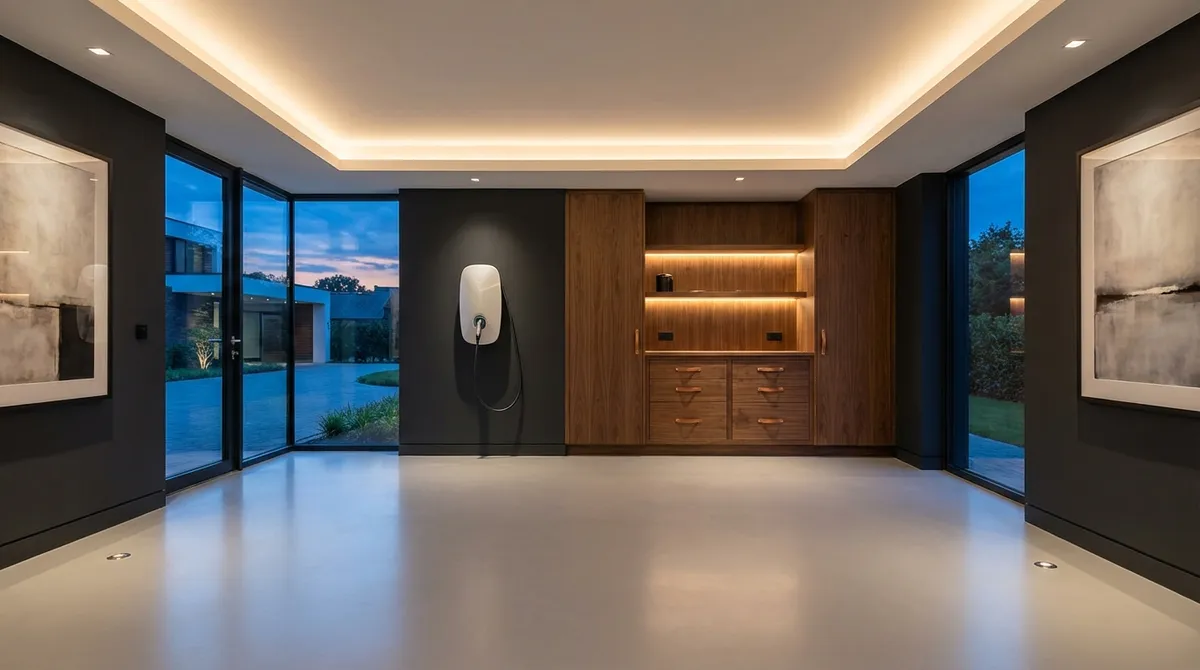
Instead of relying on extension cords and multi‑plugs, install a deliberate power plan: dedicated circuits for EV chargers or compressors, flush-mounted outlets at bench height, and ceiling outlets for tools or reels. A visually minimal but functionally abundant electrical layout allows tools, tech, and lighting to coexist without tangled improvisation.
Use Visual Rhythm to Imply Order—even When You’re Busy
Matching cabinet lines, consistent bin sizes, and carefully aligned wall hooks create a sense of rhythm that suggests order even on a crowded day. When everything has a defined vertical or horizontal alignment, slight disorder reads as temporary instead of chaotic, which subtly encourages you to reset the space more often.
Specify Finishes for Easy Forensics
Choose surfaces that make it simple to see problems early: a light- to mid-tone floor coating that reveals leaks without looking dirty, wall colors that highlight water staining or cracks, and counters that make dropped fasteners easy to spot. These choices turn your garage into a quiet diagnostic instrument, revealing issues before they become repairs.
Integrate Security and Access with Domestic Etiquette
Smart openers, keypad entry, and app‑based controls should be configured not just for convenience but for household behavior. Time-based auto‑close settings, temporary digital keys for service providers, and activity logs transform the garage door into a controlled entry rather than a vulnerability. When tuned well, family members barely notice the system—but you always know who came and went, and when.
Each of these insights is subtle, but together they shift the garage from functional backdrop to deliberate, high‑performance environment. You are not merely upgrading components; you are orchestrating how the space behaves day after day.
Conclusion
A sophisticated garage is less about spectacle and more about precise intention. The upgrades that matter most are rarely the ones that draw attention at first glance; they are the improvements that make daily arrivals smoother, maintenance more proactive, and the entire property feel quietly better managed.
For the discerning homeowner, the garage is not a compromise space. It is a threshold—between public and private, between exterior conditions and interior control. When you refine lighting, acoustics, environmental stability, and behavioral flow, the garage stops apologizing for itself and begins to participate in the home’s overall standard of excellence.
In that transformation, every detail sends a message: nothing here is accidental.
Sources
- U.S. Department of Energy – Insulation and Air Sealing in Garages - Guidance on attached garages, air quality, and energy-smart insulation and sealing practices
- Consumer Reports – How to Choose a Garage Door Opener - Detailed overview of opener types, noise levels, and features for quieter operation
- International Association of Certified Home Inspectors – Garage Inspection Guidelines - Professional insight into common garage issues, safety considerations, and structural elements
- Lighting Research Center – Residential Lighting Basics - Research-backed information on residential lighting quality, color temperature, and task illumination
- Harvard T.H. Chan School of Public Health – Indoor Air Quality - Explains how ventilation, humidity, and contaminants affect health in enclosed spaces, including attached garages
Key Takeaway
The most important thing to remember from this article is that this information can change how you think about Upgrades.