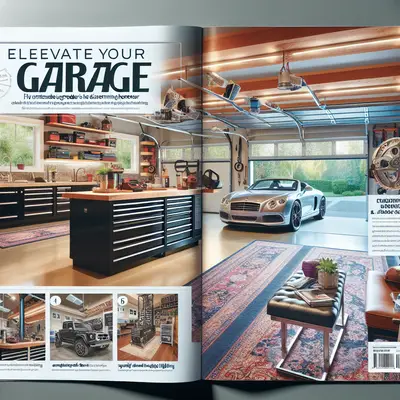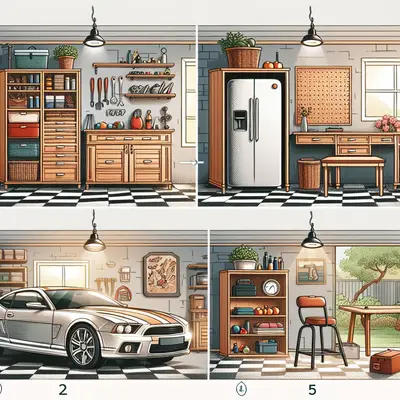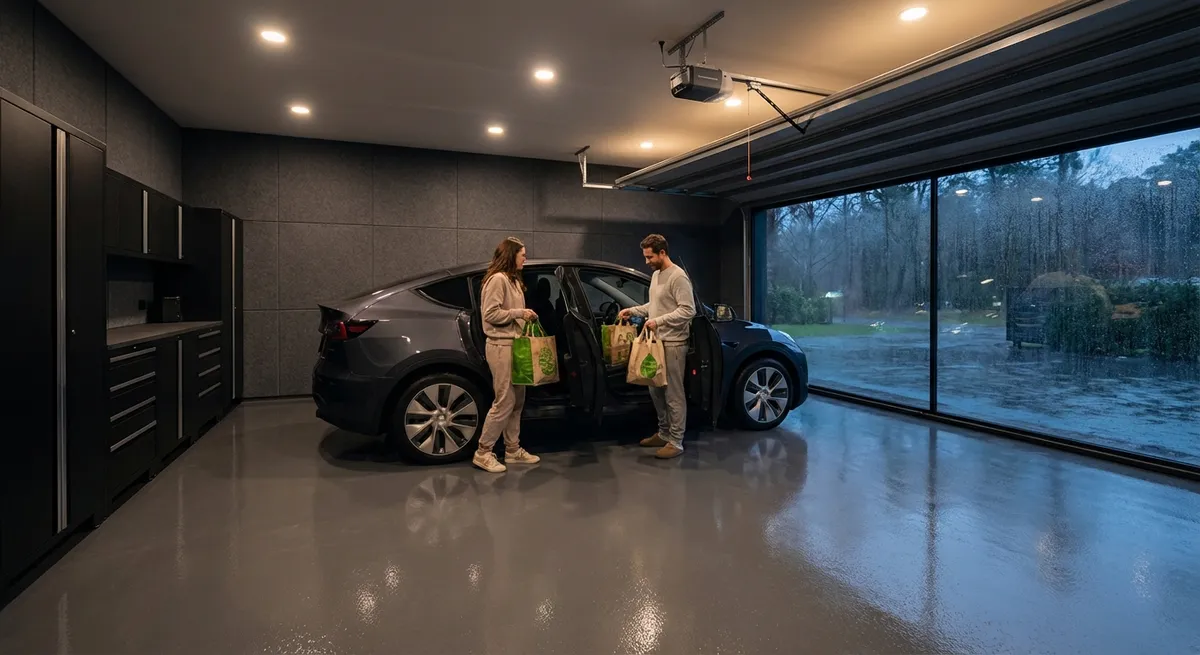
A garage is rarely the centerpiece of a home tour, yet it quietly dictates much of a household’s comfort, security, and efficiency. When thoughtfully upgraded, this ostensibly utilitarian space evolves into a finely tuned extension of the home—calm, composed, and remarkably capable. Rather than chasing flashy overhauls, discerning homeowners are now favoring precise, high‑impact refinements that address noise, climate, safety, and longevity in ways that feel almost invisible…until they are missed.
This guide explores a suite of refined upgrades and five exclusive insights designed for homeowners who expect their garage to function with the same poise and reliability as the rest of their residence.
Re‑Thinking the Garage as a Controlled Environment
Most garages are treated as semi-outdoor spaces, yet they often sit directly beneath bedrooms, adjacent to family rooms, or serve as the primary entry to the home. Treating the garage as a controlled environment—rather than a concrete afterthought—reshapes how you prioritize upgrades.
Begin with the building envelope. Adding closed-cell spray foam or high-density fiberglass insulation to exterior walls and the ceiling above the garage can dramatically improve temperature stability. Paired with an insulated, properly weather‑sealed garage door, the space holds more consistent temperatures year-round, easing the burden on adjacent rooms and HVAC systems. For homes with attached garages, a well-sealed common wall and fire-rated, self-closing door enhance both safety and energy performance.
Ventilation deserves equal consideration. A quiet, humidity-sensing exhaust fan can mitigate moisture buildup from snowmelt, wet vehicles, and stored items. For regions with hot summers, a thermostatically controlled, low‑sone fan or ducted mini‑split system can transform the garage from an oppressive heat trap into a usable extension of the home’s functional space. The result is a garage that protects vehicles, tools, and finishes just as a conditioned interior room would.
The Acoustics of Movement: Elevating Door and Opener Performance
Garage door motion is one of the most frequent mechanical events in a home—yet it is often the loudest and least refined. Thoughtful upgrades can turn that daily clatter into a near-silent, composed movement that feels commensurate with a premium residence.
Modern belt-drive and direct-drive openers, especially those with DC motors and soft-start/soft-stop technology, dramatically reduce vibration and noise. When paired with nylon rollers, properly adjusted torsion springs, and reinforced mounting brackets, the entire door system becomes quieter and smoother. This is particularly important for garages located beneath sleeping areas or adjacent to living spaces where early-morning or late-night use can disturb occupants.
Consider hardware as part of the acoustic ecosystem. Heavier-gauge tracks, vibration-isolating mounting pads, and well-lubricated hinges and rollers all contribute to a quieter, more stable operation. With modest investment and professional tuning, the once-jarring sound of a garage door in motion can be reduced to a subdued mechanical whisper—precisely the kind of refinement that discerning homeowners notice over time, not in a single dramatic reveal.
Surfaces with Intent: Floors, Lighting, and Storage that Actually Work
The garage floor sets the tone for how the rest of the space is perceived. A stained, cracked slab telegraphs neglect, while a thoughtfully treated surface conveys order and care. High-solids epoxy systems or polyaspartic coatings, properly installed after moisture testing and surface preparation, offer chemical resistance, easier cleaning, and a subtle reflective sheen that improves overall brightness. For climates with significant freeze-thaw cycles or moisture, slip-resistant additives can be integrated without sacrificing visual refinement.
Lighting should be approached as intentionally as in a kitchen or studio. Replace a single bare bulb with high-CRI LED fixtures that offer even, shadow-minimizing illumination across the entire space. Layer task lighting over workbenches and key storage zones to create defined, usable areas rather than a diffuse glow. The combination of a reflective floor and crisp, color-accurate lighting transforms the garage into an environment where inspections, repairs, and detailing can be performed with precision.
Storage, too, benefits from disciplined planning. Wall-mounted, rail-based systems free floor space while accommodating seasonal adjustments. Enclosed cabinets for chemicals and solvents protect both children and finishes, while open shelving for frequently used items accelerates access. A narrow run of built-in cabinetry along a side wall—carefully dimensioned to allow vehicle doors to open without impact—can reconcile aesthetics and practicality in a way that freestanding units rarely manage.
Intelligent Security and Access Without Visual Noise
Security in the garage should be robust yet discreet. Since the garage often offers a direct route into the home, its vulnerabilities must be addressed with the same rigor as the front door—but without cluttering the environment with obvious hardware or intrusive devices.
Contemporary smart openers provide rolling-code encryption, automatic closing options, and remote monitoring without requiring a visible proliferation of keypads and locks. Many systems allow you to check door status, set temporary access for service providers, and receive alerts if the door remains open beyond a set time—all from a smartphone. When thoughtfully installed, the technology recedes into the background, providing assurance without spectacle.
Attention to physical security details reinforces this digital backbone. Reinforced door jambs, high-quality deadbolts on the connecting door to the home, tamper-resistant hinges, and proper strike plates all narrow the points of failure. Frosted or laminated glass in any garage windows preserves natural light while limiting visibility into the space and improving resilience. The objective is not to turn the garage into a fortress, but into a quietly secure threshold that aligns with the rest of the home’s expectations for privacy and protection.
Five Exclusive Insights for Homeowners Facing Garage Issues
For homeowners already contending with garage problems—persistent drafts, noise, uneven doors, or chronic clutter—these five insights offer a more strategic path forward than piecemeal fixes:
- Most “door problems” begin with the structure, not the hardware.
Misaligned tracks, doors that won’t seal, and recurring opener strain often trace back to framing that has shifted, a header that has sagged, or a slab that has settled. Before investing in premium openers or new panels, have a professional evaluate the opening itself—especially in older homes or those with visible cracks near the garage. Correcting subtle structural issues can transform the performance of even mid-range hardware.
- Thermal and acoustic comfort share the same upgrades.
If your garage is uncomfortably hot, cold, or noisy, many of the remedies overlap: insulated doors, proper weatherstripping, sealed penetrations, and insulated ceilings above the garage. Addressing these elements as a unified envelope project, rather than as isolated complaints, yields a measurable improvement in both sound transmission and temperature control that extends into adjacent rooms.
- Floor coatings fail more from preparation than from product.
Homeowners often blame the brand when coatings peel, hot-tire lift appears, or stains re-emerge. In reality, inadequate etching, grinding, moisture testing, or crack repair is usually the culprit. If your existing coating is failing, a professional re-prep with mechanical grinding and moisture mitigation, followed by a high-solids epoxy or polyaspartic system, will dramatically extend service life and appearance.
- Noise is often cumulative—and solvable in layers.
A “loud garage” is rarely the result of a single offending component. Opener vibration, metal rollers, loose fasteners, uninsulated doors, hollow-core connecting doors, and hard reflective surfaces all combine into a harsh acoustic environment. Addressing even three elements—such as upgrading to a belt-drive opener, installing nylon rollers, and adding insulation to the door—can reduce perceived noise more than replacing the opener alone.
- Clutter is a design problem, not a discipline failure.
Homeowners frequently blame themselves for disordered garages, yet many spaces are simply not designed for the volume and variety of what they must hold. If you are constantly moving items to access others or cannot park comfortably inside, it signals a layout issue. A zoning approach—vehicle zone, seasonal storage, tools/work area, household overflow—paired with dimensioned wall storage and overhead racks, typically resolves what years of “decluttering” sessions could not.
These insights encourage you to see garage upgrades not as isolated transactions, but as components of a cohesive performance strategy that honors both the architecture and your daily rhythms.
Conclusion
An upgraded garage need not announce itself with dramatic embellishment. The most satisfying transformations tend to be the ones you feel before you see: quieter operation at dawn, a stable temperature on sweltering afternoons, a clean and luminous floor underfoot, tools and equipment precisely where you expect them, and a subtle but steadfast sense of security every time the door closes.
By reimagining the garage as a refined, controlled environment—with measured attention to structure, acoustics, surfaces, storage, and access—you elevate a purely functional space into a quiet partner in everyday living. The result is not merely a better garage; it is a more composed home.
Sources
- U.S. Department of Energy – Insulation in Residential Buildings – Guidance on insulation types, installation, and energy performance in residential spaces, including attached garages
- International Association of Certified Home Inspectors – Attached Garage Fire Hazards – Details on safety, fire separation, and best practices for the interface between garages and living spaces
- LiftMaster – Garage Door Opener Technology Overview – Information on modern opener technologies, smart features, and noise-reducing designs
- Sherwin-Williams – Concrete and Garage Floor Coatings – Technical insights on surface preparation, coating systems, and performance considerations for garage floors
- U.S. Fire Administration – Residential Garage Fires – Federal analysis of garage fire risks and recommended mitigation strategies for homeowners
Key Takeaway
The most important thing to remember from this article is that this information can change how you think about Upgrades.