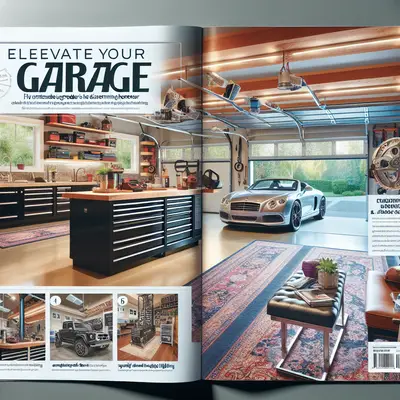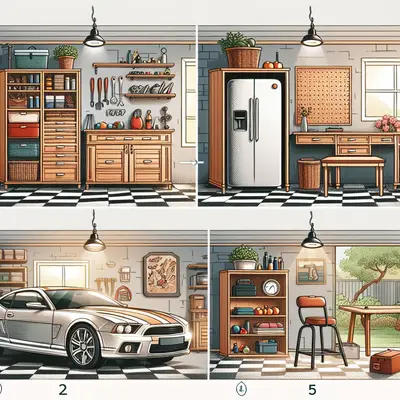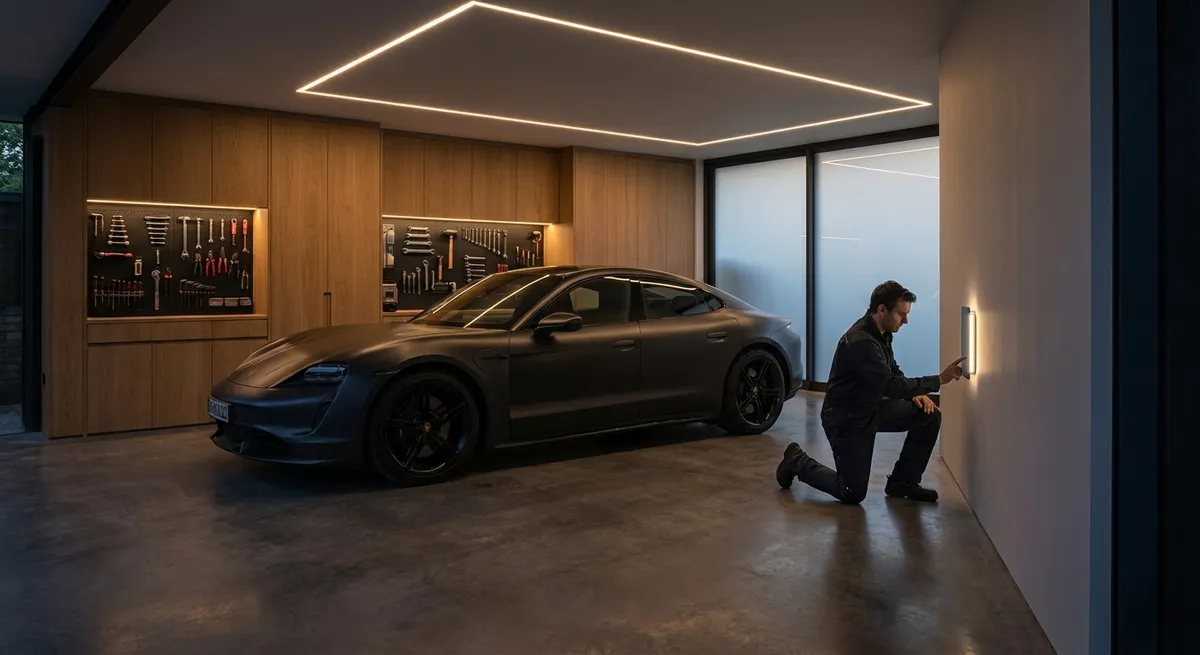
For discerning homeowners, the garage is no longer a forgotten utility zone—it is an extension of the home’s architecture, performance, and quiet efficiency. Yet most upgrades are marketed as dramatic “before and after” spectacles, rather than as carefully engineered refinements that simply work better, last longer, and demand less of your attention.
This guide explores a more elevated approach. Instead of gimmicks and impulsive add-ons, we focus on five exclusive insights that treat the garage as a precision system: acoustically calmer, mechanically sharper, thermally stable, and visually coherent with the rest of your home.
Re‑Calibrating the Garage as a Performance System
Before choosing any upgrades, it helps to reframe the garage not as a room, but as a performance environment: a controlled interface between the outside world and the home’s private interior.
A garage influences more than where you park. It affects energy efficiency, sound transmission into living spaces, air quality near entry doors, even how gracefully you arrive and depart each day. A well-upgraded garage doesn’t announce itself—it simply removes friction: fewer jarring noises, fewer temperature swings, fewer minor failures that chip away at a sense of quality.
This systems perspective changes the priority list. Instead of starting with decorative cabinetry or floor decals, you begin with structural, mechanical, and thermal fundamentals. Reinforced framing, precision-balanced doors, high-quality seals, and smart yet unobtrusive control systems create a platform on which every other upgrade performs better. The ultimate luxury is reliability that feels almost invisible.
Insight 1: Treat the Garage Door as a Moving Facade
Most homeowners think of the garage door as a single component, when in reality it is a moving facade with multiple subsystems—panels, tracks, springs, bearings, hinges, seals, and controls—all of which must work in elegant coordination.
Upgrading the door itself is only the beginning. The true refinement lies in:
- Panel construction: Opt for insulated, steel-backed or composite-backed panels rather than hollow, single-layer doors. They resist warping, quiet vibration, and improve thermal performance.
- Precision hardware: Ball-bearing rollers, heavy-gauge tracks, and properly sized torsion springs don’t just feel smoother—they drastically reduce strain on the opener, extending its life and reducing maintenance.
- Balanced motion: A properly balanced door should remain in place when partially open, not slam shut or shoot upward. This balance is the difference between effortless daily use and a system that silently grinds itself toward failure.
- Architectural coherence: Upgraded doors should align with the home’s design language—panel lines that mirror window mullions, finishes that harmonize with trim, and hardware that feels considered rather than generic.
When the door is treated with the same care as an entry facade or custom millwork, it stops feeling like a utility piece and begins to read as part of the home’s architecture—quiet, weighty, and deliberate.
Insight 2: Engineer Silence, Not Just Strength
Most upgrade conversations focus on durability and security; fewer consider acoustic comfort. Yet for homes with adjacent bedrooms, offices, or living spaces, the garage can be the primary source of disruptive noise.
Achieving a quieter, more “civilized” garage involves layering small engineering decisions:
- Opener technology: Belt-drive and direct-drive openers run significantly quieter than traditional chain-drive models. Look for variable-speed operation and soft-start/soft-stop features that avoid abrupt jerks.
- Isolated vibration paths: Anti-vibration mounting brackets and rubber isolation pads between the opener and ceiling framing prevent noise from traveling through the structure and echoing into the home.
- Composite or nylon rollers: Swapping metal rollers for high-quality nylon or composite versions can noticeably reduce harsh rolling noise along the tracks.
- Strategic insulation: Insulated doors and properly insulated common walls (garage-to-house) not only stabilize temperature but also dampen sound, limiting both inbound and outbound noise.
- Seal refinement: Upgraded bottom seals and perimeter weatherstripping prevent metal-to-concrete slap and rattling, cutting down on subtle but persistent sounds.
The combined effect is a garage that opens and closes with the muted confidence of a luxury automobile door—measured, smooth, and free from mechanical drama.
Insight 3: Elevate Environmental Control Beyond “Draft Fixes”
Most garage upgrades treat drafts and temperature swings as annoyances to be patched. A more refined approach is to treat the garage as a buffer zone whose climate performance affects the entire home envelope.
Key strategic upgrades include:
- High-performance weather seals: Premium bottom seals, side and top perimeter seals, and threshold systems that create a cleaner, more continuous barrier against air, water, and pests.
- Insulated interfaces, not just insulated walls: The door between the garage and the home should be exterior-grade, weather-stripped, and, where appropriate, self-closing. This improves both energy efficiency and indoor air protection from exhaust and particulates.
- Smart ventilation: Rather than leaving a window cracked or running a loud fan indefinitely, consider humidity- and CO/CO₂-sensing exhaust fans or quiet, timer-controlled systems that purge the space after vehicle use.
- Floor and slab considerations: High-quality, properly prepared coatings or sealers can reduce dusting from bare concrete, limit moisture migration, and make the space easier to clean—improving both durability and indoor air comfort.
Viewed this way, thermal and environmental control upgrades aren’t just about comfort while you’re in the garage; they are about protecting adjacent rooms, finishes, and even the mechanical systems that draw air from nearby spaces.
Insight 4: Design Storage as Infrastructure, Not Furniture
Typical garage storage upgrades focus on standalone cabinets and racks that often feel visually and functionally disconnected. A more elevated route is to treat storage as part of the garage’s permanent infrastructure.
This mindset leads to upgrades that feel integrated rather than merely placed:
- Wall systems that respect structure: Track or slatwall systems anchored into studs, designed to distribute loads intelligently, accommodate heavy items, and minimize fastener fatigue over time.
- Ceiling storage that considers forces and clearances: Overhead racks engineered for the specific joist layout and load capacity, with careful attention to door travel arcs, vehicle roof height, and utility runs (sprinkler lines, low-voltage cabling, or ductwork).
- Zoned storage: Tools and supplies positioned by frequency and type of use—quick-access zones near the primary entry, seasonal storage toward the perimeter, and heavier loads lower and closer to structural supports.
- Material and finish harmony: Cabinetry finishes, hardware, and even fasteners selected to resist corrosion, withstand temperature swings, and visually complement the door, floor, and wall treatments rather than clash with them.
By upgrading storage as infrastructure, you essentially “build in” order. The garage becomes legible at a glance, which is a subtle but powerful form of everyday luxury.
Insight 5: Integrate Smart Controls Without Visual Clutter
The smartest garage upgrades are rarely the most visible. A premium experience favors discreet intelligence over gadgetry that dominates the space or introduces complexity without real value.
Consider a quiet layer of integrated control:
- Consolidated control points: Rather than multiple mismatched remotes and wall buttons, opt for a centralized, cleanly mounted control interface that manages the opener, lighting, and, where applicable, ventilation.
- Geofenced and app-based access: Quality smart openers can detect your approach and open automatically within a defined range, then confirm closure after departure—minimizing both visual keypads and the anxiety of wondering if you left the door open.
- Soft, layered lighting: Motion-activated, high-CRI LED lighting that ramps on gently and is zoned—task lighting over benches, vehicle bays, and storage—so the space is fully usable at night without harsh, flat illumination.
- Discreet monitoring: Integrated camera or sensor systems that blend into existing fixtures, providing security and status alerts without turning the garage into a visible surveillance hub.
- Fail‑gracefully design: Manual release mechanisms, battery backups, and clear, intuitive override options ensure that even when power or connectivity fails, the system remains functional without drama.
This approach turns the garage into a quietly intelligent gateway—responsive, secure, and visually composed, rather than a tangle of gadgets vying for attention.
Conclusion
A truly refined garage upgrade is not defined by a single dramatic feature, but by the cumulative effect of disciplined decisions: a door that moves like a precision mechanism, hardware that feels over-specified rather than barely adequate, storage that reads as architecture instead of clutter, and controls that anticipate your needs without demanding your attention.
When you treat the garage as a performance system—mechanical, acoustic, thermal, and aesthetic—all of your investments work in concert. The result is not a showpiece, but something more enduring: a space that quietly reflects the same level of care, engineering, and composure as the rest of your home.
Sources
- U.S. Department of Energy – Insulation in Your Home – Guidance on insulation strategies that inform thermal upgrades and envelope decisions for attached garages
- International Association of Certified Home Inspectors – Garage Inspection Guidelines – Professional standards and safety considerations for garage doors, openers, and structural components
- Consumer Product Safety Commission – Garage Door Safety – Official recommendations on garage door and opener safety features, balancing, and maintenance
- LiftMaster (Chamberlain Group) – Choosing a Garage Door Opener – Manufacturer insight into drive types, noise levels, and smart opener capabilities
- University of Minnesota – Ventilation for Homes – Technical overview of residential ventilation strategies, relevant to designing smarter, healthier garage exhaust solutions
Key Takeaway
The most important thing to remember from this article is that this information can change how you think about Upgrades.