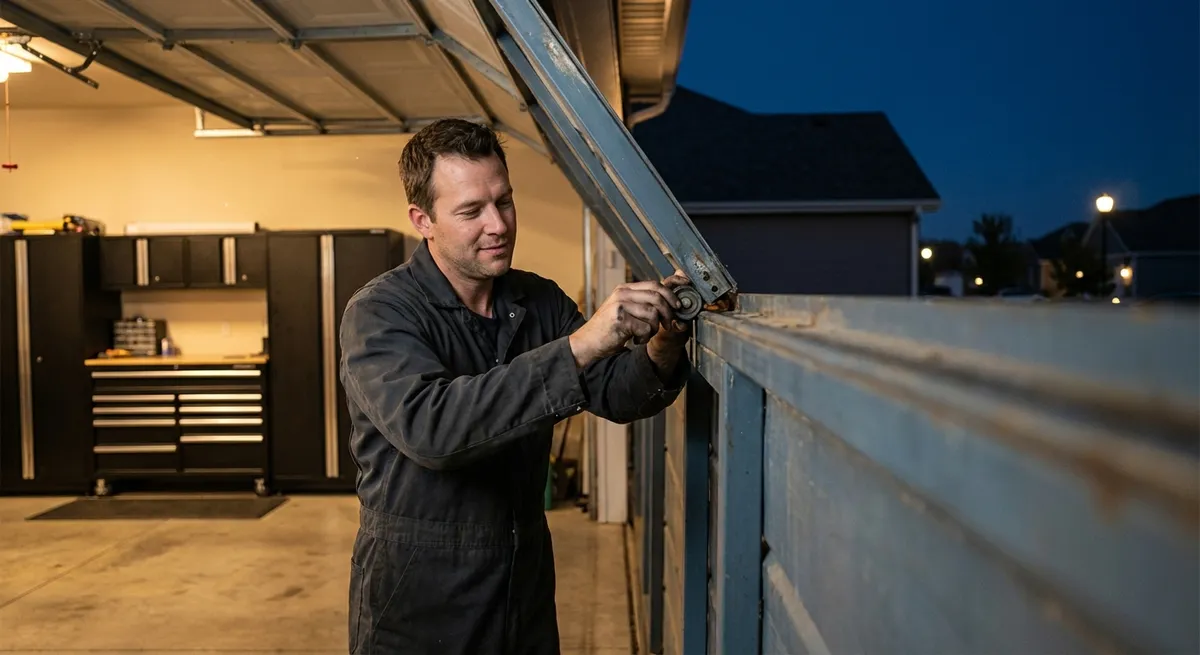
Many homes advertise their value at the front door. The most discerning ones protect it at the garage. When your garage system falters—whether through a hesitant opener, a door that shudders instead of glides, or a floor beginning to telegraph cracks—it’s not merely an inconvenience. It’s a subtle erosion of reliability, safety, and daily ease. Repair, executed thoughtfully, restores something deeper than function: it restores confidence.
This guide steps past generic “quick fixes” and into a more refined, strategic approach to garage repair—one that respects the architecture of your home, your time, and your standards.
Understanding the Garage as a System, Not a Collection of Parts
Most repair missteps begin with a narrow focus on a single failing component: a broken spring, a misaligned track, a noisy roller. Sophisticated repair starts by acknowledging the garage as an integrated system of mechanical, structural, electrical, and safety elements.
A door that hesitates may not be “weak”; it may be compensating for misbalanced springs. A strained opener may be performing the thankless task of dragging a misaligned door through bent tracks. Hairline cracks in a concrete slab could be signaling drainage issues, not just a need for patching. By reading these relationships instead of isolating parts, you avoid “bandage repairs” that solve the symptom while quietly accelerating underlying wear.
This systems view also shapes repair priorities. Addressing balance, track geometry, and structural integrity first often reduces the load on the opener and hardware, extending their life before you even replace a single component. The result is a quieter, more composed door that behaves like a single, well‑orchestrated mechanism—rather than a set of competing parts.
Exclusive Insight 1: Treat Door Balance as the Foundation of Every Repair
Door balance is the unsung metric that separates refined repair from routine service. A correctly balanced door, when disconnected from the opener, should stay in place when lifted halfway and require minimal force to raise or lower. Anything else is not a quirk; it’s a warning.
An imbalanced door forces the opener to do more than it was designed to do, quietly shortening the life of gears, belts, and motors. It also strains hinges and rollers, encouraging uneven wear and track misalignment. Worse, a severe imbalance can create safety risks, particularly in the event of a spring failure.
For homeowners, insisting that any repair visit includes a complete balance check is a subtle but powerful upgrade in standards. This typically involves assessing spring tension, confirming proper cable routing, and verifying that the door’s weight is appropriate for its hardware. Once balance is restored, familiar irritations—noisy operation, jerky motion, premature opener failures—often recede without the need for extensive component replacement.
Exclusive Insight 2: Specify Components for Silence, Not Just Survival
Most garages can be made operational. Far fewer are intentionally engineered for quiet, refined operation over years, not months. This is where the choice of components—including some often overlooked details—becomes decisive.
Upgrading from standard steel rollers to high‑quality, sealed-bearing nylon rollers transforms the acoustic character of the door, replacing metallic scraping with a muted, controlled glide. Reinforced, properly sized hinges with thicker gauge steel reduce flex and wobble at panel joints, which not only improves durability but also creates a more composed movement profile.
Even fasteners matter. Properly torqued, corrosion‑resistant hardware minimizes micro‑movement and vibration at attachment points. When combined with a belt‑drive or direct‑drive opener—preferably with soft‑start and soft‑stop features—the result is an experience that feels curated rather than simply functional. Repairs that specify this level of component quality don’t just extend service life; they redefine the character of every open and close cycle.
Exclusive Insight 3: Diagnose Noise as a Symptom, Not an Annoyance
Noise in the garage is rarely “just noise.” In a refined repair mindset, every sound carries diagnostic information. A grinding tone may signal worn rollers or track damage. Rhythmic ticking can indicate a loose hinge or fastener. A harsh, sudden clunk often traces back to misalignment or a failing torsion spring.
The disciplined approach is to treat each new sound as a data point. Rather than simply lubricating everything in sight, a careful visual and tactile inspection should accompany any noise complaint. Look for shiny wear lines on tracks, fine metal dust near hinges, or uneven gaps around the door perimeter. Each of these clues points to stresses that, left unaddressed, will eventually translate into mechanical failure.
Modern openers with vibration control and quieter motors are valuable, but they should be considered the final act—not the opening move. Install them on a noisy, neglected door and you’ve merely masked the soundtrack of ongoing wear. Addressing the structural and mechanical causes of noise first yields a quieter, safer, and more durable system—before you even touch the opener.
Exclusive Insight 4: Elevate Safety Features from “Required” to “Non‑Negotiable”
In many homes, safety features are treated as box‑checking formalities. For a more elevated standard, they become the central criteria against which any repair is judged. This is not overcautious; the forces involved in a moving garage door can be significant, especially with heavier, insulated doors.
Photoelectric safety sensors should be perfectly aligned, securely mounted, and tested regularly—not crooked, taped in place, or bypassed for convenience. Auto‑reverse pressure sensitivity should be calibrated to respond decisively if the door encounters even modest resistance. Emergency release mechanisms must be functional and accessible, particularly in homes where the garage is a primary point of entry.
When evaluating repair solutions, prioritize technicians and products that clearly conform to current safety standards and manufacturer specifications. A correctly balanced, safety‑verified door isn’t simply compliant—it feels different in use. It moves with assurance, stops with intention, and earns trust every time it operates, especially when children, guests, or vehicles are nearby.
Exclusive Insight 5: Include the Floor and Envelope in Your Repair Strategy
Many repair conversations focus on what hangs and moves. The understated reality is that the surfaces under and around the door—concrete, thresholds, weather seals, and surrounding structure—play an equally critical role in performance and longevity.
Fine cracks or settling in the slab can create uneven contact lines that prevent a complete seal at the bottom of the door. This encourages moisture intrusion, which in turn accelerates corrosion on metal components, encourages mold on stored items, and undermines overall environmental control. Addressing small voids with high‑quality concrete patching or self‑leveling compounds can restore a clean, consistent seal plane.
Similarly, premium weatherstripping and bottom seals—not the thinnest options available, but durable, UV‑resistant, properly sized materials—can significantly improve insulation, cleanliness, and even noise control. In climates with pronounced temperature swings, attention to air sealing around the door frame and side jambs can meaningfully reduce heat loss or gain, protecting both the garage and any living spaces adjoining it. Thoughtful repair looks beyond the hardware and considers the entire envelope as a single protective system.
When to Repair, When to Strategically Replace
A refined approach does not insist on repair at all costs. There is a point at which replacing a door or opener is the more rational, elegant choice—not for novelty’s sake, but for performance, safety, and efficiency.
Repeated spring failures, visibly fatigued panels, pervasive rust, or a door lacking key modern safety features (such as mandated photo eyes) can justify full replacement, especially for older systems. Likewise, an opener without rolling‑code security, reliable auto‑reverse, or adequate motor capacity may be better replaced than endlessly repaired, particularly when adding features such as battery backup or smart-home integration is desirable.
The decision point is not purely financial. It includes noise profile, safety standards, security, energy performance, and how gracefully the system integrates into your daily life. A well‑advised homeowner selects replacement not as an admission of failure, but as a measured upgrade to a more capable, more composed system.
Conclusion
A garage that simply “works” is ordinary. A garage that operates with quiet certainty, precise movement, and understated safety every day is the result of intentional choices—about balance, components, diagnostics, safety, and even the floor beneath your feet.
Repair, approached at this level, is not about patching problems as they appear. It is about curating a system that aligns with the rest of your home: reliable, discreet, and confidently capable. When you insist on this standard, every open and close becomes less a utilitarian moment and more a quiet reassurance that the unseen parts of your home are as carefully considered as the visible ones.
Sources
- U.S. Consumer Product Safety Commission – Garage Door Safety – Official guidance on safety standards, photoelectric sensors, and injury prevention
- International Association of Certified Home Inspectors – Garage Door Inspections – Detailed overview of door balance, hardware, and safety considerations used by professional inspectors
- Clopay Garage Doors – Garage Door Balance and Operation – Manufacturer recommendations on testing and understanding proper door balance
- LiftMaster – Safety Reversal System Information – Explanation of modern opener safety features and proper auto‑reverse function
- Portland Cement Association – Concrete Slab Maintenance – Technical guidance on assessing and repairing concrete cracks and surface defects
Key Takeaway
The most important thing to remember from this article is that this information can change how you think about Repair Solutions.