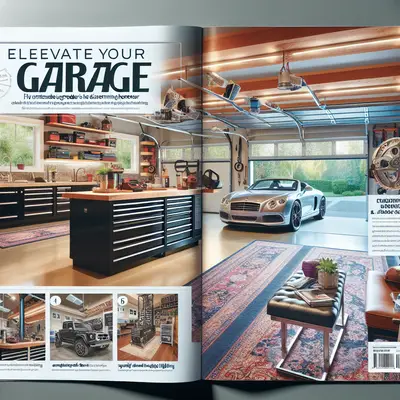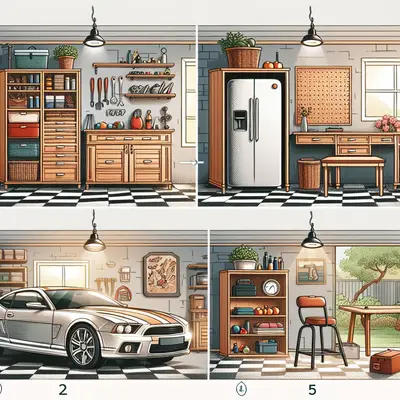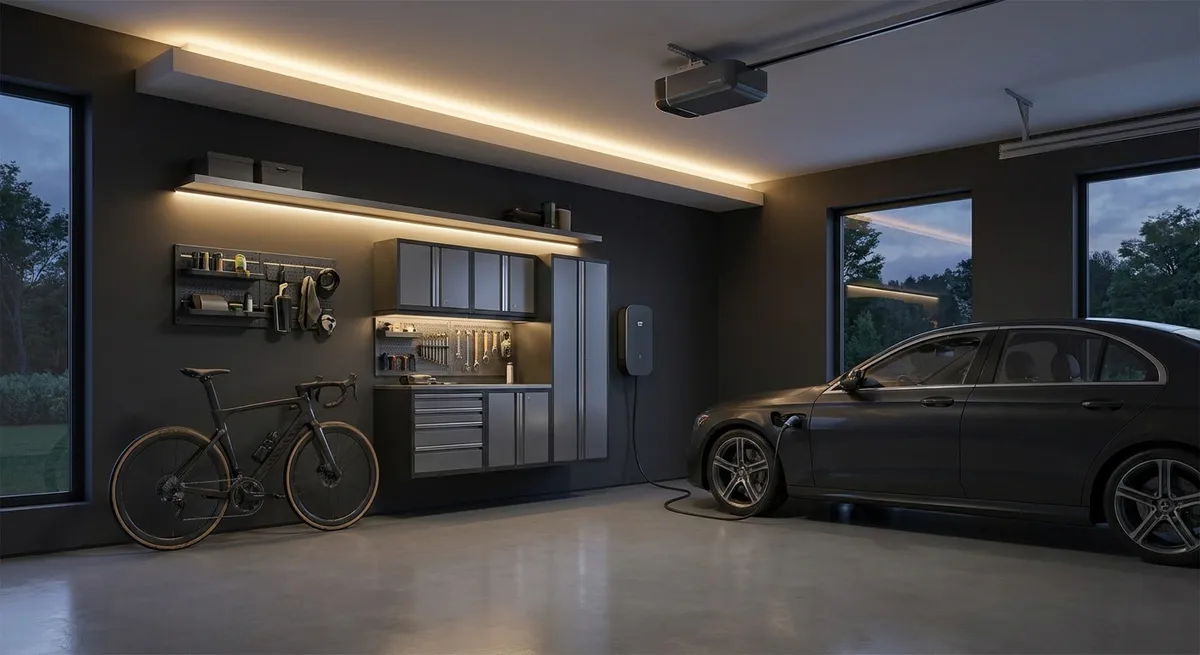
A well-resolved garage does not announce itself. It moves, closes, lights, and organizes with a quiet confidence that makes the rest of the home feel more composed. For homeowners who expect more than “good enough,” the garage becomes less of a leftover space and more of a precision environment—where every upgrade solves a real problem without sacrificing elegance.
This is not about dramatic overhauls. It’s about targeted refinements that transform daily friction points—unreliable doors, murky lighting, cluttered floors—into a seamless, almost invisible order. Below are five exclusive, detail‑driven insights for homeowners who treat the garage as seriously as any other room in the house.
Engineering a Door That Feels Effortless, Not Just Functional
Most garages fail not because the door doesn’t work, but because it doesn’t work beautifully. A refined garage door upgrade begins with the mechanics, not the cosmetics.
Start with the spring and track geometry. A door that is properly balanced will lift with two fingers; if it doesn’t, your opener is compensating with brute force instead of finesse. Insist on a load test and door balance check before any motor upgrade—this ensures the operator is enhancing movement, not masking mechanical inefficiencies.
Consider a DC motor with soft‑start and soft‑stop capabilities. These openers deliver a gentle ramp‑up and glide‑to‑stop motion that dramatically reduces vibration and noise. Paired with nylon‑coated rollers and properly tensioned torsion springs, the result is a door that feels less like machinery and more like a precision instrument.
For insulated doors, specify a door with a published R‑value and proper perimeter weatherstripping, then verify sealing with a simple daylight check: stand in the dark garage with daylight outside and look for perimeter leaks. A quiet, airtight door doesn’t just improve comfort; it protects vehicles, tools, and stored items from temperature swings and dust intrusion while giving the entire space a subtly elevated feel.
Lighting That Reveals Craftsmanship, Not Just the Floor
Most garages are overpowered with raw lumens and underpowered with finesse. A premium upgrade shifts from “bright” to purposefully lit.
Start with a layered strategy: overhead general lighting, targeted task lighting, and selective accent lighting. High‑CRI (Color Rendering Index of 90+) LED fixtures will render paint finishes, wood grains, and tool markings with clarity that cheap bulbs simply can’t match. This matters if you care how your vehicle finish looks, or if you actually work on small parts and fasteners.
Replace a single central bulb with linear LED fixtures positioned to the sides of where vehicles park, not directly overhead. This reduces harsh shadows across hoods and work surfaces. Over a workbench, add under‑cabinet LED strips with diffusers; you want consistent, shadow‑free light that feels more like a studio than a storage room.
For the final layer, consider unobtrusive motion‑activated night lighting along the lower wall or baseboard line. This subtle glow is enough for safe movement without overpowering the eyes when you arrive home late. It’s a small, almost invisible upgrade that radically changes how welcoming and usable the space feels at every hour.
Floor Systems That Work as Hard as They Look
A refined garage floor is not purely aesthetic; it is a functional surface engineered for abuse while still presenting as composed and intentional.
Skip bargain‑store coatings that peel within a season. A professionally installed, multi‑coat epoxy or polyaspartic system with mechanical surface prep (diamond grinding) is the standard for homes that expect longevity. Ask specifically about substrate moisture testing—without it, even an expensive coating can blister and fail.
Functionally, the right floor does three things elegantly:
- Controls debris – A light, subtly speckled finish disguises dust and tire marks without hiding serious spills or leaks you need to notice.
- Enhances visibility – A satin or low‑sheen surface reflects just enough light to brighten the room but not so much that it feels clinical.
- Directs water – Where possible, a slight slope toward the existing floor drain or door threshold ensures meltwater and wash water move away from walls, tools, and storage.
For homes in climates with heavy snow or rain, consider a modular tile overlay in high‑traffic tire paths. It’s a sophisticated approach: the coating provides continuous protection and visual unity, while tiles in strategic zones absorb the abuse of sand, salt, and hot tires. The combination is more durable—and more visually resolved—than either solution alone.
Storage That Respects Both Space and Silence
In most garages, storage is where refinement goes to die. Cardboard boxes, leaning tools, and random shelving send a clear message: “temporary.” A premium garage treats storage as curated, not improvised.
The starting point is vertical discipline. Wall‑mounted systems that lock into studs or a rail track keep gear suspended off the floor, making the space feel lighter and far easier to clean. Look for systems with modular, closed cabinets for visual calm, complemented by a limited set of open elements for frequently accessed items.
Hardware matters. Soft‑close hinges, full‑extension drawer slides, and anti‑slam mechanisms may sound indulgent, but they define the acoustic character of the space. A garage where nothing slams or rattles feels categorically different to live with, especially if it sits below or adjacent to bedrooms or living areas.
Think in “zones” rather than shelves: an automotive care zone, a tools and projects zone, a seasonal storage zone. Each zone should be reachable without moving something else—no stacking bins three‑high just to access winter gear. This approach eliminates the constant mini‑frustrations that make a garage feel chaotic, even when technically “organized.”
Control, Access, and Safety That Feel Seamless, Not Technical
Modern garage upgrades should feel intuitive, not like a gadget showcase. The most elegant solutions recede into the background while quietly elevating security, convenience, and safety.
For door access, prioritize systems that combine encrypted wireless remotes, interior wall controls with vacation lockout modes, and discreet exterior keypad entry. If you opt for smart integration, choose a platform that supports secure, encrypted communication and allows you to check door status at a glance without complicated apps or logins.
Safety should be layered, not loud. Verify that photo‑eye sensors are correctly aligned and mounted at the proper height, and consider adding a secondary safety such as an auto‑reversing edge if you have unusually heavy or custom doors. Good installers will also recommend reinforcement brackets on older doors to prevent flexing or cracking under motor load.
Internally, a refined safety environment is subtle: slip‑resistant floor textures near entries, dedicated circuits for heavy tools or EV chargers, and properly labeled subpanels or shutoffs. These upgrades don’t call attention to themselves, but in a moment of urgency—a tripped breaker, a leak, an electrical issue—they turn a potential crisis into a controlled, almost effortless response.
Conclusion
A sophisticated garage is not defined by how much you add, but by how precisely each upgrade removes friction from daily life. When the door glides rather than grinds, when the lighting clarifies instead of glares, when the floor, storage, and controls work in quiet concert, your garage evolves from peripheral space to a calm, capable extension of your home.
For homeowners who expect their environment to perform as well as it presents, the garage is no longer an afterthought. It is the first and last room you experience every day—and worth every detail that makes it feel impeccably resolved.
Sources
- U.S. Department of Energy – Insulated Garage Doors - Overview of how insulated doors improve comfort and efficiency
- International Association of Certified Home Inspectors – Garage Inspection Guidelines - Professional standards for safe and well‑functioning garage systems
- Lighting Research Center, Rensselaer Polytechnic Institute – Residential Lighting - Best practices for high‑quality residential lighting design
- Penn State Extension – Concrete Floors and Moisture - Technical discussion of concrete floor moisture issues relevant to coatings
- Consumer Product Safety Commission – Automatic Garage Door Openers - Safety guidance and requirements for modern garage door systems
Key Takeaway
The most important thing to remember from this article is that this information can change how you think about Upgrades.