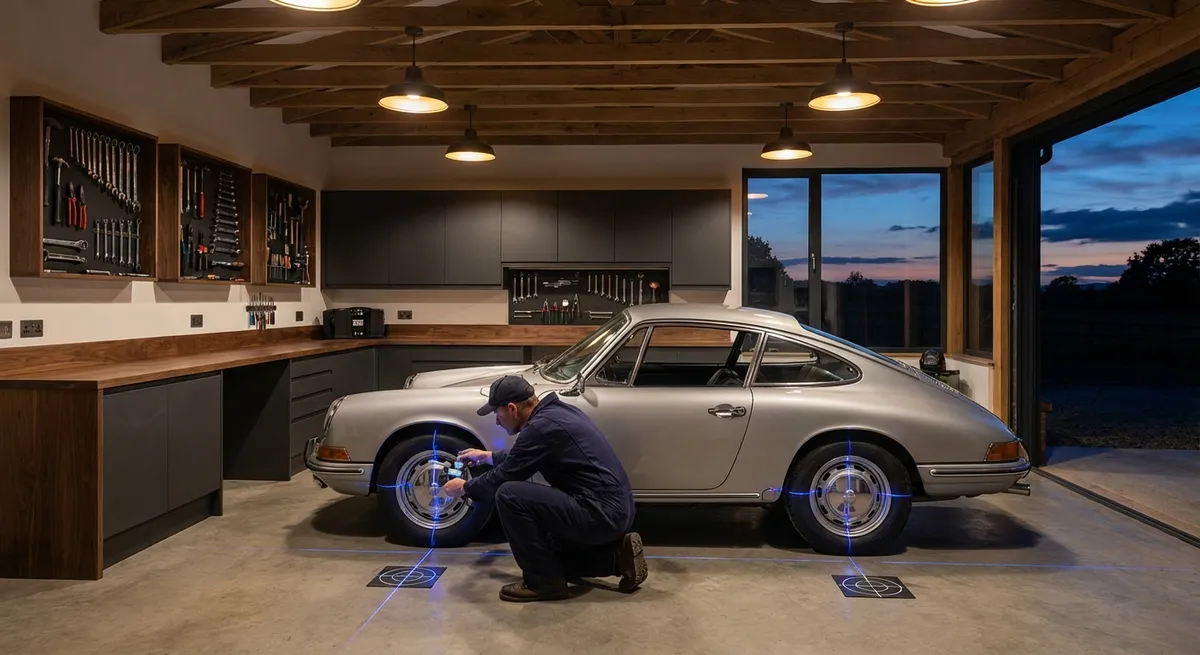
A well-resolved garage is rarely loud about its virtues. It simply works—quietly, consistently, and with a level of refinement that reflects the rest of the home. When something falters, however, the disruption is immediate: a grinding door, faint fuel smell, damp corners, or erratic lighting. Repairing these issues is not merely a matter of function; it is an opportunity to elevate the space into a more controlled, safer, and more elegant environment.
This guide explores repair solutions through a more discerning lens—focusing on underlying causes, long-term stability, and the subtle upgrades that separate a merely “fixed” garage from a truly resolved one. Along the way, you’ll find five exclusive insights that attentive homeowners can leverage to make their garages perform—and feel—exceptionally well.
Reframing Garage Repairs as System Refinements
Most garage problems present as surface irritations: noise, drafts, odors, flickering lights. Yet each symptom usually hints at a broader system breakdown—structural, mechanical, or environmental. A sophisticated repair strategy starts by redefining what a “fix” should achieve.
Instead of asking, “How do I stop this from failing today?” a more elevated question is, “How do I prevent this system from becoming a source of friction and risk over the next decade?” This shift encourages a thorough inspection of how components interact: the interface of door seals and concrete slab, the relationship between ventilation and stored chemicals, the way drainage affects wall framing and stored belongings.
This systems mindset often reveals elegant, layered solutions: combining a repair with a small upgrade that reshapes how the garage behaves in daily use. A quieter opener that also improves security protocols, a moisture repair that doubles as a foundation safeguard, or a lighting correction that doubles as safety enhancement. The goal is not just restoration, but refinement.
Exclusive Insight #1: Treat any single repair request as a structured mini-audit. When you call a professional—or plan a DIY intervention—use that moment to visually check adjacent systems: wiring near the opener, seals near a cracked threshold, drainage patterns near a water stain. One service visit can discreetly resolve three future problems if approached with intention.
Silent Mechanics: Repairing Motion, Friction, and Balance
Doors and moving systems are usually the first to demand attention. A garage door that jerks, shudders, or shrieks is not simply an inconvenience; it’s a sign of mechanical imbalance or fatigue that can escalate into failure—or worse, safety risk.
A refined repair approach goes beyond replacing the visibly broken part. It begins with a balance test: disconnecting the opener and manually lifting the door to feel its weight. A properly tensioned system allows the door to stay suspended at multiple points. If it slams shut or races upward, the springs, cables, or tracks are asking for professional recalibration.
From there, attention turns to friction and contact surfaces. High-quality, silicone-based or lithium-based lubricants applied sparingly to hinges, rollers, and bearings can dramatically reduce strain on both hardware and motor. Nylon rollers can replace worn metal rollers for smoother, quieter travel. Tracks should be cleaned rather than over-lubricated; debris removal is often more transformative than any spray.
Exclusive Insight #2: Prioritize balance before power. Many homeowners respond to a struggling door by upgrading to a more powerful opener. In reality, a correctly balanced and tuned door will operate smoothly on surprisingly modest motor power. Fix the mechanics first; only then evaluate whether the opener truly needs replacement.
Controlling the Invisible: Odors, Fumes, and Subtle Air Quality Repairs
A refined garage is as much about what you don’t smell as what you see. Lingering fuel vapors, musty odors, or a faint exhaust smell that creeps toward the interior of the home are all cues that ventilation, containment, or storage practices require thoughtful repair—not just masking.
The first layer is containment. Fuel cans, solvents, and paints should be stored in tightly sealed, purpose-built containers, ideally in a dedicated, ventilated cabinet. Replacing worn gaskets on water heaters or tuning gas-fired appliances in the garage can quietly resolve low-level exhaust creep. Weatherstripping between garage and house entry doors should be intact and high quality, acting as a barrier to fumes migrating indoors.
Next comes directed ventilation. Rather than leaving the door partially open—which invites humidity, pests, and security concerns—consider adding a modest but well-positioned exhaust fan or upgrading existing vents. A fan placed high on a side wall or ceiling, paired with a controlled intake vent, can carefully draw fumes outward without overcooling or overheating the space.
Exclusive Insight #3: Use negative pressure to your advantage. A properly installed exhaust fan (especially near areas where engines idle or chemicals are stored) can create a subtle negative pressure zone in the garage, drawing fumes out instead of allowing them to drift into the living area. This is far more effective and discreet than relying on open doors or windows.
Moisture, Concrete, and the Quiet Work of Structural Preservation
Water is arguably the most understated threat in any garage. The signals are often subtle: a faint white powder (efflorescence) along the slab, dark corners that never quite dry, or small cracks that seem purely cosmetic. Yet these signs point to patterns—drainage, vapor transmission, or material fatigue—that merit deliberate correction.
Addressing moisture begins outside. Gutters that discharge too close to the foundation, sloped driveways that funnel water toward the door, and missing or eroded grading can all push moisture into the garage. Repair here may mean extending downspouts, re-sloping a small apron of concrete, or adding a discreet trench drain at the entry.
Inside, small cracks can often be filled with high-quality epoxy or polyurethane sealants, but the real refinement lies in understanding why they appeared: thermal movement, settling, or hydrostatic pressure. If the slab routinely wicks moisture, a penetrating concrete sealer—chosen for vapor permeability and durability—can protect not only the floor but also stored materials and any adjacent framing.
Exclusive Insight #4: Always pair crack repair with a drainage or moisture assessment. Filling a crack without evaluating water movement is cosmetic at best. A brief inspection of where roof runoff, driveway slope, and neighboring landscaping send water often reveals a simple, elegant upstream adjustment that prevents future cracking and interior dampness.
Electrical, Lighting, and the Subtle Architecture of Safety
Lighting and power are often treated as afterthoughts in a garage—until something fails. Flickering fixtures, overworked power strips, or outlets that intermittently trip are all invitations to intervene with a higher standard than “get it back on.”
Start with circuit clarity. Many older garages share circuits with interior spaces, leading to overload and nuisance tripping when tools, freezers, and chargers compete for limited capacity. A refined repair strategy may involve working with a licensed electrician to install a dedicated garage circuit, GFCI or AFCI protection where required, and properly rated outlets for heavy-draw equipment.
Lighting deserves equal attention. Replacing outdated, buzzing fluorescent fixtures with high-CRI LED lighting instantly transforms both function and perception. Well-placed linear LEDs along the perimeter can illuminate work zones and storage without creating harsh glare. Motion sensors—properly tuned—offer hands-free entry while also acting as a subtle security feature.
Exclusive Insight #5: Consider light quality as a safety device, not a luxury. High-quality, evenly distributed lighting reduces trip hazards, improves accuracy when working with tools, and makes small leaks, damage, or pests visible sooner. Selecting fixtures for color accuracy (CRI), beam spread, and shadow control can be just as important as their brightness rating.
Integrating Repairs into a Long-Term Garage Strategy
Once individual issues are resolved, the next elevation comes from unifying them into a coherent maintenance and improvement trajectory. Rather than waiting for the next failure, you can intentionally sequence repairs to build a garage that supports your lifestyle with almost invisible effort.
Create a concise, one-page garage profile: door age and service history, opener model, electrical layout, flooring condition, known moisture pathways, and storage of fuels and chemicals. Use this as a living document. When you repair the opener, note the date and parts. When you address drainage, add photographs and before/after notes. This transforms the garage from a collection of ad hoc fixes into a managed system.
From there, you can schedule discreet seasonal reviews: a spring inspection after heavy rains, a pre-winter test of seals and openers, a summer check on ventilation and air quality. Each cycle is an opportunity not only to catch developing issues early but to identify moments where a small refinement—for example, upgrading a seal, adding a sensor, or improving storage—can lift the overall experience of the space.
Conclusion
Elegant garage repair is not about elaborate remodels or conspicuous upgrades. It is about precision: addressing symptoms with a clear understanding of systems, choosing materials and methods that respect long-term performance, and using each repair moment as a chance to reduce friction in daily life.
By rethinking mechanical balance, controlling invisible air quality, respecting the quiet power of moisture management, refining electrical and lighting infrastructure, and integrating every intervention into a thoughtful long-term plan, the garage evolves from a mere utility zone into a disciplined, reliable extension of the home. The result is a space that rarely demands attention—yet consistently rewards it.
Sources
- U.S. Consumer Product Safety Commission – Garage Door Safety – Guidance on safe operation and maintenance of garage doors and openers
- U.S. Department of Energy – Ventilation and Air Sealing – Principles behind effective ventilation strategies, relevant to managing fumes and air quality in garages
- Portland Cement Association – Repair and Maintenance of Concrete – Technical background on crack repair, moisture issues, and long-term slab performance
- National Institute for Occupational Safety and Health (NIOSH) – Controlling Exposures to Hazardous Substances – Best practices for controlling chemical and fume exposure in enclosed spaces
- Harvard T.H. Chan School of Public Health – Lighting and Health – Research-based insight into how lighting quality affects safety, comfort, and perception
Key Takeaway
The most important thing to remember from this article is that this information can change how you think about Repair Solutions.