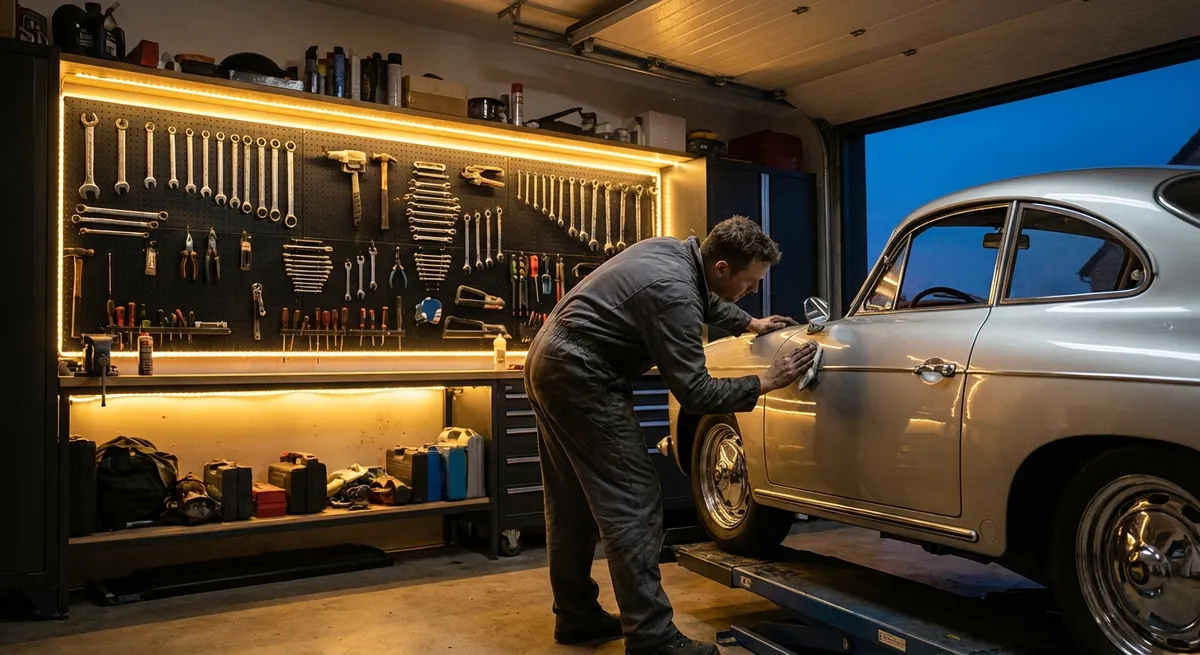
A garage in distress rarely announces itself dramatically. More often, it whispers—through a subtle shudder in the door track, a faint oil sheen beneath the car, or a light that flickers once too often. For discerning homeowners, these are not mere inconveniences but early cues that a critical space in the home deserves attention. Thoughtful, well-executed repair solutions not only restore function; they recalibrate the entire experience of arriving home. This guide explores refined, detail-driven approaches to common garage issues, with five exclusive insights that anticipate the needs of homeowners who expect more than “good enough.”
Rethinking Garage Repairs as System Calibration
Treating repairs as isolated fixes invites recurring problems. A premium approach views the garage as an interconnected system: door, opener, track, floor, lighting, storage, and environmental controls all influence one another.
A jerking door, for instance, is rarely just a door issue—it may involve track alignment, spring tension, mounting hardware, and even structural framing movement over time. Likewise, addressing a cracked concrete slab without considering drainage, subgrade conditions, and vehicle load patterns is an invitation to repeat the repair in a few years. A system-calibration mindset first diagnoses root causes, then designs an integrated solution that aligns mechanics, safety, and longevity. The result is not only a smoother-operating space, but fewer disruptions and a more predictable maintenance trajectory.
Exclusive Insight #1: Silent Hardware Upgrades as a Repair Strategy
Most homeowners think “repair” means replacing what has failed. A more refined approach includes selectively upgrading hardware components to eliminate noise, vibration, and premature wear—all under the umbrella of repair.
Quiet, precision-engineered rollers (often nylon with sealed bearings) dramatically reduce door noise and mechanical stress compared with basic steel rollers. Reinforced hinges and commercial-grade fasteners can correct minor flex in door sections that would otherwise masquerade as a track or opener problem. Even swapping out standard mounting brackets for vibration-dampening assemblies can turn a noisy, rattling opener into a subdued presence that barely registers inside the home.
When planning repairs, ask not only, “What is broken?” but “What can be upgraded now to make future failures less likely and the daily experience more refined?” This mindset turns every repair visit into an opportunity to bring the garage closer to silent, confident operation.
Exclusive Insight #2: Intelligent Diagnostics Before the First Turn of a Wrench
Sophisticated repair begins long before tools leave their case. The most effective solutions start with a diagnostic protocol that mirrors what you’d expect from a high-end automotive service bay: structured observation, targeted testing, and baseline documentation.
For garage doors, this can include measuring travel force, checking spring balance with the opener disconnected, and inspecting for micro-cracks or fatigue in high-stress areas such as hinge mounts and header brackets. For flooring issues, a moisture test (either with a calcium chloride kit or electronic moisture meter) can reveal vapor problems that would undermine coatings or patching compounds. Electrical concerns demand both visual inspection and voltage testing at critical points rather than assumptions based solely on symptoms.
Homeowners who insist on a diagnostic-first approach often spend less over time. Misdiagnosis is one of the most expensive forms of “cheap” repair—replacing components that were never the problem while leaving the true cause untouched. Insist on a clear explanation of findings, with photos where appropriate, before approving significant work.
Exclusive Insight #3: Structural Sensitivity—Protecting the Envelope While You Repair
Garages often sit at the intersection of heavy mechanical systems and delicate building envelopes. A door repair that ignores structural nuance can introduce subtle movement, misalignment, and even water intrusion.
When addressing track or opener issues, for example, many quick-fix approaches overtighten fasteners into aging framing, compressing wood fibers and slowly loosening the anchor points over time. A more considered strategy may involve backing plates, upgraded lag screws sized to existing structure, or localized reinforcement with blocking to distribute load. Similarly, repairing a header crack or sag is best handled in concert with door adjustments so that the weight distribution and operational path of the door are harmonized with the framing repair.
Floor cracks and spalling along the foundation line deserve equal sensitivity. Simply filling visible gaps without analyzing settlement patterns, joint behavior, or adjacent drainage conditions risks sending structural stress elsewhere. When executed well, structural-aware repairs become almost invisible but profoundly stabilizing, preserving both the performance and the architectural integrity of the space.
Exclusive Insight #4: Moisture Management as the Hidden Foundation of Lasting Repairs
Moisture is the quiet saboteur of the refined garage. It rusts hardware, delaminates coatings, warps doors, feeds mold, and degrades concrete. The most durable repair solutions always include a moisture strategy, even if it is not the headline issue.
For flooring, this may mean pairing crack repairs with improved grading at the driveway, installing a discreet trench drain where melting snow regularly pools, or sealing the slab with a vapor-tolerant system designed for garages, not just decorative interiors. For doors, attention to bottom seals, perimeter weatherstripping, and threshold design can dramatically reduce wind-driven rain and moisture migration that would otherwise attack metal components and encourage corrosion.
Even storage and wall systems benefit: keeping items off the slab with properly finished, moisture-resistant wall panels or rails protects both belongings and building materials. When talking with a repair professional, look for evidence that they are thinking about how water and humidity move through the space—not just what is visibly damaged today.
Exclusive Insight #5: Safety Layers That Feel Invisible but Perform Exceptionally
For many homeowners, “safety” conjures images of visible hardware and intrusive devices. In a well-considered garage, safety is layered, discreet, and seamlessly integrated into repair work so it never feels like an afterthought.
When repairing or replacing openers, modern photoelectric sensors and auto-reverse features are essential—but they are only the beginning. Properly calibrated spring tension, correctly rated cables, and secure anchor points all protect against catastrophic failures that rarely give a second chance. Upgraded lighting—such as high-CRI LED fixtures with even coverage—can be framed as a comfort upgrade, yet they play a crucial role in preventing trips, missteps on stairs, and tool mishandling.
Electrical repairs present another opportunity to elevate safety unobtrusively. Confirming that outlets near potential moisture sources are GFCI-protected, that circuits are not overloaded by high-draw tools, and that extension cords are replaced with properly located outlets all reduces risk without altering the visual character of the space. The best safety features are those you barely notice—until the day they matter.
Bringing Cohesion to Future Repairs
A garage that functions beautifully is rarely the product of a single dramatic renovation. Instead, it evolves through a series of well-judged repairs and upgrades that share a consistent philosophy: diagnose thoroughly, address causes rather than symptoms, respect the structure, manage moisture, and quietly reinforce safety.
When planning your next garage repair, consider creating a simple, long-view plan. Document what has been done, which components have been upgraded, and where remaining vulnerabilities lie. Over time, this transforms every “problem” into an opportunity to refine the space—making it quieter, safer, more resilient, and aligned with the standards you apply to the rest of your home.
The result is more than a functional garage. It is a transition space that feels deliberate rather than incidental—a place where everyday reliability is achieved through careful decisions, executed with precision.
Sources
- U.S. Consumer Product Safety Commission – Garage Door Safety - Outlines key safety features, standards, and best practices for garage door systems
- International Association of Certified Home Inspectors (InterNACHI) – Garage Inspection Guidelines - Provides professional guidance on evaluating garage structure, doors, and safety elements
- Portland Cement Association – Causes, Evaluation and Repair of Cracks in Concrete Structures - Explains concrete cracking mechanisms and durable repair approaches relevant to garage slabs
- U.S. Department of Energy – LED Lighting Basics - Details performance, efficiency, and quality-of-light considerations for upgrading garage lighting
- National Fire Protection Association (NFPA) – Home Electrical Safety - Offers best practices for safe electrical use in residential spaces, including garages
Key Takeaway
The most important thing to remember from this article is that this information can change how you think about Repair Solutions.