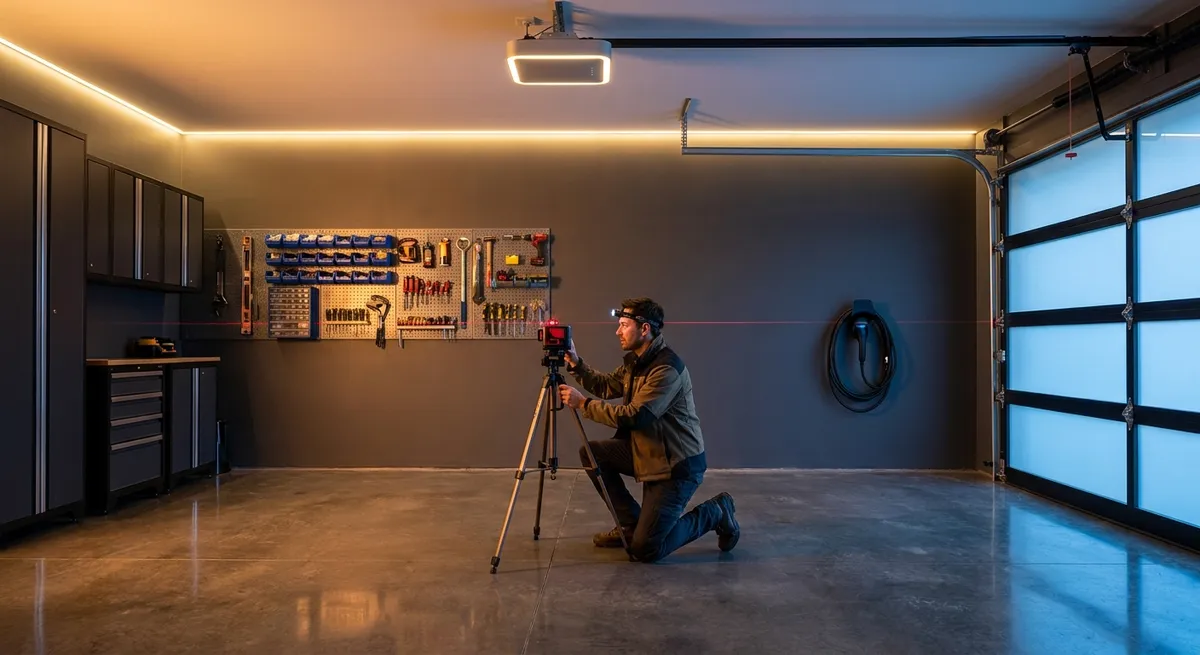
A well-appointed home does not end at the front door. For many discerning homeowners, the garage is both a threshold and a test: it must function flawlessly, withstand constant use, and do so without drawing attention to itself. When something fails—an uneven door, a shuddering opener, a faint smell of fuel—it is not merely an inconvenience; it is an interruption to the quiet order you’ve curated.
This is where repair moves beyond “fixing what’s broken” and becomes an exercise in precision. The most successful garage repairs are thoughtfully diagnosed, minimally invasive, and engineered to endure. Below are five exclusive insights that elevate garage repair from a necessary chore to a disciplined craft.
Insight 1: Diagnose the System, Not Just the Symptom
Most repair calls begin with a single complaint: the door won’t close, the opener is noisy, there’s water on the floor. But refined repair starts by stepping back and viewing the garage as a connected ecosystem—door, track, opener, weather seals, drainage, ventilation, and electrical all interacting.
Instead of simply replacing a broken spring, a skilled technician will evaluate cable wear, track alignment, opener force settings, and the balance of the door leaf itself. A “stuck” door may be the symptom; a subtle track twist from a past impact might be the true cause. Addressing the symptom alone often produces a temporarily smoother operation that steadily deteriorates; diagnosing the system prevents the same failure from reappearing in a new guise.
For homeowners, this means seeking professionals who conduct full-cycle diagnostics: testing door balance by hand, checking safety reverse functions, inspecting wall anchors and fasteners, and listening for tonal changes in operation. A repair that begins with a thorough systems review will often be slightly more involved on day one—and significantly quieter and more reliable over the next decade.
Insight 2: Specify Components for Longevity, Not Just Compatibility
Most garages are quietly downgraded at the point of repair, often without the homeowner realizing it. A “standard” replacement part is chosen because it fits, not because it is the best long-term match for the door’s weight, use pattern, or climate.
Refined repair strategy treats component selection as specification, not shopping. For example, torsion springs can be selected with a higher cycle rating to match frequent daily use; sealed, heavy-duty rollers can replace basic open-bearing types to reduce friction and noise dramatically; weather seals with UV-resistant compounds can be chosen to resist cracking in coastal or sun-exposed locations.
Garage owners who value long-term performance should ask explicit questions: What is the cycle rating of this spring? Are these rollers sealed and ball-bearing or plain nylon? How does this weather strip perform in my climate? By upgrading key components during necessary repair, you convert a moment of failure into an opportunity to lift the entire system’s standard—without visible fuss.
Insight 3: Calibrate for Silence: The Acoustics of a Well-Repaired Garage
Noise is often treated as a cosmetic issue—tolerable as long as the door opens and closes. Yet in a considered home, acoustic behavior is a mark of quality, not an afterthought. The difference between a roughly repaired door and a precisely tuned one is often most apparent in the first few seconds of operation.
True acoustic refinement during repair goes beyond lubrication. It involves tightening or replacing loose fasteners that cause rattles, aligning tracks to avoid sharp contact points, and adjusting opener speed and force so that transitions are smooth rather than abrupt. In some cases, a simple addition—such as vibration-isolating mounting brackets for the opener—can dramatically reduce transmitted noise into bedrooms or living spaces above the garage.
Homeowners should regard “quiet” as a measurable outcome of repair, not a bonus. Ask your technician to demonstrate operation before and after adjustments. A properly calibrated system should move in a single, composed motion: no abrupt starts, no metallic clatter, no harsh stop at the floor. Silence, in this context, is not just a comfort; it is an indicator that components are working within their intended tolerances.
Insight 4: Protect the Envelope: Repair as Preservation of the Entire Space
Many garage repairs focus narrowly on mechanical function and overlook the building envelope: how well the space is protected from moisture, fumes, and temperature swings. Yet some of the most consequential “repairs” are subtle interventions that keep the garage dry, clean, and breathable.
A small crack in the floor that allows water intrusion, a failed door bottom seal that invites rodents, or an unsealed gap around conduit can, over time, degrade finishes, rust metal components, and introduce dampness. Similarly, malfunctioning exhaust fans or blocked vents can allow vehicle fumes and volatile compounds from stored materials to linger.
Thoughtful repair work considers these vulnerabilities. When addressing a door issue, for instance, it may be prudent to upgrade threshold seals, assess the slope near the entrance for standing water, or verify that sensors and wiring penetrations are properly sealed. In climates with significant temperature differentials, choosing insulated door panels and ensuring tight perimeter seals can preserve both the garage and the adjacent conditioned spaces.
The key insight: every mechanical intervention in the garage is an opportunity to enhance the protective shell of the space, not just restore movement.
Insight 5: Document the Garage Like a Mechanical Asset, Not a Spare Room
High-performance buildings—commercial, institutional, and industrial—are maintained using detailed records: component specifications, service dates, adjustments made, and observations about wear patterns. Most residential garages, by contrast, operate on memory and guesswork.
Treating your garage as an asset to be documented transforms the way repairs are planned and executed. After any significant intervention, request a concise service log: spring sizes and cycle ratings, opener model and settings, part numbers, and the technician’s recommendations for future inspection intervals. Retain photos of key areas before and after work, especially if structural fasteners, anchors, or electrical runs are involved.
Over time, this documentation becomes invaluable. A future technician can see when a spring was upgraded, which panels were replaced, or why a particular adjustment was made. Patterns in wear can be identified early and resolved proactively. For a homeowner, this record serves another function: it signals that the garage has been maintained to a standard, not merely kept functional. In a carefully considered property, such quiet evidence of stewardship is its own form of refinement.
Conclusion
Garage repairs need not be hurried, transactional interruptions. Approached with intention, they become opportunities to elevate the performance, quietness, and durability of one of the home’s most frequently used spaces. By insisting on system-level diagnosis, specifying components for longevity, calibrating for silence, protecting the entire building envelope, and documenting the space like a true asset, homeowners transform repair from reactive maintenance into a disciplined, ongoing refinement.
The result is a garage that feels less like a service zone and more like a precisely tuned mechanism at the edge of your home—unobtrusive, dependable, and fully aligned with the standards you apply everywhere else.
Sources
- U.S. Consumer Product Safety Commission – Garage Door Safety - Guidance on safe operation, entrapment risks, and the importance of properly adjusted systems
- International Association of Certified Home Inspectors – Garage Inspection Guidelines - Detailed reference on common garage defects, safety issues, and best practices for evaluation
- Energy.gov – Air Sealing Your Home - Explains how sealing gaps and improving the building envelope (including in garages) protects the home and improves efficiency
- Mayo Clinic – Carbon Monoxide Poisoning - Outlines health dangers from exhaust fumes, underscoring the need for proper garage ventilation and safe operation
- Clopay Garage Doors – Door Construction & Insulation Guide - Manufacturer information on insulated door design, materials, and performance considerations for different climates
Key Takeaway
The most important thing to remember from this article is that this information can change how you think about Repair Solutions.