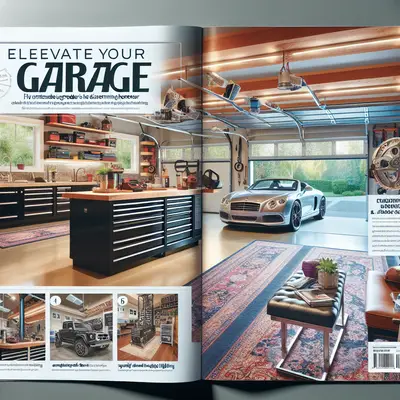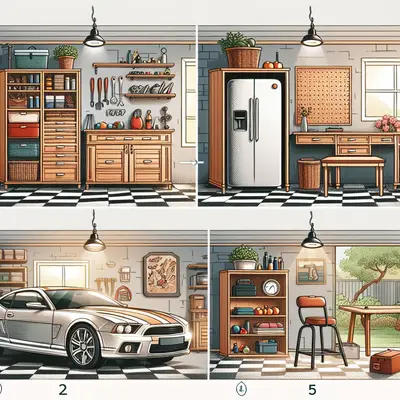
A well-resolved garage doesn’t demand attention; it earns it quietly through precision, restraint, and intelligent upgrades that solve problems before they become visible. For discerning homeowners, a garage is not a storage afterthought—it is an engineered threshold between the home and the outside world. The right upgrades don’t simply add features; they refine how the space sounds, moves, smells, and functions every single day.
Below are five exclusive, problem-solving insights designed for homeowners who expect their garage to perform at the same standard as the rest of a carefully considered home.
1. Treat the Garage as a Climate Buffer, Not a Utility Zone
Most garages are insulated as if they were sheds. For a refined home, that is a missed opportunity.
Upgrading your garage’s “envelope” (walls, ceiling, and especially the door) turns it into a climate buffer that protects everything behind it—mechanical systems, interior finishes, and even indoor air quality. Closed-cell foam in the ceiling, properly detailed air sealing around penetrations, and an insulated, weatherstripped garage door convert the space from a temperature swing zone into a controlled transition layer.
This does more than keep you comfortable when you step out of the car. It reduces thermal stress on the home’s HVAC systems, stabilizes temperatures in rooms above or adjacent to the garage, and slows the degradation of stored items—particularly finishes, lubricants, and electronics. For garages that share a wall with living spaces, this upgrade often quiets mechanical noise and outside traffic simultaneously.
The key is not simply “adding insulation,” but commissioning the garage as though it were an auxiliary room: blower-door–style attention to drafts, appropriate R-values for your climate, and a garage door whose insulation rating isn’t undermined by poorly fitted perimeter seals.
2. Upgrade the Door System as a Mechanical Ensemble, Not a Single Component
Many homeowners replace a noisy or unreliable door opener while ignoring the rest of the system. From a performance standpoint, that is the equivalent of putting new tires on a misaligned suspension.
A garage door functions as a coordinated mechanical ensemble: door weight and balance, spring calibration, track alignment, roller type, and opener technology all work in concert. A premium upgrade begins with a technician weighing the door and adjusting or replacing torsion springs so the door can be lifted smoothly by hand with minimal effort. Only once the door is properly balanced does it make sense to specify a higher-end opener.
Upgrading to nylon rollers, reinforced hinges, and carefully plumbed tracks can transform the door’s movement from strained to effortless. Pair this with a direct-drive or belt-drive opener, and the difference in acoustic quality is striking: a muted hum instead of a grinding rattle. Intelligent openers with soft-start and soft-stop profiles also reduce abrupt mechanical stresses, prolonging the life of both the opener and the door hardware.
The result isn’t just a quieter entrance, but a system that operates within its mechanical comfort zone, day after day, with minimal need for corrective repairs.
3. Design Lighting as Task-Focused Illumination, Not a Single Ceiling Fixture
The standard builder-grade single bulb in the middle of the ceiling is wholly inadequate for a garage that’s expected to function as a working environment. Thoughtful lighting upgrades do more than increase brightness—they sculpt visibility and reduce eye strain.
Begin by zoning your lighting:
- High-CRI LED fixtures overhead for general illumination
- Vertical lighting along walls for shelving, tools, and workbenches
- Focused task lighting at critical zones—work surfaces, charging stations, and entrances
Choosing LEDs with a color temperature in the 3500K–4000K range avoids the clinical harshness of cooler lights while still rendering details crisply. High color rendering (CRI 90+) makes it easier to read labels, inspect finishes, and spot leaks or wear early.
Placing fixtures to minimize shadows around vehicles and work areas is a small design decision that has an outsized impact on how usable the space feels. For garages that double as hobby or project rooms, dimmable circuits or separate task zones allow the space to adapt to different uses, from maintenance work to quiet evening arrivals.
An elegantly lit garage reads less like a storage zone and more like a well-planned studio—functional, legible, and composed.
4. Engineer Storage to Reduce Friction, Not Just Add Capacity
Most storage upgrades focus on volume: more shelves, more hooks, more bins. Refined garages aim for a different metric—reduced friction. The best storage systems are engineered around routines, not just square footage.
Begin with a candid audit of how you actually move through the garage: where you enter, what you carry, what you’re usually looking for in a hurry. Then configure storage zones to serve those patterns:
- A “daily orbit” zone near the entry for coats, shoes, bags, and frequently used tools
- A clean, enclosed bay for chemicals, paints, and lubricants, separated from living-area doors
- Ceiling or high-wall storage for seasonal items, configured so nothing heavy must be lifted over shoulder height
- Narrow, wall-mounted systems that keep the floor as uninterrupted and easy to clean as possible
Upgrading to modular, closed cabinetry (as opposed to open-wire shelves) keeps visual noise to a minimum and helps contain dust. Soft-close hinges, full-extension drawer slides, and labeled compartments turn a chore—finding the right drill bit, locating the pressure washer fittings—into a precise, almost effortless action.
The difference is subtle but significant: a garage where everything has a clearly defined, intuitive place naturally stays ordered with far less effort.
5. Address Air Quality and Containment Like a Discreet Machine Room
Garages often harbor the least controlled air in the entire property—fumes from vehicles, off-gassing from stored products, and fine particulates from projects. For a high-performing home, this is not acceptable, especially when a door connects directly to conditioned living spaces.
Upgrading here means treating the garage more like a small mechanical room than a casual storage area. Strategic steps include:
- Weatherstripping and threshold seals at the door leading into the home to prevent air migration
- A dedicated, code-compliant exhaust fan, ideally on a timer or occupancy sensor, to purge fumes after parking
- Properly sealed containers and cabinets for chemicals, paints, and fuels
- If feasible, a slight negative pressure strategy in the garage relative to the house so air flows from the home into the garage, not the other way around
These measures reduce the transfer of volatile organic compounds (VOCs), carbon monoxide, and other pollutants into the interior. For homes with attached garages and young children, elderly residents, or anyone with respiratory sensitivities, such upgrades are not just a matter of comfort, but of long-term health.
The refined result is a garage that smells neutral, clears quickly after use, and behaves like a controlled gateway rather than a source of contamination.
Conclusion
An elevated garage is not defined by visible luxury; it is defined by the absence of annoyance, strain, and disorder. When you treat your garage as a climate buffer, commission the door system as a complete mechanical ensemble, sculpt the lighting thoughtfully, engineer storage around real routines, and manage air quality with intent, the space begins to feel less like a compromise and more like a quiet asset.
These upgrades are not about adding spectacle—they’re about precise, durable solutions that respect how you actually live. Done well, they make every arrival and departure feel more composed, more controlled, and entirely in keeping with a home that values performance as much as appearance.
Sources
- U.S. Department of Energy – Insulation in a Garage - Explains best practices for insulating garages and improving the building envelope
- International Association of Certified Home Inspectors – Garage Door Safety - Details the components of garage door systems, safety considerations, and proper operation
- U.S. Environmental Protection Agency – Attached Garages and Indoor Air Quality - Covers how pollutants from attached garages can affect indoor air and strategies to reduce risk
- Illuminating Engineering Society – Lighting for Residential Spaces - Provides guidance on effective residential lighting design, including task and general illumination
- Consumer Product Safety Commission – Paint, Fuel, and Chemical Storage Safety - Offers recommendations for safe storage of chemicals and fuels commonly kept in garages
Key Takeaway
The most important thing to remember from this article is that this information can change how you think about Upgrades.