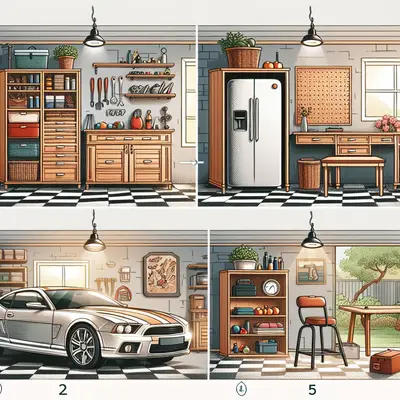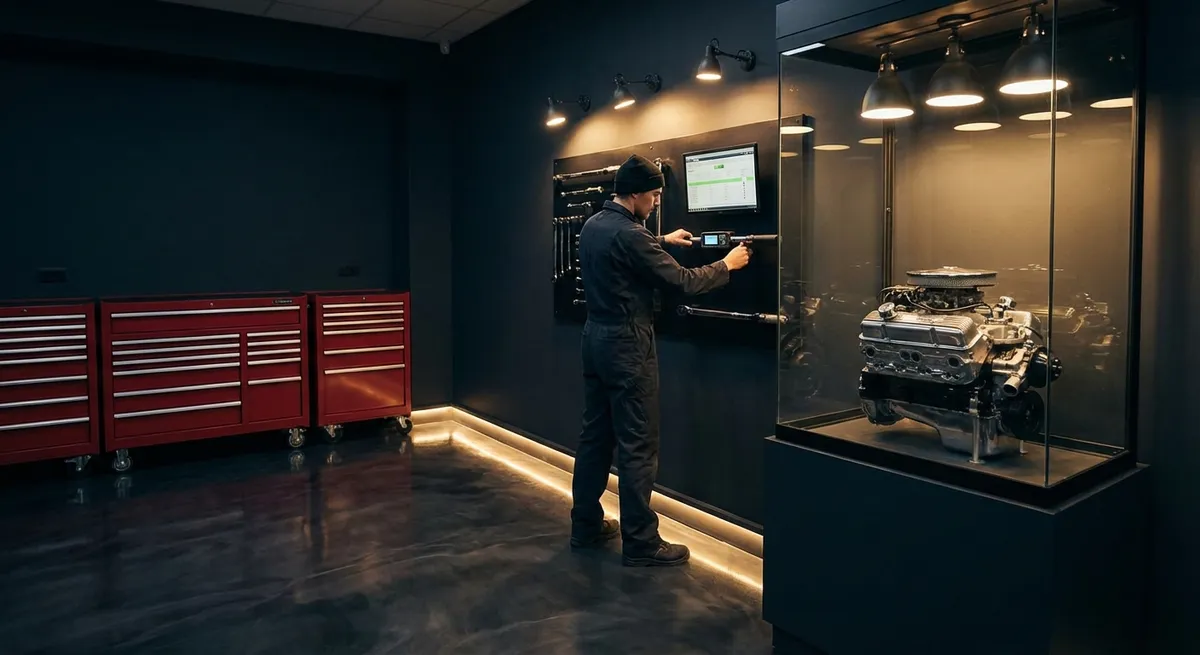
The most satisfying home improvements are rarely the loudest. They are the precise, disciplined upgrades that eliminate friction from your routine, protect your investments, and quietly elevate the way you live. Nowhere is this more evident than in the garage—the transitional space between the outside world and the curated calm of your home. Thoughtful garage upgrades are not just about convenience; they are about precision, longevity, and a standard of quality that respects both your time and your property.
Below, you’ll find five exclusive, detail‑driven insights that move beyond generic “garage makeover” advice and into the realm of refined, performance‑oriented upgrades.
The Hidden Geometry of a Truly Balanced Garage Door
A garage door that “mostly works” is often quietly consuming your opener’s lifespan and compromising safety. The true mark of a well‑executed upgrade is not just a new opener, but a door that is perfectly counterbalanced to it.
A properly balanced door can be lifted by hand with minimal effort and will stay in place when released halfway. This isn’t a cosmetic improvement; it is a structural one. When the torsion or extension springs are calibrated correctly, the opener is no longer straining to drag dead weight but simply guiding a system already in equilibrium. The result is reduced motor stress, less wear on drive components, and a quieter, more controlled motion.
A premium upgrade means having a technician measure the door’s exact weight, match it to the appropriate springs, and fine‑tune the tension. Homeowners often replace openers prematurely when the actual culprit is poor balance. Rectifying this transforms even a mid‑range opener into a precision instrument, and gives premium models the conditions they were engineered for. For a discerning homeowner, this is non‑negotiable: the door should move with the effortless poise of a well‑tuned mechanism, not the strain of a barely managed load.
Exclusive Insight #1: Treat torsion spring calibration and door balancing as a foundational upgrade, not an afterthought. Without it, every other investment is compromised.
Acoustic Engineering, Not Just “Quiet Hardware”
Many homeowners chase “quiet” garage solutions by swapping in a belt‑drive opener or nylon rollers, then stop there. While those are worthwhile changes, a truly refined acoustic upgrade looks at the entire sound path—from the door, to the track, to the framing, to the adjoining rooms.
High‑quality nylon rollers with sealed bearings reduce rolling noise, but the next level involves decoupling the system from the structure where feasible. This can include vibration‑dampening mounting brackets for the opener, rubber isolation pads between metal components and framing, and replacing rigid angle iron with strut reinforcement that minimizes flex and rattle across the door sections. Even the way the opener rail is anchored to the ceiling joists matters; a premium installation will use properly spaced fasteners and, where appropriate, backer boards to distribute load and minimize resonance.
For garages beneath bedrooms or adjacent to living areas, the transformation is significant. Instead of a sharp mechanical clatter that announces every arrival, you experience a controlled, subdued motion that respects the quiet of the home. This level of acoustic engineering is understated—few guests will ever know why your garage sounds different, but you will notice it every day.
Exclusive Insight #2: Think in terms of vibration isolation and structural resonance, not just “quiet parts.” Silence is engineered, not purchased off a shelf.
Thermal Discipline: Treating the Garage as a Controlled Buffer Zone
Most garage “insulation upgrades” stop at insulated doors or a few batts in the wall. Yet, for performance‑minded homeowners, the garage is a critical thermal buffer between the exterior and conditioned space. Managing this zone with intention can improve comfort, reduce energy loss, and protect valuable belongings, from vehicles to stored finishes and tools.
Begin with the door itself: a high‑quality, insulated steel door with a solid core and properly sealed joints does more than stabilize temperature; it also reduces noise and improves structural rigidity. But the upgrade shouldn’t end at the door. Attention to perimeter weatherstripping, top seals, and bottom seals (or threshold systems) closes the gaps that cause drafts, dust, and pest ingress. For attached garages, air‑sealing the shared wall and any door to the interior becomes essential to prevent fumes and temperature migration.
For those storing fine tools, paints, or sensitive equipment, consider adding modest but intelligent climate assistance—a variable‑speed exhaust fan, a dehumidifier, or a small, properly sized mini‑split system in regions with extreme temperatures. This isn’t about making the garage a fully finished living space; it’s about protecting what you store, extending the life of finishes and electronics, and making the space usable year‑round without wasteful overconditioning.
Exclusive Insight #3: Think of the garage as a strategic thermal buffer. Select upgrades that stabilize the environment and protect both your home’s efficiency and your stored investments.
Power, Lighting, and Data: Infrastructure for the Modern Garage
The truly modern garage is less a static storage bay and more a flexible, powered workspace—charging vehicles, supporting tools, and often housing critical household systems. Upgrades in this domain should be treated with the same rigor you’d apply to a professional workshop or a technical utility room.
Begin with power distribution. If you own—or plan to own—an electric vehicle, dedicated EV charging with appropriately rated wiring and breaker capacity is essential. But don’t stop there. Consider the future: additional circuits for power tools, air compressors, wall‑mounted vacuums, or refrigeration. A premium approach involves assessing your panel capacity, anticipating growth, and installing clean, well‑labeled circuits with outlets precisely where you’ll use them.
Lighting should shift from a single ceiling bulb to a layered, high‑CRI LED solution: broad, uniform overhead lights for general visibility and targeted task lighting over workbenches, storage walls, or detail areas. The color rendering index (CRI) matters more than many realize; accurate lighting makes it easier to notice leaks, finish defects, and fine details on vehicles or materials.
Finally, treat data and connectivity as part of core infrastructure, not an afterthought. Hardwired Ethernet or robust Wi‑Fi coverage enables camera systems, smart openers, inventory tracking, or even remote diagnostics for high‑end EV chargers. For a homeowner who values order and forward‑thinking design, this connective tissue is as important as the hardware itself.
Exclusive Insight #4: Upgrade the garage as a powered, connected system—not just a place that happens to have an outlet and a switch.
Precision Storage: Systems That Protect, Not Just Contain
Storage is often framed as an aesthetic or organizational exercise, but in a performance‑minded garage, storage is a protective discipline. The objective is not simply to “put things away,” but to shield them from damage, contamination, and unnecessary wear.
High‑quality, wall‑mounted storage systems free the floor for safe vehicle movement and cleaning, while preventing moisture migration from the concrete slab into boxes and materials. Closed, gasketed cabinets protect tools, finishes, and detailing products from dust and overspray. Adjustable shelving allows you to create specific zones for automotive care, seasonal equipment, and household supplies, preventing the chaotic overlap that leads to lost or damaged items.
Flooring, too, is a storage decision. A professionally applied, slip‑resistant coating or a high‑end tile system doesn’t just look refined; it protects the slab from chemical staining, makes spills visible and easier to manage, and allows you to maintain a high standard of cleanliness. For vehicles you care about, cleaner floors and controlled storage conditions pay dividends in reduced corrosion risk, fewer micro‑abrasives on tires, and a more controlled environment during maintenance work.
Exclusive Insight #5: View every storage decision through a protective lens—how it preserves the condition, accessibility, and longevity of what you own, not just where it “fits.”
Conclusion
Refining a garage is not about spectacle; it is about orchestrating a series of precise, technically sound upgrades that quietly transform the way you live with your home. A perfectly balanced door, engineered acoustics, disciplined thermal control, robust infrastructure, and protective storage all serve a single purpose: to remove friction from the ordinary moments that define your days.
For homeowners who value subtle excellence, the garage becomes less a forgotten annex and more a proof of intent—a space where every motion, from the lift of the door to the turn of a wrench, feels deliberate, reliable, and thoroughly under control. The true luxury is not in excess, but in the assurance that every component is working exactly as it should.
Sources
- U.S. Department of Energy – Insulation in Garages – Guidance on treating garages as buffer zones and improving thermal efficiency
- International Association of Certified Home Inspectors – Garage Door Safety – Technical details on balance, springs, and safe operation standards
- UL Solutions – Electric Vehicle Supply Equipment (EVSE) Safety – Information on safe installation and standards for EV charging infrastructure
- U.S. Department of Energy – LED Lighting Basics – Explains LED benefits, efficiency, and quality factors such as color rendering
- Centers for Disease Control and Prevention – Preventing Carbon Monoxide Poisoning in Homes – Relevant for attached garages and the importance of air sealing and ventilation
Key Takeaway
The most important thing to remember from this article is that this information can change how you think about Upgrades.