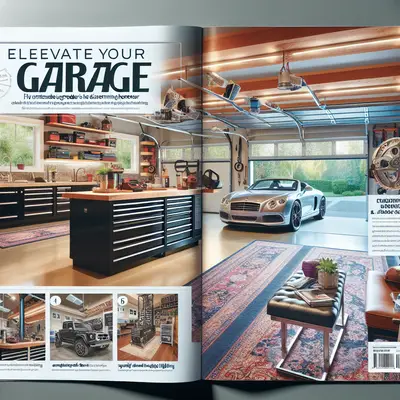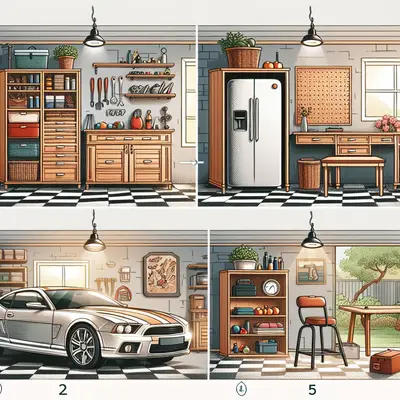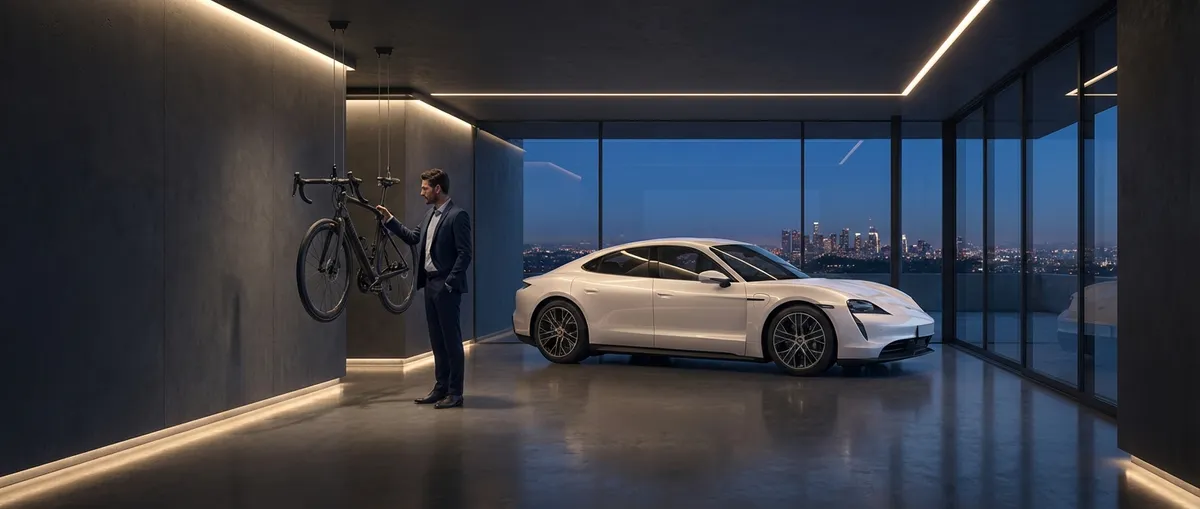
For discerning homeowners, the garage is no longer a forgotten annex—it is a controlled environment, a technical space, and often the first statement of how a property is truly maintained. Upgrades in this part of the home are no longer about basic functionality; they are about precision, quiet authority, and long-term resilience. The right improvements don’t shout for attention, but they are unmistakable to anyone who notices quality in the details.
This guide explores a refined approach to garage upgrades, focusing on five exclusive insights that anticipate problems before they appear, protect your investment, and elevate the daily experience of using your garage.
Rethinking the Garage as a Controlled Environment
Treating the garage as a conditioned envelope—not merely a storage bay—dramatically changes how you prioritize upgrades. Instead of starting with cosmetic changes, begin with the environmental fundamentals: air, moisture, and thermal control.
A properly insulated and air-sealed garage helps stabilize temperature, reduces humidity swings, and protects vehicles, stored items, and mechanical systems from premature wear. Upgrading to insulated doors with high-quality weatherstripping, sealing slab cracks to prevent vapor intrusion, and addressing any exterior grading issues creates a foundation that supports every future upgrade. This is not simply about comfort; it’s about safeguarding finishes, electrical components, tools, and even the structure itself from subtle, ongoing degradation.
Homeowners who view the garage as part of the home’s performance envelope—rather than as an exterior appendage—typically see lower maintenance burdens, fewer surprise repairs, and a more consistent experience throughout the year.
Insight 1: Structural Quiet as a Performance Metric
Most homeowners think of “quiet” as a noise issue; refined garages treat it as a structural performance indicator. Rattles, resonances, and vibration during door operation are often early warnings of misalignment, insufficient reinforcement, or inferior mounting hardware.
Upgrading is not just about choosing a “quieter” opener. It starts with how the system is anchored into the structure: proper lag bolts into framing members, reinforced mounting plates, and correct bracing for torsion springs and tracks. A well-executed upgrade aligns tracks, balances springs, and ensures the opener is not compensating for a mechanical or structural flaw.
The result is a door that moves with composed precision rather than brute force. When properly tuned, the door’s movement is a diagnostic tool: any new sound, drag, or hesitation becomes immediately noticeable, allowing early intervention before a cable frays, a bracket fails, or a panel deforms.
Insight 2: Specifying Hardware for Longevity, Not Minimum Code
Many garages operate on hardware selected to meet the lowest acceptable standard. For homes that expect more, every visible and concealed component becomes a deliberate specification.
This might mean stepping up to heavier-gauge steel for tracks and hinges, choosing high-cycle torsion springs rated for significantly more open/close cycles than the typical builder-grade option, and using corrosion-resistant fasteners and brackets—especially in regions with coastal air or heavy road salt exposure. These details slow fatigue, preserve alignment, and maintain smooth operation year after year.
Premium hardware also improves safety. Components designed to operate within a generous safety margin are far less likely to fail catastrophically under stress. Over time, these elevated specifications reduce emergency repair calls, panel damage, and the subtle accumulation of play and wobble in the system that undermines the feel of quality.
Insight 3: Floor Systems as Technical Surfaces, Not Just Finishes
For many homeowners, a “garage upgrade” floor means a shiny coating and little else. A more exacting approach treats the garage floor as a technical surface with specific performance requirements: chemical resistance, impact tolerance, slip resistance, and reflectivity.
A thoughtful upgrade begins below the surface. Moisture testing the slab, addressing hydrostatic pressure issues, and repairing cracks and spalling ensure any coating or tile system bonds correctly and endures. From there, the choice of finish—high-solids epoxy, polyaspartic coatings, or high-performance tiles—should be matched to actual use: frequent vehicle traffic, workshop activities, or storage.
The result is a floor that is not just visually refined but operationally superior. Better reflectivity improves lighting efficiency. Proper texture reduces slip risk when wet. Chemical resistance protects against oil, battery electrolytes, and road salts that would quietly etch or stain untreated concrete. An upgraded floor becomes an integral part of a robust, low-maintenance garage ecosystem rather than a cosmetic afterthought.
Insight 4: Intelligent Power and Lighting as Infrastructure, Not Accessories
Most garages inherit a sparse electrical layout and a single central fixture. For homeowners who expect the garage to perform at a higher standard, electrical upgrades are foundational infrastructure decisions, not secondary conveniences.
Strategic circuit planning allows for dedicated loads—vehicle chargers, air compressors, future workshop tools—without overtaxing existing circuits. Clean, well-labeled subpanels, GFCI/AFCI protection where required, and properly calculated capacity create a safe, future-ready backbone for any additional technology.
Lighting, likewise, deserves a design-level approach. High-CRI LED fixtures placed to minimize shadows around vehicles, entry points, and work zones make the garage feel composed and usable at any hour. Integrated motion sensors, scene controls, and layered task lighting replace the traditional single, harsh bulb with a system that responds to how the space is actually used. These upgrades are subtle in daily use but unmistakable when you return home after dark or work in the space for extended periods.
Insight 5: Discreet Technology That Protects Without Intruding
Many homeowners now seek “smart” garages, but the premium experience lies in technology that protects and informs without becoming visually or functionally intrusive. Instead of a clutter of mismatched devices, a coherent system quietly enhances security, convenience, and monitoring.
Upgraded openers with secure wireless protocols, battery backup, and soft-start/soft-stop motion extend component life while providing reliable access control. Discreetly placed cameras, sensors for carbon monoxide and smoke, and temperature/humidity monitors can all integrate into a single home platform, providing situational awareness without overwhelming the space with hardware.
Importantly, installation quality is part of the upgrade. Concealed wiring, carefully planned device placement, and tidy cable management preserve the visual calm of the garage. The space remains elegant and orderly, while behind the scenes a thoughtful array of sensors and controls reduces risk, alerts you early to anomalies, and ensures that doors, lights, and systems behave reliably whether you are home or away.
Conclusion
For homes that refuse compromise, garage upgrades are not about adding more—they are about refining what matters. Treating the garage as a controlled environment, listening to structural quiet, specifying hardware for longevity, elevating floor and lighting systems to technical assets, and integrating discreet, intelligent technology all contribute to a space that feels composed, capable, and deeply considered.
When executed with this level of intention, the garage becomes a reflection of the entire property’s standard: precise, restrained, and quietly prepared for whatever demands you place upon it.
Sources
- U.S. Department of Energy – Insulation and Air Sealing - Technical guidance on insulation and sealing principles that also apply to treating a garage as part of the home’s thermal envelope
- International Code Council – Residential Building Codes - Reference for minimum structural and safety standards that quality upgrades can thoughtfully exceed
- Clopay Garage Doors – Insulated Door Overview - Manufacturer information on insulated garage doors and performance benefits for temperature and noise control
- Penn State Extension – Garage Floor Coating Considerations - Practical discussion of concrete conditions, moisture, and coating selection for durable garage floors
- National Fire Protection Association – NFPA 70 (National Electrical Code) - Authoritative standards on residential electrical safety, relevant to upgraded lighting, circuits, and EV-ready garages
Key Takeaway
The most important thing to remember from this article is that this information can change how you think about Upgrades.