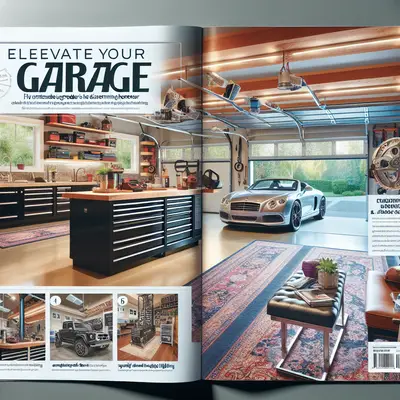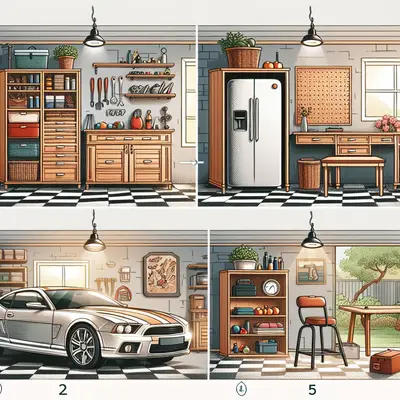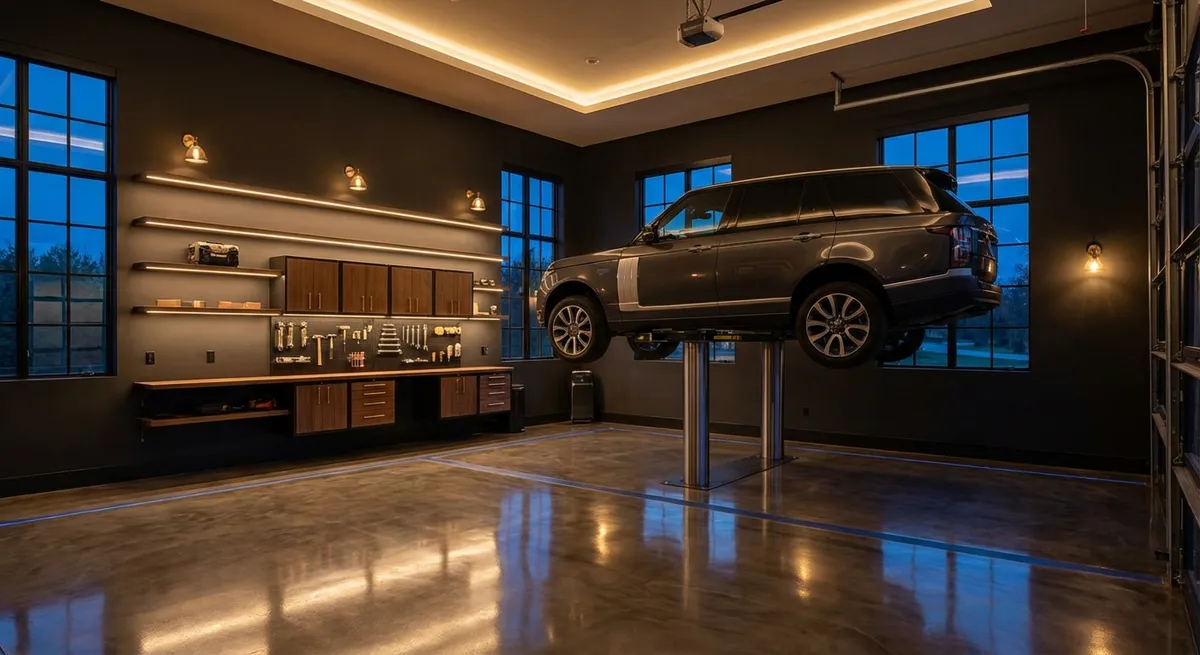
For discerning homeowners, the garage is no longer a forgotten utility space—it is a working extension of the home’s architecture, security strategy, and daily rhythm. Thoughtful upgrades here do more than “refresh” a room; they refine how your entire property functions. This guide explores elevated, repair‑focused improvements that resolve common garage frustrations while quietly enhancing value, safety, and comfort.
Below are five exclusive insights that move beyond cosmetic tweaks and into true performance-focused upgrades, tailored for homeowners who expect their garage to work as impeccably as the rest of the home.
Re‑Engineering the Threshold: Where the Driveway Meets the Garage
For many homes, the most persistent garage problem begins at the threshold: minor flooding after storms, salt damage in winter, and an uneven bump that punishes suspensions and strollers alike. Yet this junction is rarely upgraded with the same seriousness as a front entry.
A refined solution starts with a precision-installed garage door threshold system paired with a properly graded driveway apron. Modern, high-density rubber or composite thresholds, bonded to a clean concrete surface, create a subtle but effective barrier against wind‑driven rain, pests, and debris. When paired with a carefully designed slope at the driveway interface, pooled water is directed away from the interior instead of creeping inward.
For homes battling seasonal snow, a thoughtfully selected threshold also protects interior slabs from de‑icing salts that rapidly degrade concrete and corrode reinforcing steel. The result: a garage that stays drier, cleaner, and significantly more durable, without the visual bulk of improvised ramps or mats. This is a quiet upgrade that feels like luxury every time you cross the threshold—no more standing water, no more jarring transitions, and no more improvising with towels or shop vacs after every storm.
Climate-Controlled Performance: Insulation That Matches the Home
Many homeowners invest heavily in whole‑home comfort, then accept a garage that swings between icy and sweltering. The consequence isn’t merely discomfort: temperature extremes in the garage accelerate wear on vehicles, stored belongings, finishes, lubricants, and even the garage door opener itself.
A premium upgrade begins with treating the garage envelope—walls, ceiling, and door—with the same seriousness as a partially conditioned space. This includes properly specified insulation (often above local code minimums), air sealing around penetrations and framing, and an insulated, tightly weather‑stripped garage door with a known R‑value. When combined, these measures dramatically reduce thermal flux, even if the garage is not fully heated or cooled.
The payoff is tangible. Finishes age more slowly, stored items are less prone to warping or mold, and tools remain closer to optimal operating temperatures year‑round. For homes with living spaces above or adjacent to the garage, improved insulation materially enhances comfort and can reduce energy consumption. Instead of treating the garage as a sacrificial zone, this approach elevates it to a thermally controlled buffer that supports the performance and longevity of the entire home.
Silent Mechanics: Upgrading the Motion, Not Just the Door
Most garage upgrades obsess over the visible door panel while ignoring the mechanical choreography that lifts it several times a day. Yet for many homeowners, the real problem is not aesthetics—it is noise, vibration, and unreliable operation that disrupts the household.
Transitioning from a basic chain‑drive opener and tired hardware to a modern, belt‑drive or direct‑drive system with soft‑start and soft‑stop technology transforms how the space feels in use. Precision‑balanced torsion springs, correctly sized for the door weight, reduce strain on the opener, while nylon‑coated rollers and properly aligned tracks reduce friction and resonance. The result is a smoother, more controlled movement that is quieter, safer, and dramatically easier on components.
This mechanical refinement is about more than comfort. A precisely tuned system is less likely to suffer sudden failures, sagging doors, or misaligned safety sensors. For homes with bedrooms above or next to the garage, these upgrades noticeably improve sleep and day‑to‑day serenity. It is the difference between a door that simply “works” and a door that feels engineered—predictable, quiet, and confident in every cycle.
Intelligent Light and Power: Wiring the Garage for Modern Living
The modern garage must do more than house a single vehicle. It is often a workshop, fitness area, storage center, hobby space, and sometimes an EV charging hub. Many garage frustrations—dim corners, tripped circuits, tangled extension cords—stem from an electrical layout that was never designed for contemporary use.
A considered electrical upgrade prioritizes illumination and specialized power. High‑CRI LED fixtures with even, shadow‑controlled distribution ensure that work surfaces, storage zones, and the entry point to the home are properly lit. Strategically placed task lighting over benches and along the door perimeter enhances safety when moving between car, steps, and interior door at night.
On the power side, dedicated circuits for tools, EV charging, or future equipment avoid nuisance trips and unsafe improvisations. Weather‑resistant outlets at logical heights, power near anticipated storage systems, and clearly labeled subpanels or breakers deliver a sense of order that busy households depend on. This is not about excess—it is about ensuring that every activity in the garage has appropriate, reliable support, and that upgrades in one area (such as an EV charger) do not compromise the rest of the home’s electrical performance.
Storage With Structural Discipline: Protecting the Shell While Maximizing Space
Garages often become the default repository for everything that has no obvious home. The resulting clutter is more than an aesthetic issue—it can conceal leaks, accelerate corrosion, and compromise safety. A refined storage upgrade respects both visual order and the building’s structure.
Wall‑mounted systems that anchor into studs or masonry, rather than overloaded freestanding units, create a clean vertical plane that lifts items off the slab. This reveals cracks, moisture intrusion, or pest issues earlier, when they are easiest to correct. Overhead storage, when executed with engineered racks and proper fasteners into framing members, leverages unused volume without overloading joists or creating hazardous headroom conflicts.
Equally important is zoning: separating chemical storage from frequently accessed items, giving tools and seasonal equipment their own territories, and keeping mechanical and electrical systems unobstructed. This disciplined approach turns the garage from a chaotic storage shed into a precisely organized environment where maintenance, repairs, and daily routines can unfold smoothly. The benefit is not just neatness; it is a safer, more predictable space with fewer surprises.
Conclusion
Truly elevated garage upgrades are not defined by how dramatic they look, but by how effortlessly they resolve day‑to‑day frustrations: water that no longer intrudes, doors that move with quiet assurance, climates that protect rather than punish, power that anticipates, and storage that reveals instead of conceals.
For homeowners who expect their homes to operate at a higher standard, the garage is an opportunity—often the most neglected one—to align performance with the rest of the property. When you treat this space as an engineered environment instead of an afterthought, every arrival and departure feels more composed, more secure, and unmistakably more refined.
Sources
- U.S. Department of Energy – Insulation and Air Sealing - Guidance on effective insulation strategies and how they impact comfort and energy performance
- International Code Council – Residential Building Codes Overview - Background on structural, mechanical, and safety standards relevant to garage upgrades
- Harvard Joint Center for Housing Studies – Improving America’s Housing - Research on remodeling trends and investments that enhance home performance and value
- U.S. Fire Administration – Residential Garage Fire Safety - Information on garage fire risks and safety considerations when planning electrical and storage upgrades
- LiftMaster – Garage Door Opener Technology Overview - Manufacturer guidance on modern opener systems, noise reduction, and safety features
Key Takeaway
The most important thing to remember from this article is that this information can change how you think about Upgrades.