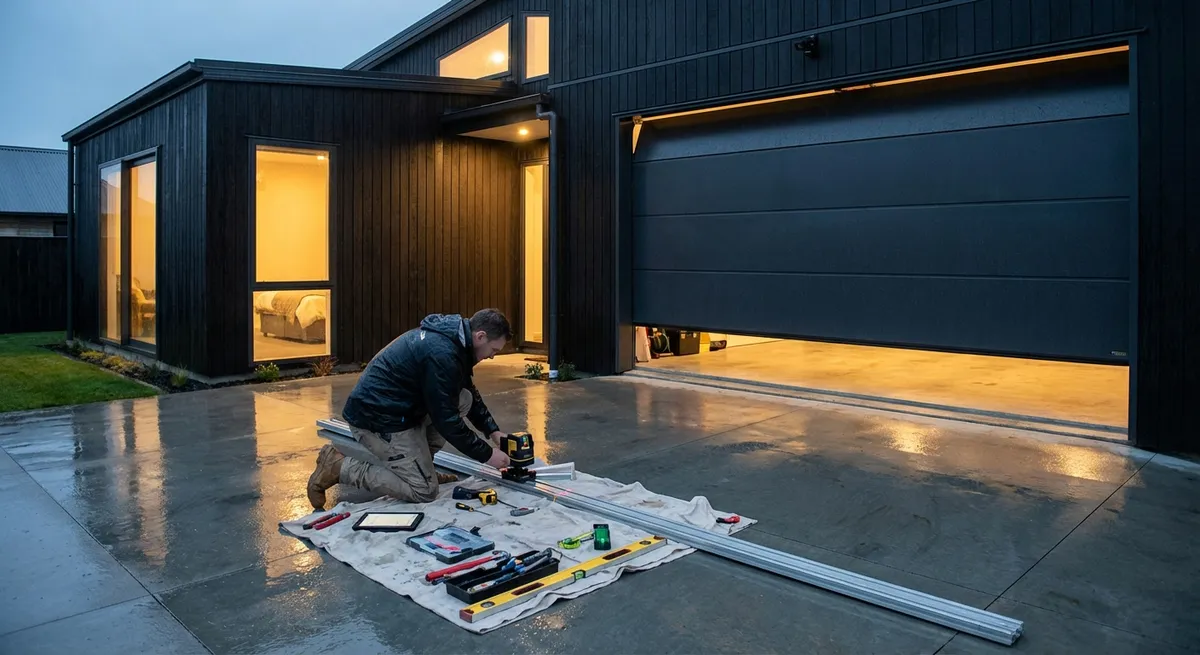
The modern garage is no longer a neglected utility zone; it is the silent concierge of the home. When it misbehaves—hesitating, shrieking, or failing outright—it disrupts more than convenience. It undermines security, devalues curb appeal, and erodes the sense of order a refined property depends on. Repairing it properly is less about quick patches and more about a disciplined, detail‑driven approach that restores quiet reliability and preserves the architectural dignity of the home.
Below, we explore a premium standard for garage repair—one that treats the door and its mechanisms as precision equipment, not just hardware to be “got working again.” Along the way, you’ll find five exclusive insights that discerning homeowners with garage issues rarely hear from standard service calls, but should absolutely demand.
Reframing “Repair”: From Emergency Fix to Mechanical Restoration
Most garage problems are treated reactively: something jams, something breaks, someone is called. Yet a sophisticated approach treats every repair as an opportunity to restore the system to its intended performance—smooth, quiet, precise, and safe.
A garage door is a carefully engineered counterbalance system, not just a panel that goes up and down. Springs, cables, rollers, tracks, hinges, opener, and even the door’s weight distribution are designed to behave as a single organism. When one component is out of tune, everything compensates—quietly at first, then destructively.
A premium repair, therefore, is less about swapping parts and more about recalibrating the entire assembly. That means verifying door balance, testing travel limits, confirming safety features, and identifying subtle misalignments that may not yet be audible but are already shortening the system’s lifespan. When performed carefully, a well-executed repair doesn’t just restore function; it recovers the measured, almost effortless movement the door had the day it was installed.
Insight 1: True Door “Health” Starts With Balance, Not the Opener
Most homeowners assume the opener is responsible for lifting the door. In reality, the springs do almost all of the work; the opener merely guides motion. When springs lose tension—even slightly—the opener is forced into a role it was never designed for: brute labor.
A properly balanced garage door can be lifted by hand with one arm, pausing gently at mid‑travel without slamming down or drifting upward. If the door refuses to hold position or feels heavier than expected, it’s an early sign of spring fatigue, mis-calibrated tension, or incorrect spring specification for the door’s weight.
This balance assessment is the most elegant diagnostic tool a skilled technician uses, and it should be the starting point for any serious repair. Ignoring balance leads to overworked openers, stripped gears, overheated motors, and broken drive components. Addressing it restores harmony to the system and immediately reduces wear on every other part.
Exclusive Insight #1:
A premium repair visit should always include a balance test and, if needed, a recalibration of the spring system. If a technician only adjusts the opener settings without verifying balance, you’re not receiving a genuinely professional repair.
Insight 2: Noise Is Not a Nuisance—It’s Data
The garage’s soundscape is a diagnostic instrument, and trained ears can read it like a chart. Homeowners often accept new noises as “it’s just getting older,” when in fact, each sound has a mechanical story behind it.
A metallic clatter may indicate worn rollers or loose hinges. A deep, resonant groan from the tracks can point to misalignment or mounting brackets biting into structural members. Rhythmic tapping can be the auditory signature of a slightly bent track or a roller that’s begun to degrade. Even the opener’s motor tone—higher, lower, or strained—offers clues about load and resistance.
Silencing these noises by spraying generic lubricants can be a cosmetic fix that masks deeper issues. A refined repair approach interprets the sounds, isolates the cause, and corrects the underlying geometry or component problems before they become failures.
Exclusive Insight #2:
Quiet operation is not merely a luxury; it is evidence that your system is under minimal mechanical stress. Insist that noise reduction be treated as a diagnostic goal, not just an aesthetic one.
Insight 3: Hardware Specification Matters More Than “New vs. Old”
When something breaks, replacement is an obvious step—but quality of the replacement is often overlooked. Not all springs, rollers, or hinges are created equal, and subtle upgrades in specification can dramatically influence both longevity and performance.
High-cycle torsion springs (often rated for 25,000–30,000 cycles or more) dramatically outlast standard options, and they are particularly well-suited to homes where the garage is the primary entry door. Precision-sealed nylon rollers with ball bearings will often transform a once‑clunky door into a quiet, gliding mechanism. Heavy‑gauge hinges and bracketry maintain alignment under repeated stress, reducing the door’s tendency to twist or rack over time.
The difference in cost between basic and premium components is negligible compared to the cost—both financial and psychological—of frequent callbacks and recurring breakdowns. A sophisticated homeowner understands that the true value is not in “cheapest per part,” but in “lowest cost per trouble‑free year.”
Exclusive Insight #3:
When approving repairs, ask not only what is being replaced, but with what specification: cycle rating on springs, material and bearing type on rollers, gauge on hinges and brackets. This single conversation can double the practical lifespan of your repair.
Insight 4: Subtle Misalignment Is the Silent Killer of Garage Systems
A garage door can still open and close even when its geometry is slightly off. The tracks may be a few millimeters out of plumb. The door may rub just enough at one jamb to leave a faint scuff. One cable may take on slightly more tension than the other. For some service providers, “it still runs” is enough. For a refined repair standard, it is not.
These almost imperceptible misalignments are what quietly eat hardware from the inside out. Uneven load causes accelerated roller wear, early hinge fatigue, and abnormal cable behavior. The opener senses this extra resistance and compensates, leading to motor strain and logic board errors over time.
Premium repair work treats alignment as non‑negotiable. That can mean shimming track brackets, truing the vertical and horizontal tracks with precision, verifying the header bracket position for the opener, and ensuring equal cable tension. To the casual eye, these corrections are invisible. To the system, they are transformative.
Exclusive Insight #4:
Any repair that addresses only the “obvious broken part” without confirming track plumb, door squareness, and cable symmetry is, at best, partial. The most durable repairs are those that restore geometry, not just function.
Insight 5: The Opener Is a Brain—And It Needs Recalibration After Major Repairs
Modern garage door openers are increasingly intelligent devices, equipped with force sensing, travel memory, and safety logic designed to protect both people and property. Yet these systems are often left in their old configuration even after springs, cables, or hardware have been replaced. The result is a powerful brain working off outdated assumptions.
Whenever substantial repairs are completed—especially changes to springs, door weight, or hardware friction profile—the opener should be retrained. That includes resetting travel limits, reprogramming force settings, checking soft‑start and soft‑stop behaviors if available, and re‑verifying response to obstructions.
This recalibration is more than procedural housekeeping. If the opener believes the door should feel heavier or lighter than it now does, it may fail to react properly to obstructions or may overdrive the system, further stressing components. A refined repair always ends with the opener and hardware “in agreement” about how the door should behave.
Exclusive Insight #5:
Consider opener recalibration an essential final chapter in any major repair, not an optional convenience feature. If your technician replaces springs or major hardware but doesn’t formally retrain the opener, the repair is unfinished.
Beyond the Fix: Elevating the Daily Experience of Your Garage
A high‑standard repair does more than restore movement; it restores confidence. The door should open with a single, measured command. It should close with an assured, quiet descent, sealing the home with a sense of finality, not anxiety. The opener should respond predictably, safety systems should react instantly, and the physical motion of the door should feel almost choreographed.
For homeowners who expect more from their spaces, the difference between a standard and a sophisticated repair is immediately noticeable. The door sounds different, feels different, and behaves differently—more like a precision instrument than a necessary nuisance.
If your garage is already demanding attention, treat this moment not as an inconvenience, but as an opportunity. Insist on a repair approach that respects balance, listens to noise as data, elevates hardware specification, corrects micro‑alignment, and recalibrates the opener as a true control system. The result is not just fewer service calls—it is the quiet pleasure of an entryway that performs with the same composed reliability as the rest of your carefully considered home.
Conclusion
When viewed through a refined lens, garage repair becomes less about “getting it working again” and more about restoring a mechanical ecosystem to its intended grace. By demanding attention to balance, listening to the system’s acoustics, specifying superior hardware, insisting on meticulous alignment, and recalibrating the opener, homeowners can convert a frustrating breakdown into a long‑term upgrade in both performance and peace of mind.
Your garage door is the daily handshake of your property. Let the way it moves, sounds, and responds reflect the standard you’ve set for everything else in your home.
Sources
- U.S. Consumer Product Safety Commission – Garage Door Safety - Official guidance on garage door safety features, entrapment protection, and proper operation
- [International Door Association (IDA) – Homeowner Garage Door Safety Tips](https://www.doors.org/ homeowners/garage-door-safety) - Industry association resource on safe operation, maintenance, and repair considerations
- LiftMaster – Garage Door Opener Support & Safety Information - Manufacturer documentation on opener calibration, force settings, and safety sensors
- Clopay – Garage Door Maintenance & Troubleshooting - Major garage door manufacturer’s guide to mechanical balance, noise, and basic diagnostics
- The Family Handyman – How to Fix a Noisy Garage Door - Practical overview of common noise sources and component-level repair, useful as a homeowner reference
Key Takeaway
The most important thing to remember from this article is that this information can change how you think about Repair Solutions.