A garage door is more than an entrance; it is a daily mechanism of trust. It protects, it conceals, and it moves on command—often more times per day than your front door. When it falters, the inconvenience is immediate, but for the refined homeowner, the deeper concern is performance: smoothness, silence, safety, and longevity. This is where intelligent repair and thoughtful upgrades transform a standard system into something quietly exceptional.
Below are five exclusive insights that move beyond basic troubleshooting and into the realm of truly elevated garage door performance.
The Hidden Geometry of Balance: Why Your Door’s Weight Matters More Than Its Motor
Most homeowners blame the opener when a door feels heavy, hesitates, or strains. In reality, the opener is intended to guide motion—not carry the full load. The true foundation of performance lies in balance, governed by the torsion or extension springs and the door’s weight distribution.
A properly balanced door can be lifted manually with one hand and will stay in place when released halfway. When balance is off by even a small margin, the opener compensates by working harder, leading to premature wear on gears, belts, and drive trains. This invisible imbalance also amplifies noise: jerky starts, harsh stops, and rattling hardware are frequently symptoms of a door fighting its own weight.
A refined repair approach begins with a balance assessment, not a motor replacement. Professionals use calibrated scales and tension adjustments so the door’s physical geometry is correct before any electronic or mechanical upgrades are considered. Once the door is balanced, even an existing opener can feel newly powerful—precise, controlled, and far quieter than before.
Silence as a Performance Metric: Acoustics, Not Just Lubrication
Noise is often dismissed as an annoyance, but in a premium home it becomes a performance metric. A loud, clattering door is usually a combination of three issues: vibration transfer, low-grade components, and neglected contact points.
Beyond simply applying lubricant, a more sophisticated approach considers the entire acoustic pathway. Steel rollers transfer vibration into metal tracks; upgrading to nylon rollers with high-quality, sealed ball bearings can dramatically soften the sound profile. Rigid angle brackets and improperly secured track supports can act like tuning forks, carrying noise into framing and drywall; adding rubber isolation pads or strategically placed vibration dampers can interrupt this transfer.
Even the opener’s mounting can be refined. Ceiling-mounted units often benefit from anti-vibration mounts and reinforced attachment points that reduce echo in larger garages with hard surfaces. The result is not only a quieter door, but a more composed motion—one that feels as dignified as it sounds.
Smart Control, Subtle Security: Using Technology Without Advertising Vulnerabilities
Modern garage doors increasingly interface with Wi‑Fi, smartphones, and cloud services. While the convenience is undeniable, a discerning homeowner will insist on discreet security as well as ease of use.
Older openers that rely on fixed-code remotes are vulnerable to code grabbing and unauthorized access. Upgrading to rolling code technology (sometimes branded as Security+ or similar systems) ensures that each use generates a unique, encrypted code. Smart openers with integrated Wi‑Fi and official apps from established manufacturers offer additional layers—access logs, remote closure confirmations, and guest access that can be revoked instantly.
Yet subtlety is equally important. A truly considered setup avoids obvious exterior keypads, weakly protected Wi‑Fi networks, and shared login credentials. Two-factor authentication on your garage app, a dedicated guest profile for service providers, and alignment with a reputable smart home ecosystem (such as Apple HomeKit, Google Home, or Amazon Alexa, when properly configured) create a system that is intelligent but not intrusive. Security should feel seamless, not performative.
Materials and Climate: Matching Your Door to Your Environment, Not Just Your Façade
Most garage door choices start with appearance, but long-term satisfaction comes from aligning materials with climate and usage patterns. A visually striking door that warps, delaminates, or corrodes is not luxury—it is liability.
In coastal or high-humidity environments, steel doors with robust factory-applied coatings and corrosion-resistant hardware (stainless or galvanized components) significantly extend service life. In regions with extreme temperature swings, insulated doors with polyurethane foam cores provide more than energy efficiency; they stabilize interior temperatures for stored vehicles, delicate equipment, or integrated workshop spaces, and reduce thermal stress on the door’s panels and joints.
For homes with design-forward façades, high-end wood or composite doors can be elevated through careful specification: engineered cores to prevent warping, UV-resistant finishes, and schedule-based maintenance that treats the door more like fine exterior millwork than generic hardware. When the door’s material is thoughtfully matched to its climate and demands, repair becomes strategic refinement rather than constant triage.
Precision Maintenance: Small Interventions That Protect Major Investments
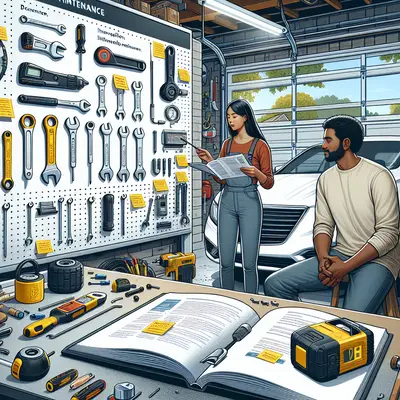
Routine maintenance is often framed as a checklist, but truly premium care is about precision: making small, informed interventions that prevent larger, more disruptive failures.
A sophisticated maintenance plan includes:
- Torque-verification of critical fasteners on hinges, brackets, and tracks, ensuring nothing gradually works loose and misaligns the system.
- Spring lifecycle awareness, with notation of installation dates and cycle ratings, so springs are proactively replaced before sudden failure—especially important for doors used multiple times daily.
- Cable and drum inspections for fraying, uneven winding, or surface damage, preventing catastrophic cable failures that can jam or misalign the door.
- Photo-eye and safety sensor calibration to ensure consistent alignment, correct mounting height, and clean, unobstructed lenses, preserving both safety and reliability.
- Opener force and travel limit fine-tuning, so the door doesn’t over-travel, slam, or exert unnecessary force on the floor, the weather seal, or the opener’s internal components.
This level of attention transforms repairs from reactive to anticipatory. The homeowner is no longer surprised by failure; instead, the system is gently, consistently kept within ideal operating parameters—quiet, composed, and trustworthy.
Conclusion
A garage door that simply “works” is acceptable. A garage door that works with precision, silence, and intelligence is an asset. By understanding balance rather than blaming the motor, treating sound as a design element, integrating smart controls with subtle security, respecting the interplay of materials and climate, and practicing precise, lifecycle-aware maintenance, homeowners elevate their garages from mere entry points to finely tuned mechanical companions.
In a home where every detail matters, the garage door deserves the same considered attention as any other sophisticated system. Done well, the result is not loud or showy. It is something better: a quiet, confident mechanism you barely notice—because it operates exactly as it should.
Sources
- U.S. Consumer Product Safety Commission – Garage Door Safety – Official guidance on garage door safety features and best practices
- International Door Association – Homeowner’s Guide to Garage Doors – Industry-level overview of components, maintenance, and safety considerations
- LiftMaster Official Website – Safety & Security Features – Details on rolling code technology, smart controls, and modern opener capabilities
- Clopay – Garage Door Insulation & Energy Efficiency – Explains insulated door construction, climate considerations, and performance benefits
- University of Illinois Extension – Home Maintenance Basics – General home maintenance principles that inform structured, preventive care approaches
Key Takeaway
The most important thing to remember from this article is that this information can change how you think about Garage Doors.