The garage door is often the largest moving element of a home—and one of the least understood. When it falters, the disruption is immediate: compromised security, diminished curb appeal, and a daily ritual suddenly made frustrating. Yet the difference between a temperamental door and a flawlessly reliable one usually lies not in dramatic overhauls, but in a series of precise, well‑informed decisions. This guide explores refined, practical solutions for discerning homeowners who expect their garage doors to function as quietly and confidently as the rest of their home.
Understanding the System Behind the Surface
A garage door is more than a panel that moves; it is a carefully balanced mechanical system in which springs, cables, rollers, tracks, and the opener must operate in concert. When one element slips out of tolerance, the entire system compensates—often in ways that aren’t immediately visible but gradually accelerate wear.
A door that hesitates, shudders, or sounds harsher than it did a year ago is rarely just “getting old.” It may indicate insufficient spring tension, uneven cable loading, or rollers beginning to seize. Ignoring these early warning signs can lead to torsion spring failure, misaligned tracks, or overworked openers. A sophisticated approach treats small anomalies as data: clues that the system needs calibration, not just quick fixes.
Rather than focusing only on the opener—where many homeowners instinctively look—step back and consider balance, alignment, hardware condition, and the door’s weight. A properly balanced door can be lifted manually with minimal effort and will stay in place when raised halfway. If it doesn’t, the problem is in the counterbalance system, not the motor. This distinction is the foundation of intelligent, long‑lasting repair decisions.
Exclusive Insight #1: Treat Noise as a Diagnostic, Not a Nuisance
Most homeowners live with noisy garage doors far longer than they should, assuming creaks and rattles are inevitable. In reality, sound is one of the most reliable early indicators of mechanical health. A refined home should not tolerate the auditory equivalent of a struggling machine in daily use.
A metallic screech often points to dry or worn rollers dragging along the track, particularly if the sound is rhythmic and matches the speed of travel. A dull clunk at specific points may hint at loose hinges or bracket fasteners, allowing individual sections of the door to flex more than intended. A grinding or buzzing from the opener could indicate a worn drive gear or chain that has lost proper tension.
Lubrication alone is not a cure-all. While a high‑quality, garage‑specific lubricant applied to hinges, rollers (if metal), and the torsion spring can dramatically soften operation, persistent or directional noise should trigger a closer inspection. The sophisticated move is to schedule a professional assessment when noise evolves—from occasional to consistent, or from soft to sharp—rather than waiting for a part to fail.
Exclusive Insight #2: Roller Upgrades Offer Outsized Returns
Rollers are the unsung heroes of a smooth garage door. Many original installations use low‑grade plastic or basic metal rollers that deteriorate quietly over time. As the bearing surfaces degrade, the door exerts more lateral force on the tracks, causing friction, noise, and eventual misalignment. For a homeowner focused on quality, rollers are a deceptively powerful upgrade.
High‑quality nylon rollers with sealed bearings significantly reduce operational noise and mechanical resistance. The door glides instead of dragging, which in turn lessens strain on the opener and springs. This can extend the life of the entire system while delivering an immediately noticeable improvement in refinement each time the door moves.
An added benefit: new rollers can reveal deeper issues. If fresh rollers still track poorly or exhibit uneven wear, the problem may be subtle track distortion, an out‑of‑square opening, or misaligned mounting brackets. In this way, a premium roller upgrade operates like a diagnostic checkpoint as well as a performance enhancement, revealing conditions that a casual repair approach might overlook.
Exclusive Insight #3: Balance and Spring Health Protect Your Opener
The opener is often blamed when a door struggles, but in a well‑maintained system, the opener is more conductor than workhorse. Its job is to guide a door that is already correctly balanced—not to compensate for failing springs or excess weight. When springs weaken or break, the opener must fight gravity instead of simply controlling motion. This is where long‑term damage begins.
A balanced door should not slam shut or shoot upward when disconnected from the opener; it should feel neutral, almost weightless. If it feels distinctly heavy to lift, your springs are underperforming or incorrectly specified for the door’s weight. Continuing to operate in this state accelerates wear on drive gears, belts, or chains, and pushes the motor toward premature failure.
Because torsion and extension springs are high‑tension components, they demand professional handling; attempting DIY adjustment or replacement can be dangerous. The elevated approach is to have spring health evaluated proactively—especially if you’ve upgraded to heavier, better‑insulated panels or added decorative hardware—so the counterbalance matches the true weight of the door. This thoughtful calibration preserves the opener, improves safety, and restores precision to every movement.
Exclusive Insight #4: Weather Seals Are Silent Guardians of the Garage
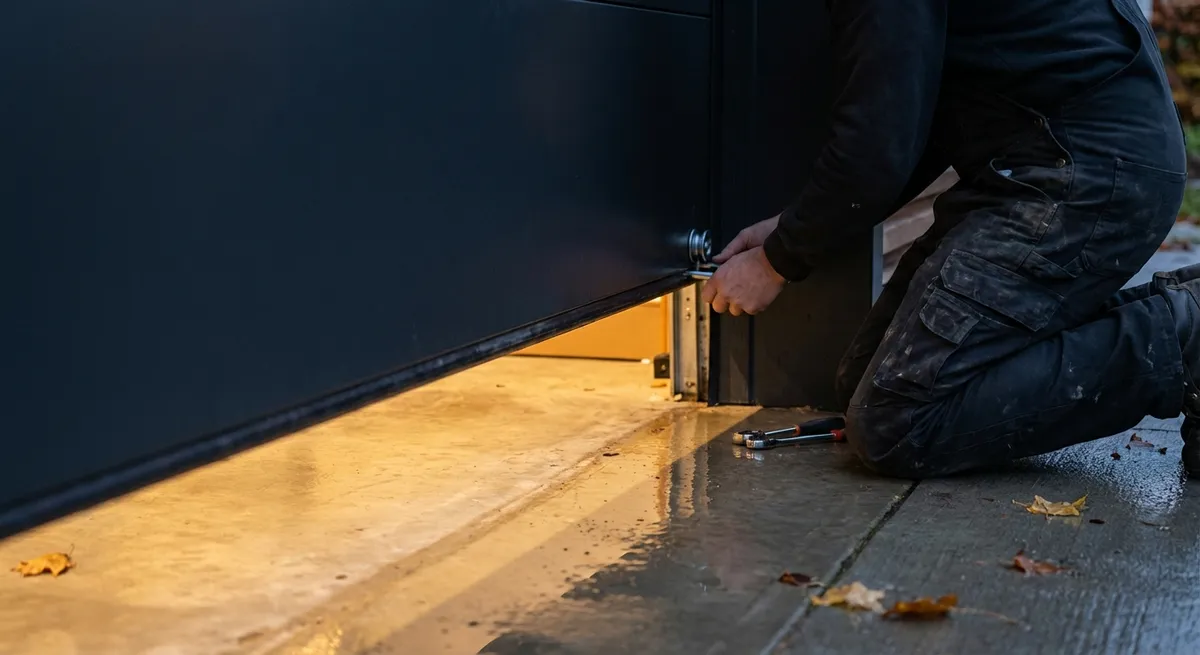
Weatherstripping is often treated as an afterthought, yet it influences everything from energy efficiency to the longevity of what you store in the garage. The bottom seal, side seals, and top molding work together to keep out water, drafts, insects, and fine debris that can corrode tools, damage finishes, or encourage mold in stored items.
A dried, cracked bottom seal allows water to wick in during heavy rain or snowmelt, pooling near thresholds and wall bases. Over time, this can compromise finishes, stain concrete, and contribute to rust on stored equipment. Side and top seals, when fatigued, allow air leaks that can undermine any investment you’ve made in an insulated door or climate‑controlled garage.
Replacing seals is a subtle upgrade that pays back in comfort and protection rather than spectacle. Choose durable, UV‑resistant materials and ensure a clean, snug fit that doesn’t bind the door. For homes in harsh climates, consider a slightly more substantial bottom seal or a threshold system that partners with the door seal to create a more reliable barrier. It’s a small refinement with a disproportionate impact on the longevity of everything behind that door.
Exclusive Insight #5: Smart Controls Are Only as Good as the Mechanics Behind Them
Modern smart openers, app‑based controls, and integrated home security systems bring welcome convenience and oversight. But there is a misconception that “smart” components inherently resolve garage problems. In reality, they merely provide more sophisticated control over a mechanism that must still be mechanically sound.
Wi‑Fi–enabled openers, automatic closing timers, and integrated camera systems do enhance safety and usability: you can confirm the door is closed, receive alerts, and monitor access remotely. However, if the door is off‑balance, the tracks are misaligned, or the hardware is fatigued, smart controls are simply supervising a struggling system.
A more considered approach pairs smart integration with a mechanical baseline: properly sized and adjusted springs, upgraded rollers, secure mounting brackets, tuned travel limits, and accurate safety sensor alignment. In this context, smart features unlock their full value—providing discreet automation over a door that already operates with precision and minimal strain. Technology becomes the finishing layer over well‑executed engineering, not a bandage over neglect.
When to Repair, When to Redesign
Not every garage door problem calls for replacement, but not every door is worth rescuing. Distinguishing between systems that benefit from refined repair and those that warrant a strategic redesign is part of a premium approach.
If your door has multiple rusted panels, severe structural damage from impact, or a history of frequent emergency repairs, you may be maintaining a system whose core integrity is already compromised. Likewise, older single‑layer steel doors or uninsulated panels in extreme climates may no longer meet your standards for temperature control, noise, or aesthetics, no matter how meticulously they are serviced.
On the other hand, many “tired” systems respond beautifully to focused upgrades: precision spring recalibration, premium rollers, new hinges, aligned tracks, modernized weather seals, and a quieter, belt‑driven opener. In these cases, strategic repair restores elegance and extends service life without the cost and disruption of full replacement. A trusted professional can help you weigh the structural condition of the existing door, your performance expectations, and the long‑term cost curve to identify which path truly aligns with your standards.
Conclusion
A distinguished garage door experience is rarely the result of one dramatic change. It is an accumulation of intelligent decisions: listening to noise as a diagnostic, upgrading small components that yield large returns, respecting spring balance, sealing the environment with care, and allowing smart technology to enhance—rather than substitute for—sound mechanics.
When treated as a precision system instead of a mere household convenience, the garage door becomes something else entirely: a quiet, reliable extension of the home’s character. Attentive repair, thoughtful upgrades, and early intervention ensure that each open and close feels less like a chore and more like a subtle affirmation that every detail of your home has been considered—and resolved—with intention.
Sources
- U.S. Consumer Product Safety Commission – Garage Door Safety Alert – Overview of safety concerns and proper operation for automatic garage doors
- International Association of Certified Home Inspectors – Garage Door Inspections – Technical guidance on components, balance, and common failure points in garage doors
- Clopay Garage Doors – Maintenance & Care Guide – Manufacturer recommendations for lubrication, inspection, and weather seal upkeep
- LiftMaster – Why Garage Door Balance Matters – Explanation of door balance, spring performance, and the impact on openers
- U.S. Department of Energy – Insulated Garage Doors – Discussion of energy efficiency, insulation, and environmental control for garages
Key Takeaway
The most important thing to remember from this article is that this information can change how you think about Garage Doors.