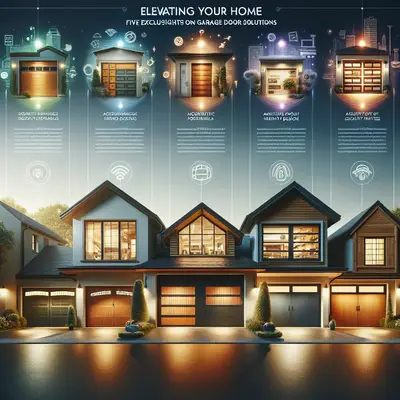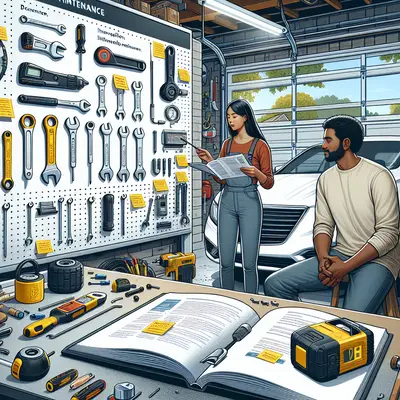
A garage door is more than a moving panel of steel or wood; it is a daily ritual, a soundscape, and a critical security barrier that frames your arrival home. When it works well, it should feel nearly invisible—quiet, balanced, and assured. When it falters, the entire experience of coming and going is disrupted. This guide explores refined, often-overlooked strategies that transform an underperforming garage door into a silent, precise, and trustworthy entryway.
Understanding the System, Not Just the Symptom
Most homeowners react to garage door issues only when something becomes loudly obvious: grinding noise, jerky motion, or a door that simply refuses to move. But a premium approach begins with understanding the door as a complete system, where small irregularities often signal deeper mechanical or structural imbalances.
A modern sectional garage door is a calibrated interplay of torsion or extension springs, cables, rollers, tracks, hinges, bearings, opener, and the door panels themselves. A subtle sag in one panel can introduce drag in the tracks. Slightly misaligned photo-eyes can force the opener to work harder, masking strain that only reveals itself as a burned-out motor months later. Rather than treating each nuisance as an isolated annoyance, a more sophisticated strategy is to view noise, vibration, and resistance as data points.
Homeowners who adopt this systems perspective tend to make better decisions: they replace failing rollers instead of repeatedly adjusting the opener force; they correct track alignment rather than compensating with heavier springs; they prioritize balanced spring tension over ever-stronger openers. The result is not merely a repaired door, but one that moves with intention—consistent, quiet, and reassuringly predictable.
Insight 1: True Quiet Begins with the Door, Not the Opener
When a garage door sounds harsh, the instinct is often to “upgrade the opener” in search of quieter operation. While belt-drive and direct-drive openers are indeed softer than chain-drive models, the opener is only the messenger. The true source of noise is almost always the door hardware and structure.
Premium quiet is achieved at the door level: high-quality nylon rollers instead of rigid metal ones, properly secured and plumb tracks, precision-lubricated hinges and bearings, and panels that are structurally sound rather than flexing or chattering during movement. Lubrication alone—applied sparingly to hinges, torsion spring coils, and bearing plates (never the tracks themselves)—can dramatically reduce metallic resonance.
An imbalanced door, forced open by a powerful motor, may move, but it will never be truly quiet. The opener then becomes an expensive bandage for a mechanical problem. A refined solution reverses the equation: first eliminate friction, looseness, and imbalance at the door, then let the opener merely guide rather than struggle. Only when the door can be comfortably lifted by hand with minimal effort should one invest in a premium, quiet-drive opener to complete the experience.
Insight 2: Balance Is a Safety Feature, Not a Convenience
Garage door balance is often discussed as a convenience—how “easy” it is to lift the door manually. In reality, proper balance is a critical safety and longevity factor. A well-balanced door stays in place when lifted halfway and does not slam shut or shoot upward. It is the delicate equilibrium between door weight, spring torque, and cable tension.
Doors that drift closed or insist on rising on their own are putting continuous, uneven stress on the opener. The motor compensates, often using higher force settings that can mask an underlying hazard. That same excessive force can become dangerous if safety sensors fail or are bypassed. An unbalanced door also stresses hinges, track brackets, and panel joints, leading to premature fatigue and cracking.
A discerning homeowner treats spring work with the respect it deserves: torsion springs are under tremendous tension and can cause severe injury if mishandled. Any adjustment to spring torque, cable replacement, or drum re-seating should be left to qualified professionals with the correct tools. The homeowner’s role is to recognize the imbalance early—by periodically disconnecting the opener and testing manual lift—and to insist that any comprehensive service call includes a proper balance check, not merely an opener reprogramming.
Insight 3: Hardware Quality Quietly Dictates Longevity
Many garage doors fail not because of dramatic events, but because of quiet compromises in hardware quality. Builders often install economical doors and components that function adequately for a few years but age poorly under daily use. Over time, low-grade rollers flatten, hinges elongate their screw holes, and thin tracks flex under the weight of the door.
Elegance in a garage door system is found in the details that are rarely seen: ball-bearing nylon rollers that glide rather than scrape, heavy-gauge steel hinges that resist bending at pivot points, and properly braced top fixtures that keep the door stable at the most stressed section. Even fasteners matter; oversized, corrosion-resistant lag screws anchoring tracks and spring brackets into solid framing make the entire assembly more stable and safer.
For homeowners already facing chronic misalignment, recurring noise, or panels that bind in the tracks, a targeted hardware upgrade can be more intelligent than a full-door replacement. Replacing rollers, hinges, and critical brackets with premium components often rejuvenates an older door, giving it a second life with a markedly more refined motion. The difference is felt not only in quietness, but also in the confidence that the door is not perpetually operating at the edge of failure.
Insight 4: Thermal Performance and Sound Control Start at the Door
The garage is often the most thermally volatile space in a home—sweltering in summer, frigid in winter, and acoustically exposed to the street. Yet many doors are essentially uninsulated metal shells, offering little buffer against temperature fluctuations or noise.
Insulated doors—especially those with a steel-polyurethane-steel “sandwich” construction—provide two significant benefits: thermal moderation and structural rigidity. The insulation core helps stabilize temperatures, which is particularly valuable if there is living space above or adjacent to the garage, or if the garage is used as a workshop or gym. In some climates, this can modestly reduce energy demand for the rest of the home by reducing heat loss or gain through the garage interface.
Structurally, insulation stiffens door panels, reducing flex and vibration during operation. That stiffness translates directly into a quieter, more composed motion; the door behaves less like a drumhead and more like a solid architectural element. Homeowners dealing with resonance, rattling, or street noise should consider not only the R-value of the door but the overall construction and sealing: perimeter weatherstripping, bottom seals, and, where appropriate, threshold seals to close gaps at the floor. The cumulative effect is an entry that feels more akin to a well-constructed exterior wall than a movable partition.
Insight 5: Smart Controls Are Only as Trustworthy as Their Safety Layer
Smart garage door openers and Wi‑Fi-enabled controllers promise effortless convenience: remote monitoring, one-tap closing from anywhere, and integration with home automation systems. Yet in the pursuit of convenience, it is easy to overlook the fundamentals of safety and security that should underpin every remote control action.
A sophisticated approach to smart control begins with ensuring that the underlying mechanical and safety systems are impeccable. Photoelectric sensors must be correctly aligned, mounted at the appropriate height, and kept clean. Auto-reverse force settings should be verified so that the door reverses promptly upon encountering resistance. Regular testing—placing a solid object like a piece of wood beneath the door and confirming proper reversal—is non-negotiable.
On the digital side, homeowners should treat their garage access with the same seriousness as a front door lock or alarm system. Strong, unique passwords for the garage door app, updated firmware on the opener, and the use of rolling-code or Security+ 2.0-style remotes help protect against code grabbing and unauthorized access. For families, activity logs—many smart systems record each open and close event—offer a discreet layer of accountability and oversight.
The true luxury of smart access lies not in mere novelty, but in a system that can be trusted absolutely: a door that moves predictably, stops safely, logs its activity, and responds to your commands with quiet assurance rather than uncertain strain.
Conclusion
A garage door that functions at a truly premium level does not call attention to itself. It rises and lowers with quiet certainty, maintains its balance over years, protects the home from weather and noise, and integrates intelligently with modern security and automation. Achieving that level of refinement is less about dramatic upgrades and more about intelligent, precise decisions: addressing the mechanics before the motor, prioritizing balance and hardware quality, rethinking insulation as both a comfort and structural asset, and layering smart controls over a thoroughly safe system.
For homeowners willing to look beyond the obvious symptom and consider the entire door assembly as a finely tuned mechanism, the garage entrance becomes more than a utility; it becomes a daily expression of quiet engineering and thoughtful care.
Sources
- U.S. Consumer Product Safety Commission – Garage Door Operator Requirements – Details federal safety standards and requirements for garage door openers, including entrapment protection.
- International Door Association (IDA) – Homeowner Garage Door Safety – Provides best practices on safe operation, maintenance, and professional service recommendations.
- Clopay Garage Doors – Insulated vs. Non-Insulated Doors – Explains construction types, R-values, and the benefits of insulated garage doors.
- LiftMaster – Security+ 2.0 Technology Overview – Describes rolling-code and modern security features in premium garage door openers and remotes.
- Energy.gov – Air Sealing Your Home – Discusses the impact of air leakage and sealing strategies, relevant to improving garage door perimeter sealing and home comfort.
Key Takeaway
The most important thing to remember from this article is that this information can change how you think about Garage Doors.