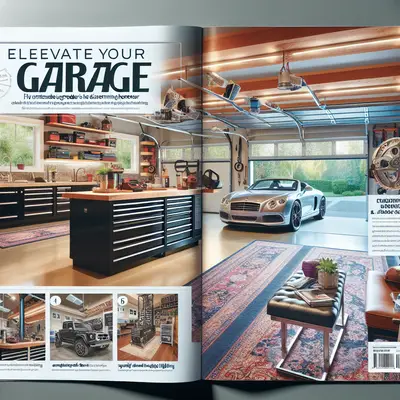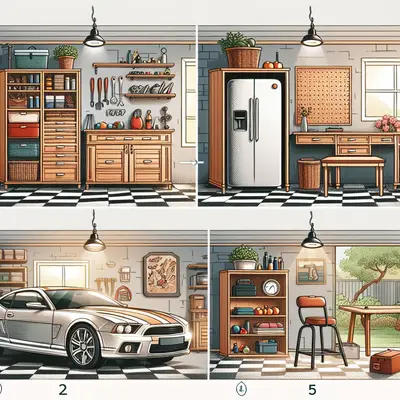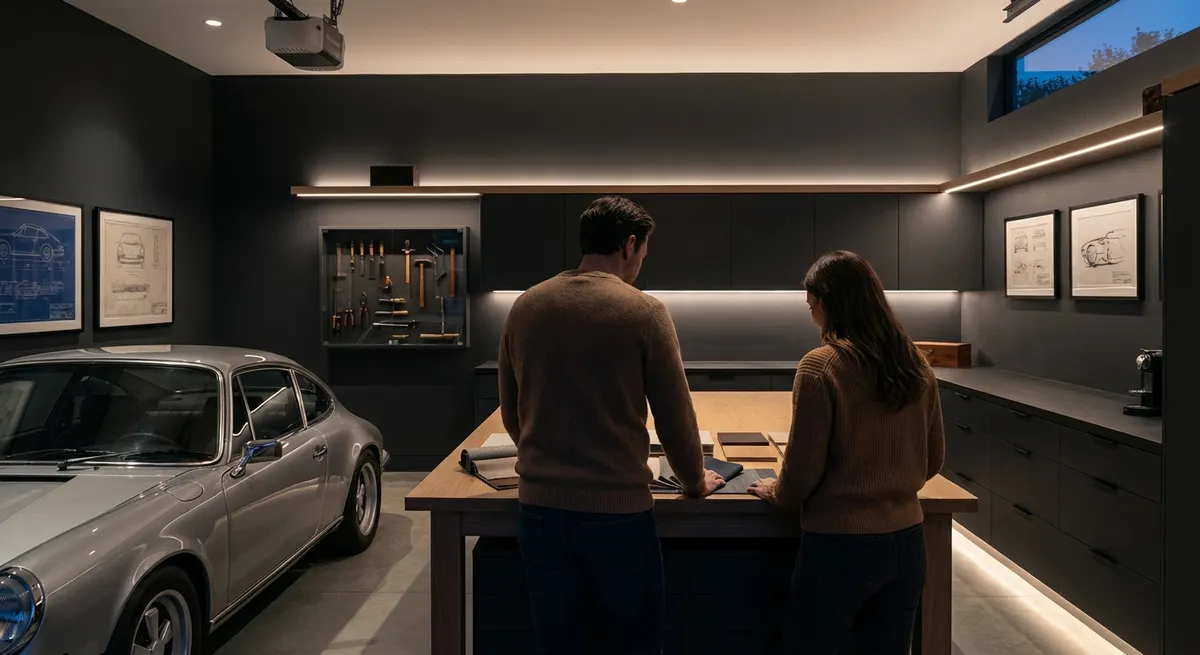
A well-considered garage upgrade is less about spectacle and more about quiet authority. When executed with precision, the space ceases to feel like a concrete afterthought and instead functions as an extension of the home’s most refined rooms—simultaneously practical, composed, and visually coherent. For homeowners who expect their garage to perform at the same level as their kitchen or study, nuance matters: the hardware you choose, the way light falls on the floor, the behavior of the door at dawn when the neighborhood is still asleep.
Below are five exclusive, detail‑driven insights tailored to homeowners who are dissatisfied with a merely “functional” garage and are ready to shape a space that feels finished, deliberate, and quietly impressive.
Elevating the Envelope: Walls, Ceiling, and the Sense of Architecture
Most garages feel unfinished because the architectural “envelope” is treated as secondary. Premium upgrades begin by giving walls and ceilings the same level of respect as interior rooms—not by over-decorating, but by refining surfaces and proportions.
Start with the walls: replace bare drywall seams and random patchwork with a smooth, primed, and painted finish in a restrained, light-neutral palette. Cool grays and warm off-whites with a matte or eggshell sheen disguise minor imperfections while reflecting light evenly. Where possible, conceal exposed wiring in conduit painted to match the wall, or reroute it within the wall cavity during a broader electrical update.
The ceiling is equally critical. If your garage ceiling is a maze of trusses and cobbled fixtures, consider finishing it with drywall and recessed LED cans aligned in clean, predictable grids. Not only does this enhance insulation potential, it visually lowers the “noise” level overhead. An upgraded, insulated overhead door with a quiet, properly balanced track system completes the envelope, reducing sound transmission and improving thermal performance. The end result is a space that reads as intentional architecture rather than an oversized storage closet.
Floor as Foundation: From Harsh Concrete to Thoughtful Surface
A garage floor is more than a slab that happens to be underfoot; it sets the visual and functional tone for every upgrade that follows. Homeowners accustomed to premium interiors often underestimate how transformative a carefully selected floor treatment can be.
High-solids epoxy or polyaspartic coatings, professionally installed, deliver a sleek, durable surface that resists tire marks, chemicals, and staining. To avoid the “dealership showroom” cliché, focus on a subtle mica or quartz flake blend in mid-tones that harmonize with your home’s exterior and interior palette. The goal is not sparkle, but depth and quiet sophistication.
Pay special attention to preparation. Moisture testing, crack repair, and mechanical grinding are non-negotiable for long-term adhesion. A rushed weekend DIY kit often leads to peeling and hot-tire pickup—issues that undermine the very elegance you’re seeking to achieve. If you prefer a more restrained aesthetic, consider a polished concrete system with penetrating densifier and a satin finish: minimal, architectural, and easy to maintain.
Finally, introduce zoning through the floor. Slightly darker tones under parked vehicles and lighter tones near workbenches or entry doors subtly guide usage without the need for visual clutter such as stripes and decals. Your floor becomes a calm, ordered foundation for the entire space.
Intelligent Storage That Disappears, Not Dominates
Most garages fail visually because storage solutions are loud—mismatched shelving, open racks of visual chaos, and ad-hoc hooks. True refinement emerges when storage is abundant yet visually recessive, allowing the room to feel composed even on a busy weekday.
Wall-mounted cabinet systems with full-height doors and integrated toe kicks create a clean, furniture-like presence. Opt for flat-panel doors in durable laminates or powder-coated steel in muted tones—think charcoal, stone, or warm white—rather than bright primary colors. Handles should be discreet and consistent, or replaced with integrated pulls for an even cleaner line.
Overhead storage should feel engineered, not improvised. Heavy-duty ceiling racks are useful but can read industrial if overused. Reserve them for infrequently accessed items, and keep bins uniform in color and size with clear, minimalist labeling. For day-to-day tools and supplies, use shallow drawers with compartmental inserts; the luxury is not in the tool itself, but in being able to reach it instantly without visual searching.
Crucially, design storage around how you live: sports seasons, gardening cycles, holiday décor, and hobby zones. When your layout anticipates how items flow in and out through the year, the garage stops being a dumping ground and becomes a smoothly functioning backstage—present, but never clamoring for attention.
Light, Power, and Quiet: Upgrading the Garage’s “Invisible” Systems
Sophisticated garage upgrades often emerge most strongly in dimensions you rarely photograph: lighting, power delivery, and acoustic behavior. Yet these invisible systems are what separate a merely upgraded garage from a genuinely elevated one.
Begin with layered lighting. Replace a single central fixture with multiple high-CRI LED sources: broad, diffused fixtures for ambient light; directional task lights over workbenches; and subtle wall or under-cabinet illumination for evenings when you enter from the driveway. Aim for a consistent color temperature (around 3000–4000K) to avoid the jarring contrast between warm interior lighting and harsh blue garage light.
Electrical upgrades are equally important. Dedicated circuits for power tools, EV charging, and refrigeration eliminate nuisance tripping and reduce the risk of overloaded outlets. Strategically placed outlets along work surfaces and at mid-wall height near storage zones prevent tangled extension cords and allow for future flexibility—whether that means a bike repair stand, a smart home hub, or a compact freezer.
Sound is the final, often overlooked layer. A belt-drive or direct-drive garage door opener with soft-start and soft-stop features dramatically reduces noise and vibration. Adding minimal acoustic treatment—such as insulated doors, weatherstripping, and, where appropriate, sound-dampening panels on shared walls—keeps early departures and late arrivals from waking the household. The experience feels deliberate and composed, even at 6 a.m.
Seamless Transitions: Integrating the Garage into the Life of the Home
The most luxurious garage upgrades don’t call attention to themselves; they simply make every arrival and departure feel calmer, more organized, and more aligned with the way you live. This means focusing on transitions—between house and garage, garage and driveway, storage and use.
Consider the door from the garage into the home as a design opportunity, not an afterthought. A solid-core, well-sealed door with premium hardware improves security, energy efficiency, and sound isolation. Echo a material or finish from your interior—such as the lever style or stain color—to maintain continuity and hint that the garage is part of the home’s design language, not merely adjacent to it.
Create a defined “arrival zone” just inside the house door: a modest bench, discreet hooks, and a slim console or cabinet for keys and small items. When this zone is integrated with your garage layout—parking lines, cabinet placement, and walking paths—you avoid bottlenecks and clutter, especially during busy mornings.
Finally, think seasonally. Install easily adjustable wall systems—such as track-based panels with movable hooks and baskets—so that winter gear, bicycles, gardening tools, and outdoor cushions can rotate in and out without a full reconfiguration. These subtle adaptations turn your garage into a responsive space, always one step ahead of your daily life rather than lagging behind it.
Conclusion
A refined garage is not defined by extravagance but by coherence: the way structure, storage, light, and sound align to support how you actually live. When floors are thoughtfully finished, storage is visually quiet, systems are intelligently upgraded, and transitions are carefully considered, the garage stops feeling like a compromise and begins to function as an integral, polished chapter in your home’s story.
For homeowners who expect their spaces to work as well as they look, these upgrades are not indulgences. They are the difference between a garage that merely holds your car and one that quietly reflects the standards you apply everywhere else.
Sources
- U.S. Department of Energy – Insulation and Air Sealing - Guidance on improving building envelopes, insulation, and energy performance
- Energy Star – Residential Garage Door Guidance - Official information on insulated doors and efficiency considerations
- ConcreteNetwork – Garage Floor Coatings - Detailed overview of epoxy, polyaspartic, and polished concrete options
- Occupational Safety and Health Administration (OSHA) – Garage Electrical Safety - Best practices and requirements related to electrical safety in workspaces
- International Association of Certified Home Inspectors – Garage Inspection and Safety - Comprehensive discussion of garage construction, fire separation, and safety features
Key Takeaway
The most important thing to remember from this article is that this information can change how you think about Upgrades.