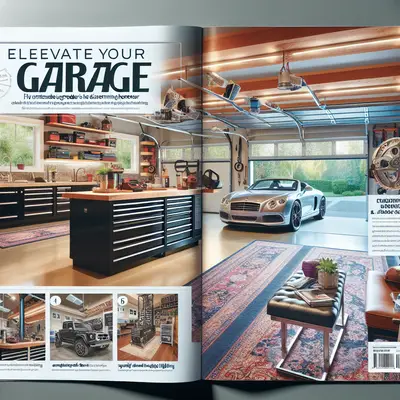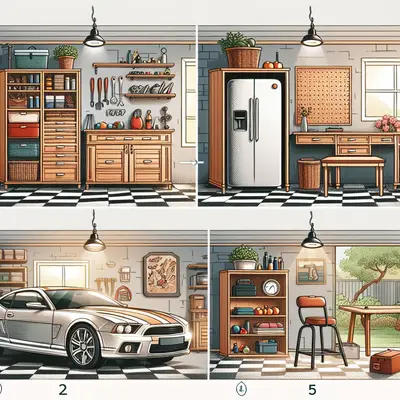
The most successful garage upgrades are rarely the loudest. They are the nuanced decisions—materials specified with intent, mechanisms chosen for their restraint, and systems calibrated for both reliability and refinement. For homeowners who view the garage as an extension of a well-considered residence rather than a purely utilitarian shell, strategic upgrades can deliver a level of ease and assurance that feels almost architectural in its impact.
Below are five exclusive, under-discussed insights that distinguish a merely updated garage from one that truly performs at a higher tier.
1. Specifying Hardware Like a High-End Appliance, Not a Commodity
Most garages fail not because of the door panel itself, but because of the hardware behind it. Treating springs, rollers, and tracks as a system—rather than a collection of interchangeable parts—elevates both reliability and refinement.
Insist on high-cycle torsion springs rated well beyond standard builder-grade counts, especially if your household uses the door as a primary entry. Pair these with nylon-coated, sealed-bearing rollers to reduce vibration and harshness; the difference is immediately perceptible inside adjacent living spaces and bedrooms. Precision-aligned, heavier-gauge tracks further minimize side-to-side play, which is often the hidden cause of squeaks, resistance, and premature opener fatigue.
This “appliance-level” specification approach costs more upfront but drastically reduces emergency failures, erratic operation, and the subtle mechanical sounds that undermine an otherwise sophisticated home.
2. Treating the Garage Envelope as a Thermal and Acoustic Buffer
An upgraded door is only part of the story. A garage that truly serves a refined home acts as a buffer—modulating temperature and sound between the exterior environment and the interior of the residence.
A polyurethane-insulated steel or aluminum door with proper thermal breaks is a strong start, but its performance is contingent on perimeter sealing. High-quality bottom seals, side weatherstripping, and top caps—properly compressed but not over-tightened—create a continuous barrier against drafts, water intrusion, and road noise. In coastal, desert, or snow-heavy climates, this controlled envelope also protects tools, finishes, and vehicles from aggressive temperature swings.
For attached garages beneath bedrooms or living spaces, consider adding rigid foam insulation or mineral wool to shared walls and ceilings. The result is a noticeably more stable environment: HVAC systems cycle less, rooms above remain quieter, and the garage itself becomes suitable for elevated uses—home gym, studio, or detailing bay—without feeling like a compromise.
3. Curating Lighting for Precision, Not Just Visibility
Lighting is often reduced to a single bulb or a harsh, flickering strip—an afterthought in a space that deserves better. A carefully curated lighting plan transforms the garage from “storage shed” to “precision workspace.”
Begin with high-CRI (Color Rendering Index) LED fixtures in a neutral white (4000–5000K) to render paint colors, fluids, and finishes accurately. Then think in layers: overhead linear LEDs for general illumination; targeted task lights above workbenches or detailing zones; and softer perimeter or under-cabinet lighting for orientation when the main lights are off. Motion sensors can be tuned for sensitivity and delay, so illumination feels responsive rather than abrupt.
This level of lighting control makes simple tasks—locating a fastener, inspecting a tire, reading a label—effortless and precise. It also elevates the visual character of the space, making clean organization and quality finishes truly visible and appreciable.
4. Calibrating the Opener for Quiet Authority, Not Raw Power
The conventional instinct is to buy a powerful opener and call it a day. Sophisticated garages, however, are defined less by horsepower and more by smooth, intelligent motion.
Belt-drive and direct-drive openers substantially reduce operational noise and vibration, particularly important when rooms sit above or beside the garage. Look for models with soft-start/soft-stop features, which gently ramp the door in and out of motion rather than snapping it into action. This not only sounds better but also reduces stress on hinges, springs, and panels over time.
Integrating smart controls adds a layer of discreet assurance: real-time status checks from your phone, event logs to confirm reliability, and alerts if the door remains open beyond a set time. When configured thoughtfully—strong encryption, unique credentials, and minimal unnecessary integrations—this ecosystem becomes a quiet, authoritative guardian of one of the home’s largest moving elements.
5. Designing Storage and Floor Systems to Protect, Not Just Organize
A refined garage upgrade goes beyond avoiding clutter; it actively protects what you own and the structure that houses it.
Wall-mounted storage systems that keep items off the floor not only look composed but also safeguard against minor flooding, snow melt from vehicles, and accidental impact from tires or equipment. Choosing heavy-duty, anchored tracks and cabinets rated for real loads (not decorative “garage-style” facades) ensures that the system supports tools, seasonal equipment, and bulky items without sagging or shifting.
Flooring deserves equal attention. A properly prepared concrete slab—cleaned, mechanically profiled, and repaired before coating—paired with a high-solid epoxy or polyaspartic system resists chemicals, hot tire pickup, and abrasion. Alternatively, high-quality modular tile systems can introduce drainage channels and controlled expansion while offering visual zoning for vehicles, workspace, and storage.
This integrated storage and flooring strategy reduces corrosion, simplifies cleaning, and turns the garage into a space where tools, vehicles, and finishes age gracefully rather than merely survive.
Conclusion
Elevating a garage is less about spectacle and more about intelligent, cohesive decisions. Specifying hardware as carefully as one would a premium appliance, refining the thermal and acoustic envelope, curating light for precision, calibrating motion for quiet authority, and designing storage and floors for protection rather than mere order—these are the details that distinguish a simply “upgraded” garage from one that genuinely enhances the architecture and daily life of a demanding home.
When thoughtfully executed, these upgrades disappear into the background of your routine, leaving only a sense of calm reliability every time the door moves, the lights rise, and the space responds exactly as it should.
Sources
- U.S. Department of Energy – Insulation and Air Sealing - Guidance on insulation strategies and envelope performance, relevant to treating the garage as a thermal buffer.
- International Code Council – International Residential Code (IRC) - Baseline requirements for garage construction, fire separation, and safety that inform upgrade decisions.
- LiftMaster Official Site – Garage Door Opener Features - Details on modern opener technologies, including belt drive and smart controls.
- Clopay – Garage Door Insulation Information - Technical overview of insulated door construction and R-value considerations.
- U.S. General Services Administration – Lighting Basics - In-depth discussion of LED lighting quality, color temperature, and efficiency, applicable to designing refined garage lighting schemes.
Key Takeaway
The most important thing to remember from this article is that this information can change how you think about Upgrades.