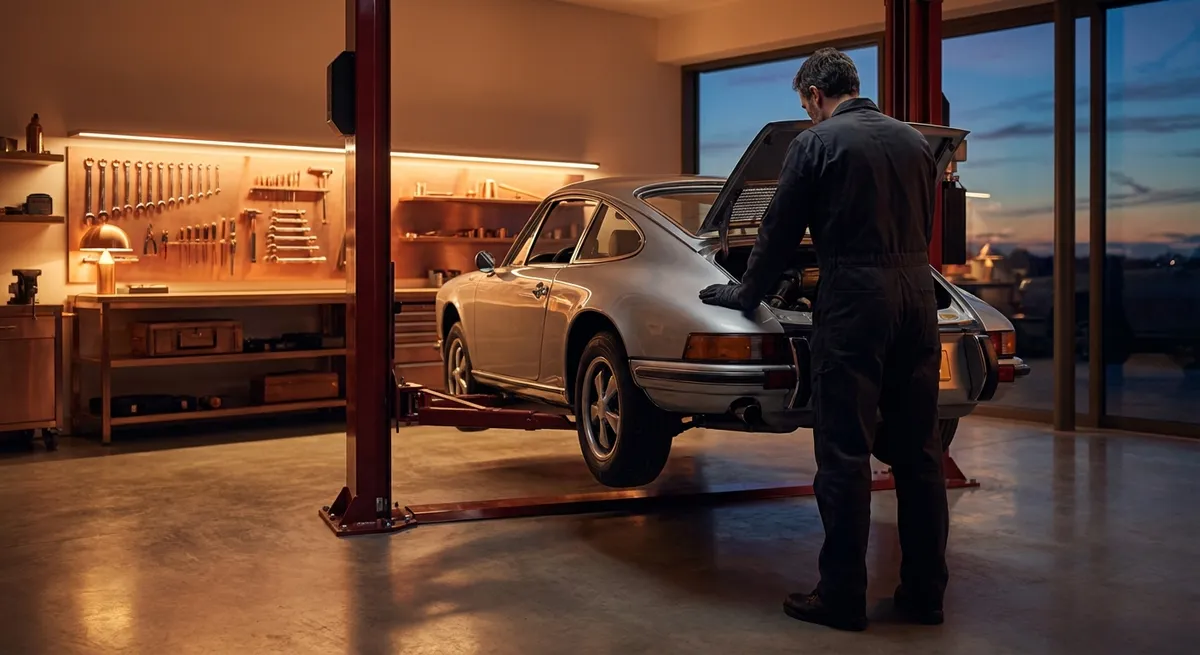
The truly refined home does not end at the front door; it extends seamlessly into the garage. When this space begins to squeak, shudder, or underperform, the response should be as considered as any intervention in a luxury kitchen or curated living room. Repairing a garage is not merely about making it work again—it is about restoring quiet authority, mechanical integrity, and long-term reliability. This is where intelligent, elevated repair solutions replace quick fixes and guesswork.
Below are five exclusive insights that discerning homeowners appreciate—subtle, strategic approaches that transform repairs from reactive chores into curated improvements.
Seeing Beyond Symptoms: Treat the System, Not the Squeak
A garage issue rarely exists in isolation, even when it presents as a single, irritating symptom—a squeaking hinge, a hesitant opener, or a misaligned panel. The sophisticated approach is to treat the entire assembly as a unified mechanical system rather than a collection of parts.
When a door becomes noisy, for example, the immediate instinct might be to spray lubricant on the loudest component. A more elevated method is to inspect load paths: springs, cables, rollers, tracks, hinges, and opener drive, asking how stress is being distributed. A loud roller may in fact be sharing the burden of misaligned tracks or under-tensioned springs. Correcting alignment, confirming proper spring balance, and verifying that the opener is not compensating for mechanical deficiency will restore quiet, measured motion—and protect expensive components from premature failure.
This systems-level thinking reduces the frequency of future breakdowns and keeps your garage door operating with the same calm precision you expect from your finest household appliances.
Precision in Balance: The Quiet Power of Proper Spring Tension
Counterbalance springs are the unsung artisans of a well-behaved garage door. Done correctly, their work is invisible; done poorly, every operation feels strained, loud, and vaguely unsafe. Many homeowners dismiss rough movement as “just getting old,” when the true culprit is subtle imbalance caused by incorrect tension or mismatched springs.
The elevated repair approach includes a meticulous balance test: with the opener disconnected, the door should float when lifted halfway, not crash down or shoot up. This simple act reveals the health of the entire counterbalance system. If the door is heavy to lift, the opener is being forced to perform a job it was never designed to do—compensating with more force, more wear, and more noise.
Professional adjustment of torsion or extension springs is not just a safety issue (these are high-tension components best left to qualified technicians); it is a refinement issue. Correct balance reduces strain on the opener, softens every start and stop, and gives the door that understated, confident motion that feels inherently premium.
Materials with Intention: Choosing Components That Age Gracefully
Not all “replacement parts” are created equal, and the difference between commodity hardware and well-chosen components is felt over years, not days. Elevated repair solutions prioritize material quality, compatibility, and long-term performance.
Upgrading to nylon-coated or sealed-bearing rollers, for instance, does more than quiet operation; it reduces friction and wear at every cycle, extending the life of both tracks and opener. Selecting heavier-gauge steel for hinges and brackets can stabilize wide or insulated doors, limiting flex and keeping panels aligned. Even something as subtle as choosing weatherstripping formulations that tolerate UV, temperature swings, and moisture will prevent warping, drafts, and water intrusion that quietly degrade the space.
This mindset turns each repair into an opportunity for incremental refinement. Instead of simply “fixing what broke,” you elevate the baseline: every replacement is intentionally better than what failed, not just a one-to-one swap.
Calibrated Intelligence: Programming Openers for Grace, Not Just Force
Modern garage door openers are no longer blunt instruments; they are software-driven machines capable of nuanced behavior. Yet many are left in default configurations that prioritize raw force over elegant control. A discerning homeowner treats opener programming as part of the repair, not an afterthought.
After mechanical issues are addressed, the opener’s travel limits, force settings, and soft-start/soft-stop parameters should be calibrated with care. The goal is to ensure the opener is not compensating for a stiff system but is instead orchestrating a smooth, measured movement. Force settings should be low enough that resistance triggers a reversal for safety, yet high enough to move the door confidently. Travel limits must be accurate to avoid overdriving the door into the floor or header, which can fatigue panels and hardware over time.
Integrating this calibration into every significant repair creates a noticeable difference in daily use: smoother motion, reduced vibration, and a sense of controlled precision every time the door opens or closes.
Discreet Diagnostics: Using Data and Subtle Clues to Prevent Failures
Refined repair is as much about anticipation as it is about response. The most successful homeowners cultivate a quiet awareness of the garage’s behavior—using both subtle cues and, where possible, technology to detect issues before they become disruptive.
A brief periodic inspection—watching the door move from the side, listening with intention, and noting changes over months rather than days—reveals misalignments, hesitations, or minor scraping sounds early. Smart openers with event logs or alerts can provide another layer of insight: unexpected reversals, incomplete closes, or surge in error notifications often precede more serious failures.
When an issue surfaces, elevated repair relies on evidence: observing cable spooling, checking track plumb with a level, examining fastener tightness at mounting points, inspecting for fatigue cracks around hinge brackets. These details inform a precise intervention rather than trial-and-error replacements. The result is less downtime, fewer unexpected emergencies, and a garage that remains quietly reliable rather than dramatically problematic.
Conclusion
A garage that operates with understated confidence is rarely the result of luck. It is the product of intelligent, precise repair strategies applied consistently over time. By treating the garage as a complete system, balancing it with care, elevating component quality, programming the opener for grace, and relying on discreet diagnostics, you transform a purely functional space into one that behaves with the composure and refinement of the rest of your home.
At this level, repair is no longer a reaction to failure; it is a curated practice—one that preserves the integrity, comfort, and quiet authority of a truly exceptional property.
Sources
- U.S. Consumer Product Safety Commission – Garage Door Operator Safety – Guidance on safety standards and proper operation of garage door systems
- [International Door Association (IDA) – Homeowner Garage Door Safety](https://www.doors.org/ homeowners/garage-door-safety) – Professional association resources on best practices for maintenance and safe repair
- Clopay Garage Doors – How Garage Doors Work – Manufacturer explanation of door components, balance, and system behavior
- LiftMaster – Garage Door Opener Owner’s Manuals & Support – Official documentation on opener programming, force settings, and travel limits
- Cornell University – Materials Selection and Design – Educational material on materials performance and durability, relevant to understanding component upgrades
Key Takeaway
The most important thing to remember from this article is that this information can change how you think about Repair Solutions.