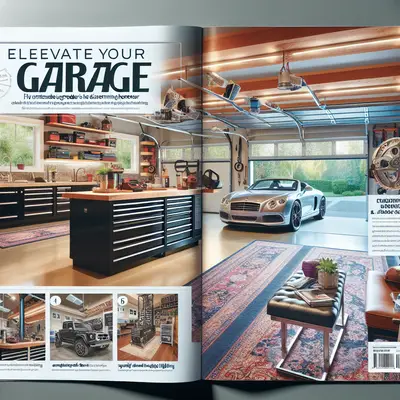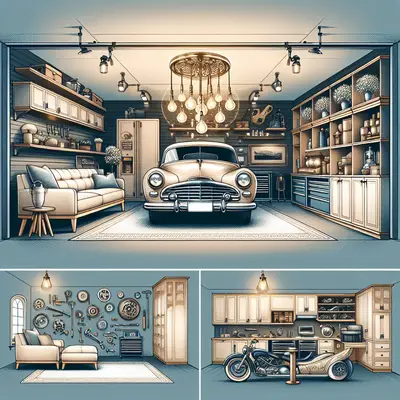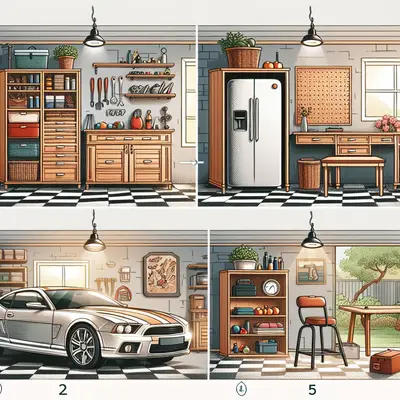
A neglected garage quietly lowers the standard of an otherwise distinguished home. An elevated one, however, behaves like an extension of your living space—ordered, capable, and mechanically impeccable. Thoughtful upgrades do more than add storage or brightness; they refine how the entire property functions day after day. For discerning homeowners, the aim is not flashy transformation, but quiet, decisive improvement that solves real issues with precision.
Below are five exclusive, detail‑driven upgrade insights designed for homes where “good enough” is never the brief.
Insight 1: Treat the Garage Door as Precision Equipment, Not Just a Barrier
Most homeowners see the door as a wall that moves. A more sophisticated view treats it as a large, high‑cycle machine that demands precision.
When addressing problems like shuddering movement, uneven closing, or grinding noises, look beyond basic lubrication and “tightening a few screws.” Upgrading to properly balanced, high‑cycle torsion springs matched to the exact weight of your door can radically reduce strain on the opener, extend service life, and quiet the operation. Consider a direct‑drive or belt‑drive opener with soft‑start and soft‑stop functions; these systems reduce vibration transfer into your home’s framing and are particularly valuable if bedrooms are above or adjacent to the garage.
Specify components the way you would specify premium appliances: look for openers with integrated battery backup, advanced surge protection, and DC motors rather than cheaper AC units. Have a professional perform a dynamic safety test (force settings, auto‑reverse timing, and photo‑eye alignment) after any upgrade. The real luxury is a door that operates quietly, predictably, and safely with minimal intervention for years.
Insight 2: Convert Harsh Utility Lighting into Layered, Purpose‑Built Illumination
The standard single-bulb fixture in the center of the garage ceiling is a relic. If your garage is dim, full of shadows, or aggressively bright in all the wrong places, the solution is not more wattage—it is better design.
A sophisticated lighting upgrade begins with zones: task lighting over workbenches and tool walls, uniform ambient lighting for vehicle areas, and accent or low‑level lighting along pathways. Linear LED fixtures with a high color rendering index (CRI 90 or above) make tools, finishes, and warning labels easier to see, particularly helpful for precise repair work and detailing. Under‑cabinet LEDs transform cluttered worktops into high‑function workstations, while motion‑activated low‑level lighting at entrances turns late‑night arrivals into a calm, safe experience.
Opt for fixtures rated for garages and workshops—damp or wet location ratings where appropriate—and pair them with smart controls or dimmers. This allows you to move effortlessly from full‑brightness project mode to soft, understated illumination when the garage is simply a passageway. The upgrade is not just visual comfort; it is a meaningful improvement in safety, accuracy, and daily ease.
Insight 3: Introduce Climate Control That Protects the Structure, Not Just Comfort
Many garages oscillate between freezing in winter and stifling in summer, a hostile environment for finishes, tools, stored belongings, and even the building envelope itself. Homeowners often reach for basic heaters or fans, but a considered approach treats the garage as a semi‑conditioned space that must manage moisture, not only temperature.
If you frequently see condensation on the slab, corrosion on tools, or warping of stored wood, your upgrade priority should be controlled ventilation and modest, well‑managed conditioning. Insulating the garage door with high‑R‑value panels and weatherstripping the perimeter can stabilize temperatures enough to make a small, efficient unit (like a ductless mini‑split or appropriately sized electric heater) incredibly effective. Pair that with a quiet exhaust fan or energy‑recovery ventilator (ERV) to remove fumes, humidity from vehicles and snow melt, and VOCs from paints or solvents.
Pay attention to details that are easy to overlook: sealed penetrations between the garage and the living area, self‑closing hinges on the door to the house, and proper thresholds to minimize air transfer. The gain is twofold—improved indoor air quality for the home and a garage environment that preserves vehicles, tools, and finishes rather than slowly degrading them.
Insight 4: Specify Storage as a System, Not an Afterthought
Ad‑hoc shelving and a few plastic bins are rarely enough for households with real garage demands—sports equipment, seasonal décor, tools, hardware, and overflow storage. The outcome is familiar: stacked containers, blocked access, and perpetual “temporary” piles on the floor.
Upgrading storage with intention means treating the garage like a small, highly functional warehouse. Begin by mapping vertical surfaces, overhead volume, and activity zones: where vehicles must clear, where a workbench naturally belongs, where frequently accessed items should live. Wall‑mounted track systems or slatwall panels allow flexible repositioning of hooks, bins, and racks as needs evolve. For tools and hardware, closed cabinetry with full‑extension drawers and clearly labeled organizers turns chaotic searching into a near-frictionless process.
Overhead racks anchored into framing reclaim the “airspace” above vehicles for rarely accessed items without compromising daily circulation. The premium approach is to ensure everything heavy is either on wheels (rolling tool chests, mobile workstations) or wall‑mounted off the floor, leaving the slab open and effortless to clean. The visual result is calm; the functional result is that you can locate, access, and stow items quickly, even during a hurried departure.
Insight 5: Build a “Service Core” for Power, Air, and Data
One of the most overlooked upgrades in problem‑prone garages is infrastructure. Extension cords, single crowded outlets, and a lack of compressed air or charging points make every repair or maintenance task clumsy. A refined solution is the creation of a compact “service core”—a deliberate cluster of utilities that turns the garage into a serious, yet discreetly efficient, working environment.
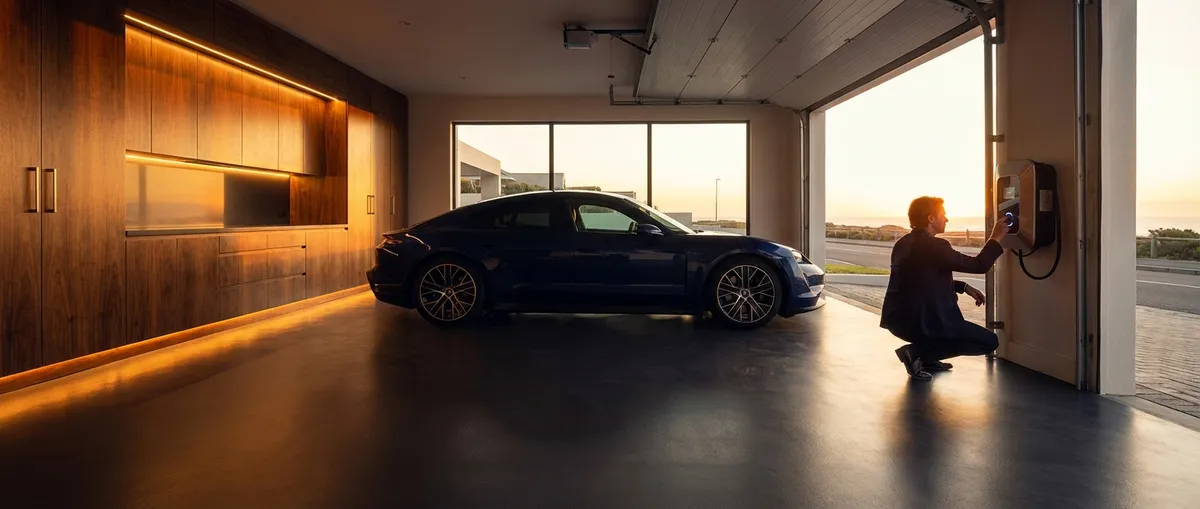
This may include a dedicated 20‑amp circuit for power tools, a GFCI‑protected outlet bank at bench height, 240V capacity if you own or anticipate an EV or high‑demand equipment, and strategically placed ceiling outlets for door openers and overhead reels. Adding a quiet, oil‑free air compressor with a retractable hose reel can transform tire inflation, cleaning tight spaces, and running pneumatic tools from chores into quick, controlled tasks. For modern homes, consider including network connectivity: a hardwired access point or conduit for future smart systems, cameras, or integrated controls.
The difference is not merely convenience. A carefully planned service core significantly reduces tripping hazards, overload risks, and clutter related to temporary workarounds. Over time, it supports everything from routine vehicle care to serious DIY repair without visually overwhelming the space. The garage begins to function like a compact, well‑equipped atelier—quietly capable, with its complexity neatly organized behind the scenes.
Conclusion
An elevated garage is not defined by lavish finishes, but by the quality of its solutions. Precision in the door system, layered lighting, disciplined climate management, systemized storage, and a well‑conceived service core together shift the garage from a compromise zone to one of the home’s most intelligently engineered spaces. For homeowners who demand more than basic fixes, these upgrades deliver something rarer: a garage that operates with the same refinement, reliability, and quiet authority as the rest of a truly considered home.
Sources
- U.S. Department of Energy – Insulating and Air Sealing Your Garage - Guidance on garage insulation, air sealing, and energy‑efficient upgrades
- International Association of Certified Home Inspectors – Garage Inspection Guidelines - Details on safety, fire separation, and best practices in garage construction and upgrades
- Occupational Safety and Health Administration (OSHA) – Walking-Working Surfaces - Relevant standards for trip hazards, floor conditions, and safe workspace design
- U.S. Consumer Product Safety Commission – Garage Door Safety - Information on safe operation, automatic reversal, and key garage door components
- U.S. Department of Energy – LED Lighting - Technical and performance information on LED lighting suitable for garages and workspaces
Key Takeaway
The most important thing to remember from this article is that this information can change how you think about Upgrades.