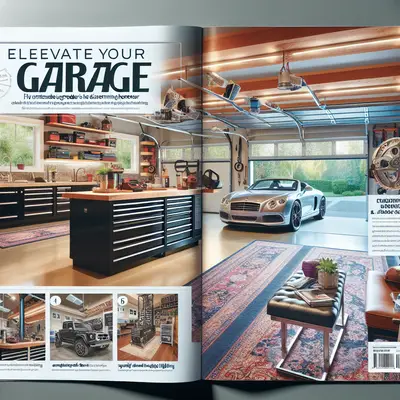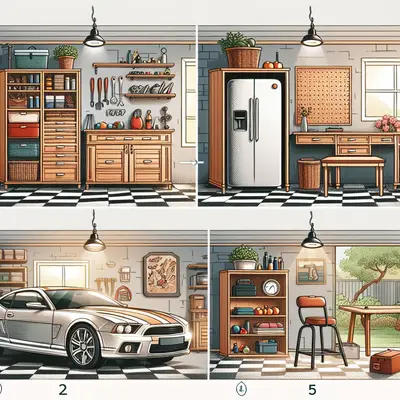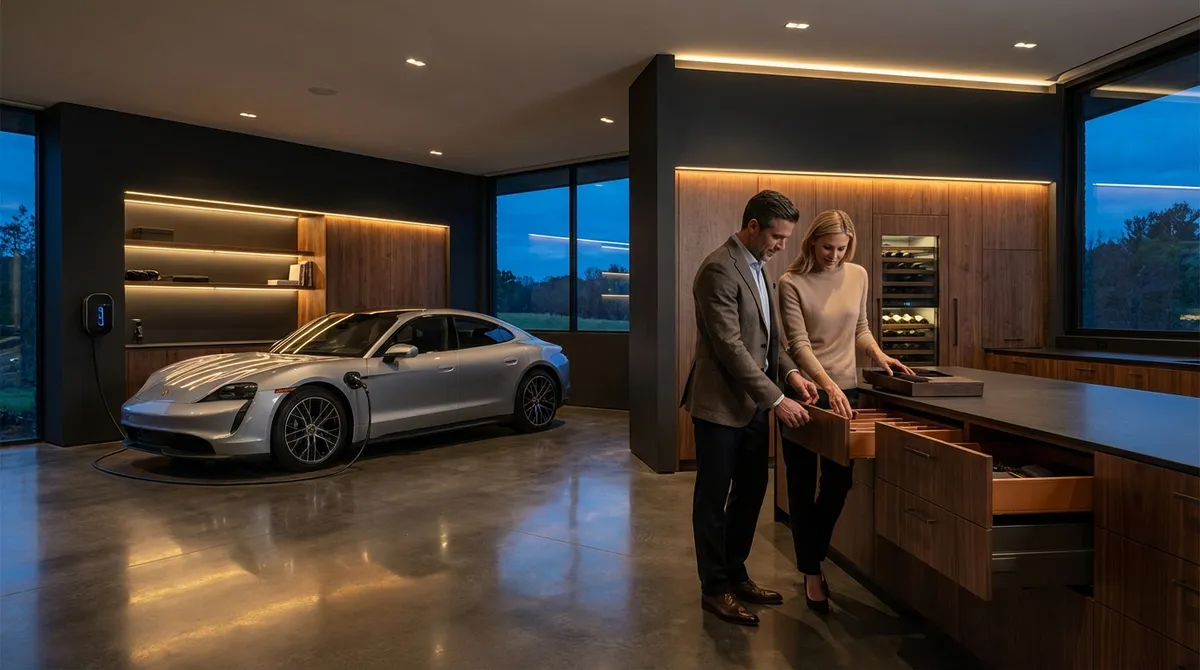
The most successful garages no longer behave like forgotten storage zones; they operate as finely tuned extensions of the home. When upgraded with intention, a garage can protect valuable assets, streamline movement, and quietly raise the overall standard of daily living. This is not about adding gadgets for their own sake—it is about engineering a space where every element has purpose, precision, and a certain understated beauty.
This guide explores refined, high-value upgrades for discerning homeowners and shares five exclusive insights that transform the garage from functional afterthought into a well-orchestrated, quietly luxurious environment.
Reframing the Garage: From Utility Room to Performance Space
A premium garage upgrade begins with a shift in perspective. Instead of treating the garage as a catch-all, see it as a performance space: a zone where mechanical reliability, spatial clarity, and environmental control all serve a single objective—effortless use.
This mindset influences every choice. Lighting is calibrated not just to see, but to inspect. Surfaces are selected not just for durability, but for how they age under use and exposure. Storage is designed around movement patterns, minimizing friction points at the busiest times of the day. Even the door becomes more than a barrier; it is a moving façade that must be quiet, responsive, and secure.
When you evaluate upgrades through this lens, the question changes from “What can I add?” to “What improves the way this space behaves?” That is the hallmark of a truly elevated garage.
Insight 1: Upgrade the “Invisible Infrastructure” First
Premium garages feel effortless because their infrastructure is quietly over-specified. Before considering visual refinements, address the elements that most homeowners rarely see but experience every day.
Think of these as foundational upgrades:
- Electrical capacity and layout – Upgrading the electrical panel, adding dedicated circuits for EV charging, compressors, or heating, and ensuring ample, well-placed outlets along the walls. This prevents overloaded circuits and extension-cord clutter.
- Wiring for data and control – Concealed conduit for Wi‑Fi access points, smart garage controllers, cameras, and sensors, so future technology can be added without exposed cables or ad hoc fixes.
- Drainage and moisture management – Floor drains (where code allows), proper slab slope, and vapor barriers to prevent standing water, rust, and mold—especially in snow or coastal climates.
- Thermal envelope – Insulation in walls, ceiling, and the door itself, combined with air sealing around penetrations. The result: reduced temperature swings and better protection for vehicles, tools, and finishes.
This focus on infrastructure rarely appears on social media feeds, yet it is the difference between a garage that looks impressive and one that performs flawlessly for years.
Insight 2: Specify Lighting the Way You Would for a Gallery
In premium spaces, lighting is rarely accidental. The same approach should apply to the garage, where quality illumination directly affects safety, precision, and daily satisfaction.
Move beyond a single ceiling fixture. Instead, design a layered scheme:
- Ambient lighting: Continuous LED strips or high‑CRI LED fixtures (90+ CRI) along the ceiling, providing even coverage with minimal shadow. This is your general light.
- Task lighting: Under‑cabinet LEDs above workbenches, focused lights over tool zones, and wall-mounted fixtures near hobby or detailing areas.
- Vertical illumination: Wall‑washing or sconces near entry doors, steps, and storage areas to increase depth perception and reduce trip hazards.
- Color temperature strategy: 4000K–5000K for clear visibility when working, with the option of tunable fixtures if you want softer light when the garage functions as a multi-use space.
The result is not just brightness, but clarity—where reading a tire sidewall, checking fluid levels, or examining a finish detail becomes effortless, and the entire space feels deliberately composed rather than incidentally lit.
Insight 3: Treat the Floor as a Functional Luxury Surface
The garage floor absorbs the hardest use yet is often the most neglected surface. A refined upgrade treats the floor with the same seriousness as a kitchen countertop: it must be beautiful, durable, and easy to maintain.
Consider a tiered approach:
- Surface preparation first – Mechanical grinding or shot blasting to open the concrete surface, repair of cracks and spalling, and moisture testing. Skipping this step undermines any coating, no matter how expensive.
- Coating or finish selection:
- High-build epoxy or polyaspartic systems for a sleek, chemical-resistant surface, ideal for automotive work and frequent washing.
- Polished concrete with penetrating sealer for a minimal, architectural aesthetic that resists staining when properly maintained.
- Modular tile systems for homeowners who need flexibility or anticipate future reconfiguration, with drainage channels and replaceable panels.
- Color and zoning – Subtle contrast bands to define parking, walking, and work areas, creating a visual order that guides movement and discourages clutter.
A carefully executed floor upgrade changes how you perceive the entire garage—it feels intentional, finished, and purpose-built, not provisional.
Insight 4: Design Storage Around Movement, Not Just Volume
Most garages fail not for lack of storage, but for lack of thoughtful storage. The objective of a premium upgrade is not to fit more items; it is to orchestrate how people and objects move through the space.
A performance‑minded storage strategy includes:
- Elevation of critical items – Wall-mounted systems and ceiling racks that keep the floor clear, making cleaning easier and improving safety during wet or icy months.
- Priority zoning:
- “Daily access” zone near the interior door for shoes, bags, and frequently used tools.
- “Seasonal” zone higher or farther back for holiday décor, sports gear, and infrequently used equipment.
- “Service” zone near workbenches and power outlets for tools, chargers, and consumables.
- Closed vs. open storage – Closed cabinets for chemicals, paints, and visually busy items, maintaining a calm visual field. Open shelving or slatwall for tools that must be instantly locatable.
- Ergonomic heights – Shelves and hooks calibrated so that the most used items fall between waist and shoulder height, minimizing bending and overreaching.
When storage is designed around patterns of use, the garage stops fighting you. Everything has a logical home, and the space naturally returns to order after even the busiest weekend project.
Insight 5: Integrate Smart Systems with a Bias Toward Reliability
Smart features in the garage should enhance safety, security, and convenience—but they must be specified with discipline. A refined approach favors reliability over novelty.
Key areas to consider:
- Smart garage door openers – Belt-drive or direct-drive units for quiet operation, with integrated battery backup and secure, encrypted remote access. Look for models that provide real-time status notifications and auto-close options.
- Environmental awareness – Smart sensors for temperature, humidity, carbon monoxide, and smoke tied into your broader home system. These are especially important if the garage shares a wall with living areas or houses fuel‑burning appliances.
- Lighting and presence – Motion-activated and app-controllable lighting that ensures you never enter a dark garage, with scenes that adjust for working vs. arriving home.
- Video and access control – Discreet cameras, smart locks on any side or rear garage doors, and integrated driveway monitoring to oversee arrivals, package deliveries, and after-hours activity without turning the space into a surveillance showcase.
The most sophisticated garage technology is nearly invisible. It doesn’t draw attention; it quietly confirms that the space is secure, responsive, and under control—whether you are at home or on another continent.
Exclusive Insight: Align the Garage with the Rest of the Home
The final, often overlooked refinement is conceptual rather than mechanical: the garage should not feel like an entirely different universe from the main house. When thoughtfully upgraded, it reflects the same design language, standards, and priorities.
This can be expressed in subtle ways:
- Matching or complementary hardware finishes on interior doors, cabinetry, and pulls.
- A color palette that echoes tones used in the entry or kitchen, creating continuity as you move between spaces.
- A consistent sound environment: quiet door operation, minimal rattles, solid-closing cabinets that match the acoustic expectations of a premium home.
- Thoughtful entry transitions: a clean, well-lit path from car to door, with appropriate mats, shoe storage, and a landing zone that feels intentionally designed, not improvised.
When the garage is aligned with the home’s overall ethos, it ceases to be a back-of-house necessity and becomes a coherent chapter in the story your property tells—one that begins the moment you arrive and continues long after the door closes behind you.
Conclusion
An elevated garage is not defined by how much equipment it contains, but by how elegantly it performs. By prioritizing invisible infrastructure, gallery-grade lighting, functional luxury flooring, movement-based storage, and disciplined smart integration, homeowners create a space that feels calm, controlled, and exceptionally capable.
In such a garage, everyday rituals—arriving home, loading the car, tackling a project—become smoother and more deliberate. The result is more than a practical upgrade; it is a quiet, enduring refinement of how the entire home is experienced.
Sources
- U.S. Department of Energy – Insulation and Air Sealing in Garages - Guidance on insulating attached garages and managing energy transfer to the home
- U.S. Department of Energy – LED Lighting - Technical overview of LED efficiency, color temperature, and quality considerations
- National Ready Mixed Concrete Association – Concrete Floors and Moisture - Discussion of moisture issues in concrete slabs and preparation best practices
- Consumer Product Safety Commission – Garage Door Safety Tips - Safety standards and recommendations for modern garage door openers
- UL Research Institutes – Carbon Monoxide Safety - Background on CO risks in enclosed spaces like garages and sensor considerations
Key Takeaway
The most important thing to remember from this article is that this information can change how you think about Upgrades.