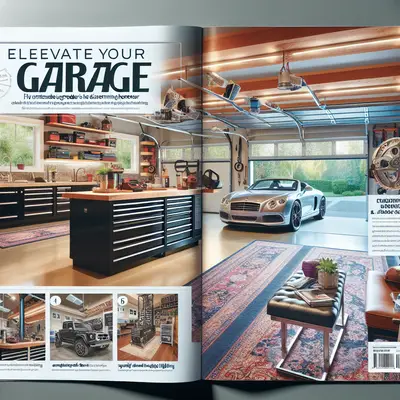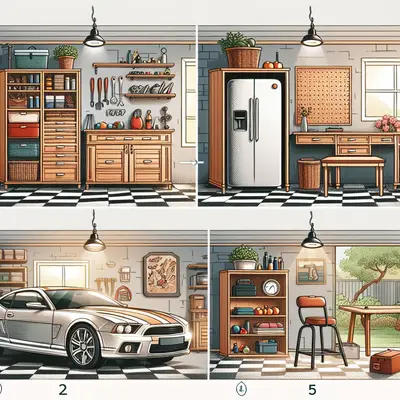
A well-considered garage upgrade is not about excess—it is about precision. For discerning homeowners, the garage is neither an afterthought nor a mere storage annex; it is a critical interface between architecture, vehicle, and daily life. When executed thoughtfully, upgrades in this space can refine how you live, protect significant investments, and quietly increase the perceived quality of your entire home. What follows is a set of elevated, practice-based insights designed for homeowners who expect their garage to perform with the same composure and reliability as the rest of their residence.
Rethinking the Garage as a Mechanical Room, Not a Catch-All
The most sophisticated garages are planned like mechanical rooms in high-end homes: every element has a purpose, a place, and a performance expectation. Rather than allowing tools, seasonal items, and sports gear to accumulate organically, a refined upgrade begins with a functional blueprint. Consider how you move from driveway to interior, how often you access storage, and where you perform maintenance tasks.
By treating the garage as a mechanical hub, you can zone the space: a vehicle bay where doors open freely without hitting stored items; a service corridor for trash and recycling; a precision wall for tools; and a clean landing zone for entering the home. This approach directly influences upgrade choices—track-mounted storage rather than ad-hoc shelving, wall systems that keep essentials at eye level, and flooring that transitions seamlessly from gritty work to clean entry. The result is not just tidiness; it is a controlled environment where everything supports how you actually live.
Insight 1: Upgrade the Envelope Before the Hardware
Many homeowners begin with the visible—new openers, upgraded doors, or lighting—before addressing the fundamentals that govern comfort, durability, and performance. A more elevated approach reverses that sequence: first refine the envelope, then layer in the technology.
Start with the door and walls as thermal and acoustic barriers. A well-insulated, properly sealed garage door paired with air-sealed wall penetrations and weatherstripped side doors will stabilize interior temperatures, protect stored items, and reduce stress on HVAC systems in adjacent living areas. This is especially critical when the garage is attached or has a room above it. High R-value insulation panels, modern weather seals, and upgraded thresholds are not aesthetic flourishes; they are the foundation that allows every subsequent upgrade—floor coating, cabinetry, even high-end vehicles—to perform as intended.
By prioritizing the envelope, you also reduce noise transmission from openers, compressors, and power tools. The garage becomes less of an acoustic liability and more of a controlled space, suitable for detailing cars, working on projects, or simply arriving home late without waking the entire house.
Insight 2: Floor Systems That Respect Both Vehicles and Architecture
Garage flooring is often an afterthought—until staining, moisture, or hot tire pickup turn a functional slab into a maintenance problem. A sophisticated upgrade treats the floor as a working surface that must satisfy structural, chemical, and aesthetic standards simultaneously.
Before applying any coating, the concrete’s moisture content, surface contamination, and structural condition should be evaluated. Cracks, spalling, or previous coatings may require professional grinding, patching, or moisture testing. Premium polyaspartic or high-solids epoxy systems, when correctly specified and installed, can resist hot tire pickup, road salts, oil, and chemical spills while presenting a unified, architectural finish. The color and texture can be tuned to complement the home’s palette and conceal minor dust or debris, avoiding the “showroom shine” that looks tired the moment a vehicle arrives.
For homeowners concerned with traction and safety, subtle texture additives can provide grip without feeling harsh underfoot. Integrated transitions at the garage entry and side doors ensure that the new floor doesn’t create trip hazards or awkward thresholds. The result is a surface that supports maintenance work, withstands daily vehicle use, and still feels visually aligned with a premium residence.
Insight 3: Lighting That Serves Both Precision and Atmosphere
Most garages operate with a single, underpowered fixture in the center of the ceiling—barely adequate for finding a broom, let alone performing detailed work. A refined upgrade considers lighting as a layered system that respects both function and atmosphere.
The foundation is bright, uniform ambient lighting with high color rendering (CRI), often achieved through LED strip fixtures or linear lights strategically placed along the perimeter rather than clustered at the center. This reduces harsh shadows around vehicles and improves visibility for cleaning, inspections, and minor repairs. Task lighting can then be integrated over workbenches, storage walls, and entry points, with controlled beam angles that illuminate tools and surfaces without glare.
For homeowners who treat the garage as an arrival space as much as a workshop, accent lighting—subtle wall washers, low-level perimeter lights, or illuminated step details—can gently highlight architectural lines and guide safe movement at night. Dimmable circuits and occupancy sensors complete the upgrade, enabling the space to feel bright and clinical when working, yet calm and restrained when used simply as a passage into the home.
Insight 4: Storage as Architecture, Not Hardware
Premium garages do not rely on mismatched cabinets and freestanding racks; they rely on storage that functions like built-in millwork. The distinction is not merely aesthetic. When storage is treated as architecture, it is sized to the space, configured to actual needs, and built to keep critical clearances for vehicles and doors.
Begin by categorizing items by frequency of use and sensitivity: tools, automotive care products, sports equipment, seasonal décor, and infrequently accessed archives. High-value, often-used items deserve secure, eye-level storage with full-extension drawers or cabinets. Occasional-use items can move higher, but still within measured reach. Long or bulky pieces (ladders, lumber, skis) should be planned along walls where their length will not conflict with opening car doors.
Wall-mounted rail systems, modular cabinets with leveling feet, and overhead racks anchored into structural members can all be composed into a coherent storage wall. The intent is to keep the floor as free as possible, allowing for easy cleaning, flexible parking, and clear visual order. In a refined garage, the storage system recedes visually, allowing vehicles and the architecture of the home to remain the dominant visual elements.
Insight 5: Intelligent Systems That Protect, Not Just Impress
The most valuable “smart” garage upgrades are not necessarily the most impressive; they are the ones that prevent problems you would rather never encounter. Instead of chasing novelty, focus on systems that provide protection, oversight, and control.
Smart openers with battery backup and secure, encrypted remote access can maintain operation during power outages and reduce the risk of unauthorized entry. Integrated position sensors on doors and side entries can alert you if a door has been left open, which is particularly useful for homes with valuable vehicles or tools. Environmental monitoring—temperature, humidity, and in some cases water detection near floor drains or water heaters—allows you to intervene before condensation, leaks, or freezing temperatures damage stored goods or finished surfaces.
Where possible, connect these systems into a broader home platform so that you can verify garage status at a glance, automate lighting scenes when arriving or leaving, and receive a single, coherent set of alerts. The most sophisticated garages feel calm not because they are complex, but because that complexity is harnessed to reduce uncertainty and protect both property and peace of mind.
Conclusion
A genuinely elevated garage upgrade is defined less by spectacle and more by intention. It starts by treating the space as a mechanical hub central to daily life, then refining the envelope, floor, lighting, storage, and systems in a way that respects both performance and aesthetics. For homeowners who expect their environments to function quietly, reliably, and with a certain understated confidence, the garage should be no exception. When each element is chosen to serve both durability and design, the result is a space that works as beautifully as it lasts—and quietly elevates the experience of arriving home.
Sources
- U.S. Department of Energy – Air Sealing Your Home - Guidance on sealing gaps and improving the building envelope, relevant to garage wall and door upgrades
- ENERGY STAR – Garage Door Considerations - Official recommendations on insulated doors and their impact on comfort and efficiency
- National Ready Mixed Concrete Association – Concrete Floors and Moisture - Technical discussion of moisture issues in concrete slabs, essential before applying floor coatings
- Illuminating Engineering Society (IES) – Lighting Recommendations - Professional standards and guidance for functional, task, and ambient lighting design
- Consumer Product Safety Commission – Garage Door Safety - Safety requirements and best practices for modern garage door opener systems
Key Takeaway
The most important thing to remember from this article is that this information can change how you think about Upgrades.