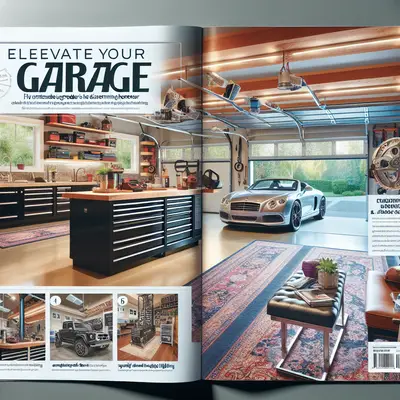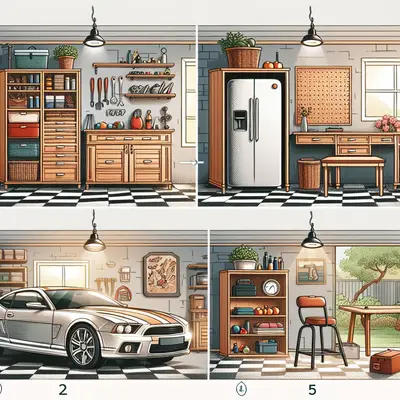
The most impressive garages rarely advertise their capabilities. They simply work—silently, reliably, and with an understated competence that reflects the homeowner’s standards. Upgrading a garage is not about decorative flourishes; it is about refining systems, eliminating friction, and orchestrating small technical advantages into a space that feels composed and effortlessly ready.
This is a guide for owners who expect their garage to behave less like a storage afterthought and more like a well‑tuned asset. Below are five exclusive upgrade insights designed to correct persistent issues, extend system longevity, and leave the entire space operating with quiet, almost invisible precision.
Insight 1: Re-Engineer the Door’s “Feel” Before You Add More Power
Many homeowners assume a strained or sluggish garage door calls for a stronger opener. In reality, a properly balanced and aligned door should lift smoothly with minimal effort—even by hand. The opener is meant to guide and regulate movement, not compensate for mechanical resistance.
A premium upgrade strategy begins with re-engineering how the door moves:
- Have a professional measure spring balance so the door can be lifted manually with no more than 10–15 pounds of force.
- Replace worn rollers with high-quality, sealed-bearing nylon rollers to reduce friction and noise simultaneously.
- Inspect vertical and horizontal tracks for micro distortions; even slight bends or misalignments can amplify strain on the opener.
- Upgrade to heavy-duty hinges and brackets at critical stress points to maintain clean, repeatable motion as the door cycles.
Only once the door glides with precision should you consider upgrading the opener itself. This sequence dramatically reduces long-term wear, eliminates recurring “mystery noises,” and prevents the expensive habit of overpowering a door that simply needed refined mechanics.
Insight 2: Design Your Lighting as a Working System, Not a Single Fixture
Most garages still rely on a lonely overhead bulb or a single strip light—barely adequate for modern tasks, inspections, or detailed work. A sophisticated upgrade treats lighting as a layered system that supports both function and mood.
Key refinements to consider:
- Zoned illumination: Separate circuits (or smart controls) for vehicle bays, workbench zones, and perimeter storage allow you to light only what you need.
- Vertical light: Add LED strips or sconces along walls or cabinetry; this reduces shadows, making it easier to read labels, inspect finishes, or perform detailed repairs.
- High-CRI LED fixtures: Choosing fixtures with a high Color Rendering Index (CRI 90+) reveals true colors, critical when matching touch-up paint, examining wiring, or identifying fluid leaks.
- Low-glare task lighting: Over a bench or tool wall, opt for diffused, adjustable fixtures instead of harsh spotlights that create eye fatigue.
The result is a garage that feels composed and deliberate—bright where it needs to be, restrained where it doesn’t, and always ready for work that demands visual clarity rather than guesswork.
Insight 3: Treat Storage as Infrastructure, Not Accessories
Standard shelving and plastic bins are often layered into a garage over time, creating the visual equivalent of background noise. A more refined approach is to treat storage as infrastructure—planned, dimensioned, and integrated to support how you actually use the space.
Three structural upgrades that change the character of the room:
- Wall systems with a logic: Instead of random hooks and brackets, invest in a track or panel system (e.g., slatwall or rail-based) and define zones: seasonal, daily access, tools, and hazardous materials. The consistency of hardware and layout communicates order immediately.
- Cabinetry that closes the visual field: Lockable metal or high-quality composite cabinets conceal visual clutter, protect tools from dust, and allow you to maintain clear, calm surfaces—even when the contents are complex.
- Ceiling and “dead zone” utilization: Overhead racks, narrow depth shelving between studs, and custom-built cubbies above door headers reclaim volume that typically goes unused. When carefully planned, these upgrades free floor area without compromising accessibility.
Effective storage upgrades don’t just “hold more things”—they turn the garage into a space where you can find what you need quickly, protect what matters, and maintain a visual quiet that feels intentional rather than improvised.
Insight 4: Modernize Access Control with Discreet Intelligence
Access is where convenience, security, and subtle technology intersect. Many garages still rely on outdated clickers, keypad codes shared too widely, or manual locks that go unchecked. Updating access control is one of the most powerful, yet visually understated, upgrades you can implement.
Consider these elements when refining your entry systems:
- Smart openers with event logs: Modern Wi‑Fi–enabled openers allow you to see exactly when the door was opened or closed, and by whom (via unique digital keys), directly from your phone.
- Temporary digital “keys” instead of shared codes: Grant limited-time or one-use access to service providers, guests, or deliveries, then revoke it—no need to change physical locks or keypads.
- Integrated safety verification: Pair sensors and cameras so you can visually confirm the door’s status if a notification suggests it was left open. This is especially valuable for homes where the garage interfaces directly with interior living space.
- Hardwired reliability where it matters: While wireless systems are convenient, critical components—like wall stations and safety sensors—should be hardwired where possible to reduce failure points.
The true luxury here is not overt gadgetry, but calm control: knowing, at any moment, that your garage is secured precisely the way you want it, without the anxiety of “Did I close the door?” moments.
Insight 5: Engineer the Environment—Temperature, Moisture, and Sound
A garage is more than a portal for vehicles; it is a microclimate that, if mismanaged, silently harms tools, finishes, stored goods, and sometimes the adjacent living areas. A premium upgrade strategy treats environmental control as a first-class priority rather than an afterthought.
Subtle but consequential enhancements include:
- Targeted insulation and air sealing: Insulate not only the door, but also the shared walls and attic plane above the garage. Seal gaps at base plates, around outlets, and near the door threshold to stabilize temperature and reduce dust and exhaust infiltration into the home.
- Moisture management: In humid or variable climates, consider a small, dedicated dehumidifier and ensure adequate ventilation. This reduces rust on tools, swelling of wood components, and mold risk on stored items and wall surfaces.
- Quiet operation as a design goal: Pair an insulated door with a belt-drive or direct-drive opener, vibration isolators at mounting points, and nylon rollers. The result is a markedly quieter system—especially important when bedrooms sit above or adjacent to the garage.
- Floor finishes that perform, not just impress: High-quality epoxy or polyaspartic coatings, when properly installed, resist chemicals, make spills visible and easy to clean, and prevent dusting from bare concrete. This protects your vehicles, storage, and indoor air quality.
Instead of forcing the garage to endure whatever conditions the weather dictates, these upgrades define the environment with intention. The payoff is durability, comfort during any repair or project, and a quieter interface between garage and home.
Conclusion
A refined garage is not necessarily the one that looks the most dramatic at first glance. It is the one that opens with minimal strain, lights precisely where you need clarity, stores what matters without visual chaos, admits only who you choose, and protects both your assets and your home from environmental stress.
By approaching upgrades as interconnected systems—mechanics, lighting, storage, access, and environment—you transform the garage from a tolerated utility zone into a disciplined extension of the home’s standards. The result is subtle, but unmistakable: a space that behaves with the same calm reliability and quiet confidence you expect from every other part of a well-considered residence.
Sources
- U.S. Department of Energy – Insulation and Air Sealing – Guidance on insulating and sealing garages and adjoining spaces for energy efficiency and comfort
- International Association of Certified Home Inspectors – Garage Inspections – Detailed discussion of garage safety, structural considerations, and best practices
- Consumer Product Safety Commission – Garage Door Safety – Official safety recommendations for garage door openers and entrapment protection
- LiftMaster – Smart Garage Door Opener Features – Overview of modern smart access, security, and control options for garage systems
- Occupational Safety and Health Administration (OSHA) – Lighting Standards – Foundational principles on adequate lighting levels and visual safety considerations
Key Takeaway
The most important thing to remember from this article is that this information can change how you think about Upgrades.