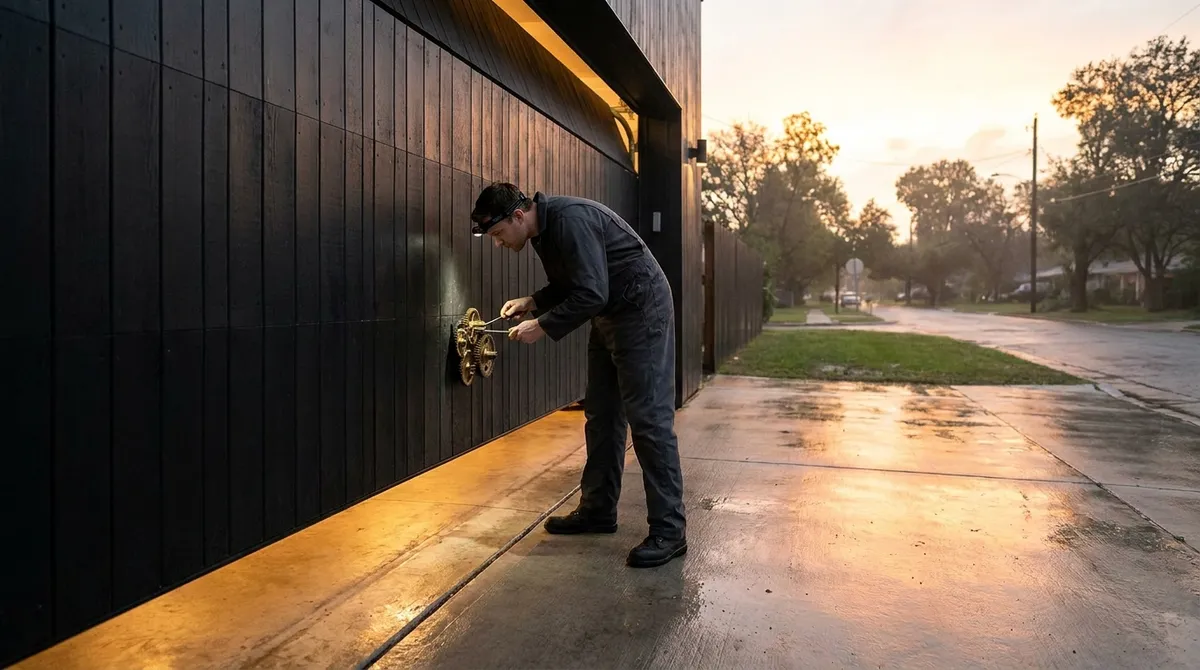
A well‑kept garage does more than store vehicles and tools—it sets the tone for how your home functions every day. When the mechanism that greets you at the end of a long drive begins to grind, hesitate, or misbehave, the disruption feels disproportionate to the issue. The difference between a merely “fixed” garage and a refined, long‑term repair lies in attention to nuance: materials, calibration, sound, and safety all woven into a single, seamless experience.
This guide looks beyond quick fixes to explore how a garage can be restored to quiet, confident operation—offering five exclusive insights that discerning homeowners will appreciate.
Reframing Garage Repairs as System Restoration, Not Part Replacement
Most garage issues show up as a single symptom: a door that won’t close, a motor that strains, or a cable that frays. The temptation is to replace the offending part and move on. But a premium repair approach recognizes the garage as an integrated system—door, tracks, springs, opener, sensors, and even the surrounding structure all influencing each other.
A broken spring, for instance, often reflects years of imbalance or misalignment; simply installing a new spring without checking cable tension, track plumb, and hinge condition is an invitation to repeat failure. Similarly, an opener struggling to lift the door may be blamed on the motor, when the real culprit is a door that’s too heavy due to waterlogged panels, bent tracks, or failing rollers.
Sophisticated service begins with diagnostics: measuring door weight, checking spring cycle ratings, inspecting fasteners in the header and jambs, and listening carefully to where noise originates. Treating the garage as a mechanism to be tuned—not a puzzle to be patched—results in smoother motion, lighter loads on the motor, and a repair that feels “complete” rather than provisional.
The Hidden Geometry of Tracks, Hinges, and Rollers
Many homeowners focus on the opener, but the quiet luxury of a properly moving door is determined largely by geometry: the interplay of tracks, hinges, and rollers. Even minor deviations in alignment can create dramatic consequences over time, from premature spring wear to warped panels.
A refined repair routinely includes:
- Track alignment by measurement, not by eye: Vertical tracks should be plumb and parallel, while horizontal tracks must be level and correctly supported. Technicians use levels and precise clearances—not guesswork—to eliminate binding.
- Hinge inspection as a structural audit: Hinges do more than flex; they control how each panel pivots, dictating the curve the door follows. Over‑tightened or bent hinges twist panels and can create a subtle “jerk” during travel. Premium repairs involve replacing deformed hinges, correctly sizing hinge numbers for their positions, and ensuring panels remain in plane.
- Roller selection as a comfort decision: Upgrading from worn plastic or low‑grade metal rollers to sealed-bearing nylon rollers is a material change you can feel and hear. The door glides, the opener works less, and vibration into the home is reduced.
What distinguishes a higher standard of repair is not simply tightening everything indiscriminately, but selectively adjusting and replacing hardware to restore the intended geometry. The result is a door that moves with quiet confidence, instead of one that shudders its way open.
Precision Spring Matching: Balancing Safety, Performance, and Longevity
Garage door springs are where engineering discipline matters most. They carry enormous stored energy, and their quality and calibration determine how long your door will operate safely and how hard your opener has to work. Too often, springs are treated as interchangeable commodities, chosen primarily by what is “on the truck” instead of what is mechanically correct for your door.
A higher‑caliber repair solution respects three key principles:
- Door weight must be measured, not estimated. A technician should disconnect the opener and use a scale or proper lift test to determine actual door weight. Springs are then selected to counterbalance that specific load, rather than approximating based on width and height alone.
- Cycle life is an investment choice. Standard torsion springs are often rated for about 10,000 cycles. For a household using the door as a primary entrance, this can be surprisingly short. Opting for higher‑cycle springs—20,000 or more—provides a quieter, more consistent experience over time and stretches out the interval between major repairs.
- Balance is not negotiable. A properly balanced door should stay in place when lifted halfway, without drifting up or crashing down. An opener should be guiding motion, not lifting excessive weight. Fine‑tuning spring tension to achieve this balance protects the motor, extends hardware life, and dramatically improves safety.
The difference is subtle but unmistakable: a well‑balanced door feels nearly weightless when operated manually, moving with a controlled, even tempo. In a premium home, that sense of controlled effortlessness is non‑negotiable.
Intelligent Opener Upgrades: Repair as a Step Toward a Smarter Garage
When an older opener fails, replacing it with a like‑for‑like model can seem practical. But a repair is an opportunity to elevate both safety and convenience in one decisive step. Modern openers quietly merge hardware, software, and security features in ways that transform the day‑to‑day experience of using your garage.
Thoughtful upgrades can include:
- DC motors and soft‑start/soft‑stop: These reduce noise, minimize stress on hardware, and create a smoother motion profile. The effect is especially noticeable in attached garages or homes with living space above the bay.
- Integrated smart controls: Serious homeowners appreciate being able to verify from anywhere that the door is closed, to schedule automatic closing, and to receive alerts if the door is left open. Professionally set up, smartphone control moves from gadgetry to genuinely useful risk management.
- Enhanced safety monitoring: Modern openers integrate better obstruction detection and more sensitive force settings. Combined with properly aligned safety sensors and regular testing, this creates a resilient layer of protection for children, pets, and vehicles.
- Battery backup as a comfort feature: In regions prone to outages, an opener that continues to function when the power fails is less a luxury and more a quiet assurance that you’ll still arrive home and enter safely.
A truly premium repair experience doesn’t just “get the door working again.” It leaves you with a garage that is more aware, more secure, and more gracious in everyday use.
Acoustics, Vibration, and the Art of a Quiet Garage
Noise is data. A sophisticated repair approach treats sound and vibration not as annoyances to be tolerated, but as useful indicators—and then deliberately refines them away. An opener that rattles the ceiling, a door that roars along the tracks, or a sudden bang when the door settles are all signals that the system is asking for better tuning.
Consider these subtle refinements:
- Vibration isolation at mounting points: Adding appropriate rubber isolation pads between opener brackets and framing can drastically reduce transmitted noise into living spaces. It’s a small detail that speaks to a higher standard of care.
- Fastener and hardware audit: Snugging lag bolts into solid framing, replacing stripped fasteners, and ensuring center bearing plates and end brackets are secure can eliminate a surprising amount of rumble and resonance.
- Lubrication with purpose: Not every component benefits from lubricant, and the wrong product can attract dust or degrade plastic. A refined repair uses high‑quality, manufacturer‑recommended lubricants, applied sparingly to the correct points—rollers (if appropriate), hinges, and springs—while keeping tracks themselves clean and dry.
- Material choices for silence: Nylon rollers, belt‑drive openers, and properly tensioned hardware collaborate to create a sound profile that feels more like a muted glide than a mechanical event.
The mark of an exceptional repair is not only that the door operates reliably, but that the garage fades into the background of your routine—present, capable, and almost imperceptible.
Conclusion
A garage that operates with precision, quiet, and assurance is not an accident. It is the result of viewing every repair as an opportunity to respect the underlying engineering, to elevate material choices, and to insist on proper calibration. When springs are matched to the exact door, when tracks and hinges are tuned instead of merely tightened, when a new opener is chosen for intelligence as well as strength, the daily act of arriving home changes character.
For homeowners who expect their surroundings to function as elegantly as they look, garage repair is no longer a reactive expense. It becomes an exercise in refinement—transforming a utilitarian space into a discreetly sophisticated part of the home’s overall performance.
Sources
- U.S. Consumer Product Safety Commission – Garage Door Safety - Official guidance on safety features and operation of automatic garage doors
- International Door Association – Homeowner Garage Door Safety Tips - Industry association recommendations on safe inspection and maintenance practices
- LiftMaster – Garage Door Opener Features and Technologies - Overview of modern opener technologies, including smart controls and quiet drive systems
- Clopay – Garage Door Spring Information - Manufacturer details on spring types, cycle life, and the importance of correct sizing
- UL Solutions – UL 325 Standard for Door, Drapery, Gate, Louver, and Window Operators - Safety standard governing automatic operator systems and entrapment protection
Key Takeaway
The most important thing to remember from this article is that this information can change how you think about Repair Solutions.