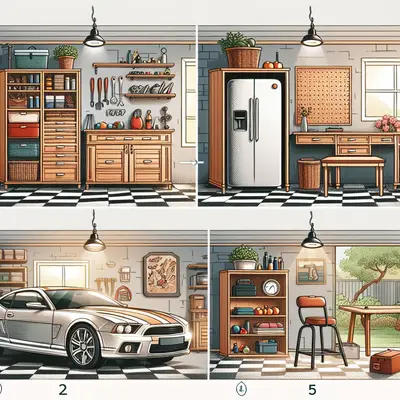
The most refined garages rarely announce themselves. They feel resolved: quiet mechanisms, confident finishes, and a sense that every component has been considered rather than merely installed. For homeowners who expect their garage to meet the same standard as the rest of the home, upgrades are less about spectacle and more about precision, longevity, and subtle performance.
This guide explores a more exacting approach to garage upgrades—one that respects detailing, mitigates common failures before they surface, and treats the space as a technical room deserving of architectural-level discipline. Below are five exclusive insights that discerning homeowners often appreciate once they’ve lived with a truly well‑finished garage.
1. Hardware as Architecture: Specifying Components Beyond “Builder Grade”
Most garages are let down by what you cannot easily see: springs, hinges, rollers, and fasteners chosen for cost, not character or performance. Upgrading these elements has an outsized impact on feel, noise, and service life. High‑cycle torsion springs can be specified to far exceed the typical 10,000‑cycle lifespan, reducing the likelihood of abrupt spring failure and emergency repairs. Precision ball‑bearing rollers in nylon or engineered composites minimize vibration, reduce track wear, and create a noticeably more composed door movement.
Hinges and brackets deserve the same scrutiny as visible hardware in a kitchen. Heavy‑gauge, corrosion‑resistant steel (or stainless in coastal environments) ensures the door panel alignment remains true over time. Fasteners should be chosen deliberately: structural screws in place of generic lag bolts at critical attachment points, and proper anchoring into framing rather than relying on drywall or compromised substrates.
Taken together, these “invisible” upgrades create a door that feels designed rather than merely installed—tracking perfectly, operating quietly, and responding consistently even after years of daily use. It is the mechanical equivalent of a precision‑built cabinet hinge that never sags.
2. Thermal Discipline: Treating the Garage as a Semi‑Conditioned Envelope
Garages have long been treated as thermal afterthoughts, yet they sit directly beneath bedrooms, beside living rooms, and adjacent to mechanical rooms. Upgrading the garage envelope is less about making the room “cozy” and more about stabilizing your entire home’s performance. A properly insulated and air‑sealed garage moderates temperature swings, eases HVAC load on adjoining rooms, and protects stored finishes, tools, and vehicles from extremes.
Consider the door first. A modern insulated door with a higher R‑value and continuous thermal break helps shield interior spaces from outdoor swings. But insulation alone is not enough—compression weatherstripping at the jambs, a high‑quality bottom seal, and top seals are crucial to controlling drafts and fine dust infiltration. Track‑side seals can also help for doors exposed to wind‑driven rain and debris.
Walls and ceilings that share boundaries with conditioned space should receive the same attention you’d give a living room: cavity insulation to meet or exceed local code, careful air sealing at penetrations, and appropriate vapor control based on climate. In cold climates, insulating the garage ceiling beneath living space can dramatically reduce floor chill above. In warm, humid climates, air sealing becomes critical to prevent moist air from migrating into cooler interior zones.
A garage that holds a narrower temperature range isn’t just more comfortable. It safeguards finishes, reduces condensation on vehicles and tools, and supports the long‑term health of the home’s building envelope.
3. Quiet, Intelligent Operation: Elevating the Door Opener from Utility to System
The typical builder‑grade opener does one thing, loudly. An upgraded system becomes part of a refined daily experience. Belt‑drive or direct‑drive openers paired with soft‑start and soft‑stop technology substantially reduce operational noise and mechanical stress. For homes with living or sleeping spaces above the garage, this distinction is immediately noticeable.
Modern openers with integrated smart controls do more than allow you to tap a phone instead of a button. Properly configured, they can provide event logs, guest access, geofencing, and status notifications that enhance both security and convenience. When combined with a battery backup system, the door remains operable in a power outage—a subtle but crucial resilience upgrade that many homeowners appreciate the first time a storm arrives.
Attention to installation detail elevates even the best equipment. A well‑braced opener rail, vibration‑isolating mounting hardware, and accurate force and travel calibration protect the door, the motor, and the home’s framing. When paired with high‑quality photo‑eyes and auto‑reversing safety features tested regularly, the result is a system that operates with quiet confidence rather than tolerated clatter.
4. Precision at the Threshold: Flooring, Transitions, and Water Management
The floor and threshold area of a garage often reveal whether a space was finished thoughtfully or simply poured and forgotten. Upgrades here are less about glossy sheen and more about control: of water, dust, stains, and long‑term degradation.
A professionally prepared and coated concrete floor—properly cleaned, repaired, mechanically profiled, and sealed with a high‑performance epoxy or polyaspartic system—does more than look polished. It makes routine cleaning efficient, resists chemicals and tire marking, and protects against moisture intrusion. Non‑slip additives can be selected to achieve a safe yet understated texture, rather than the overly aggressive grits often seen in commercial spaces.
At the interface between driveway and garage, a carefully detailed threshold solves multiple problems at once. A correctly sloped apron or drain channel directs water away from the interior, while an upgraded bottom seal and, if appropriate, a garage door threshold strip prevent wind‑driven rain, rodents, and debris from entering. Where existing slabs are uneven or have settled, professional grinding or leveling to match the door’s travel can transform a chronic gap into a clean, even closure line.
These refinements create a floor that feels intentional underfoot and a threshold that behaves more like a well‑detailed exterior facade joint than a neglected utility seam.
5. Storage and Power as Infrastructure, Not Afterthought
Many garages fail not because they are too small, but because storage and power were never systematically planned. Treating these elements as infrastructure upgrades reshapes how the space functions over time.
Wall‑mounted storage systems anchored into studs—using tracks, steel uprights, or custom cabinetry—pull items off the floor and reclaim clear circulation paths. Full‑height cabinets with concealed hardware can visually quiet the room, concealing tools, seasonal items, and automotive supplies behind a unified front. When designed with appropriate clearances around door tracks, electrical panels, and mechanical equipment, this storage remains compatible with maintenance and future upgrades.
Electrical planning should anticipate more than a single outlet and an opener. Dedicated circuits for tools, EV charging, air compressors, or future equipment prevent nuisance breaker trips and voltage drops. Strategically located outlets along work walls, near storage, and at ceiling points support task lighting, charging stations, and overhead tools. Integrating efficient, high‑CRI LED lighting transforms the garage from a dim pass‑through into a functional technical space where detailing, repairs, and inspections are comfortable and accurate.
The result is a garage that operates more like a finely organized workshop or back‑of‑house space in a boutique hotel: visually calm, mechanically capable, and ready to accommodate new uses without improvisation.
Conclusion
A truly refined garage is rarely the product of a single dramatic upgrade. It emerges from a series of disciplined decisions: selecting higher‑grade mechanical components, treating the envelope with respect, insisting on quiet and intelligent operation, detailing thresholds as carefully as exterior facades, and planning storage and power like permanent infrastructure.
For homeowners who are serious about both performance and aesthetics, these upgrades elevate the garage from a tolerated utility zone to a well‑resolved extension of the home—one that works silently, resists wear, and quietly reflects an insistence on doing things properly, even where most people never look closely.
Sources
- U.S. Department of Energy – Insulation and Air Sealing - Guidance on insulation, air sealing, and improving building envelope performance
- International Code Council – International Residential Code (IRC) - Reference for structural, safety, and electrical standards affecting residential garages
- Clopay Garage Doors – Insulated Garage Doors Overview - Manufacturer details on insulated doors, R‑values, and construction options
- LiftMaster – Smart Garage Door Openers - Information on modern opener technology, quiet drives, and connectivity features
- Purdue University – Concrete Floor Slab Information - Technical discussion of concrete slabs, cracking, preparation, and long‑term performance
Key Takeaway
The most important thing to remember from this article is that this information can change how you think about Upgrades.