The garage has quietly evolved from a utilitarian storage bay into a pivotal extension of the home’s comfort, security, and aesthetic. For discerning homeowners, the standard builder-grade setup no longer suffices—every element, from sound profile to lighting temperature, becomes part of a larger orchestration of daily life. This guide explores refined, often overlooked upgrades that do more than “fix” the garage; they harmonize function, longevity, and subtle luxury. Along the way, you’ll find five exclusive insights—nuanced considerations that help you move beyond generic repairs toward a truly elevated garage experience.
The Acoustic Garage: Quiet Power Without the Drama
In many homes, the garage door is the single largest moving object, and yet its acoustic footprint is rarely treated with the same care as an interior door or HVAC system. Upgrading from a chain-drive to a belt‑drive or direct‑drive opener, particularly in homes with living space above the garage, fundamentally changes the perceived quality of the entire residence.
A higher‑end opener with DC motor technology not only runs quieter, it starts and stops more gently, reducing stress on springs and hardware. Pair this with nylon rollers, well‑tuned torsion springs, and vibration‑isolating mounting brackets, and the result is a door that feels composed rather than clattering. Even the addition of a weatherstrip threshold across the floor can soften closing noise and reduce echo.
Exclusive Insight #1: Treat noise as a structural symptom, not a simple annoyance. Chronic rattling, banging, or screeching often signals misalignment, improper spring tension, or failing bearings. A quiet system isn’t just more pleasant—it’s usually a more precise and longer‑lasting one.
Climate Control by Design: Insulation, Seals, and Temperature Discipline
For many households, the garage is a thermal bridge—leaking conditioned air and inviting temperature extremes that undermine comfort and energy efficiency. Upgrading to an insulated door with a robust R‑value is an obvious step, but the refined solution looks beyond the panel.
A disciplined sealing strategy starts with the perimeter: high‑quality vinyl or rubber seals along the sides and top of the door, plus a flexible, properly sized bottom seal that maintains contact without over‑compressing. The next layer is the envelope itself: insulated walls, a finished ceiling with proper air sealing around light penetrations, and, where appropriate, upgraded attic insulation above the garage.
If your garage is attached, a better thermal boundary between the garage and interior spaces—solid-core or insulated door, tight weatherstripping, and even a closer—protects your living areas from temperature swings and fumes. For homeowners who use the garage as a workshop or gym, a quiet, dedicated mini‑split or radiant heater can transform usability in both winter and summer.
Exclusive Insight #2: Prioritize the “shared walls” with the home over the exterior. Tightening and insulating the boundary between garage and interior typically yields more comfort and energy savings than focusing only on the door or exterior walls.
Light as a Tool: Layered Illumination for Work and Safety
Most garages are lit as an afterthought: a single bare bulb or a pair of harsh fixtures in the center of the ceiling. A premium upgrade treats light as a precision tool—both for tasks and for safety. Begin by replacing outdated bulbs with high‑CRI (Color Rendering Index) LED fixtures that render colors accurately; distinguishing between oil stains, wiring colors, and fastener types becomes markedly easier.
Layered lighting can include overhead general illumination, task lighting over workbenches, and targeted fixtures near the garage door tracks and opener head for maintenance visibility. Motion‑activated sconces or overhead LEDs near the entry door and driveway add a sense of security and welcome when you arrive home after dark. Smart switches or integrated controls in the opener system allow light scenes: one tap for full task brightness, another for a softer evening setting.
Exclusive Insight #3: Choose lighting temperature by function, not fashion. Cooler daylight (around 5000K) by the workbench and warmer white (around 3000–3500K) near entry points and adjacent interior doors creates a balanced, visually composed space that feels intentional rather than improvised.
Hardware with Intent: Precision Components That Outlast Trends
Much like fine cabinetry hinges, garage hardware may be invisible to guests but unmistakable in daily use. Upgrading from commodity components to premium hardware dramatically changes the system’s feel and reliability. High‑cycle torsion springs designed for 25,000 or 50,000 cycles instead of the standard 10,000 reduce the frequency of disruptive failures. Heavier‑gauge tracks resist warping and stay true over time, helping the door move smoothly and stay aligned.
Rollers with sealed bearings and nylon wheels reduce friction and noise while minimizing wear on tracks. Even the choice of fasteners—switching from low‑grade screws to corrosion‑resistant, properly torqued hardware—contributes to long‑term stability. For coastal or high‑humidity environments, galvanized or stainless elements become essential, not optional.
Exclusive Insight #4: Upgrade the “invisible” hardware before you upgrade the visible finishes. Investing first in springs, rollers, and tracks builds a mechanical foundation that supports any future aesthetic change, from new panels to glass inserts, without rework or premature failure.
Intelligent but Disciplined: Smart Features That Serve, Not Distract
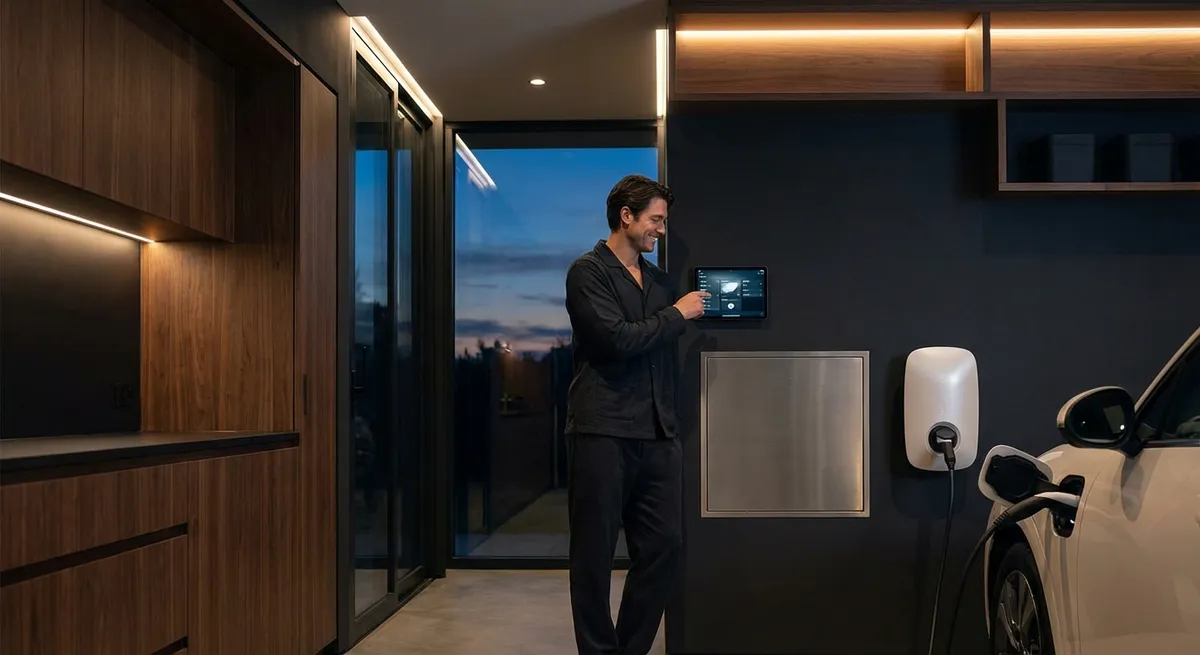
Connected garage systems have matured beyond novelty, offering tangible security and convenience—provided they are deployed thoughtfully. Modern openers can integrate with home networks to deliver smartphone control, real‑time door status, and alerts when doors are left open. Some systems add built‑in cameras or package delivery modes, but discerning homeowners should curate features rather than collecting them.
Start with essentials: encrypted wireless communication, trusted brand support, and compatibility with existing home platforms. Then, define your actual use cases—remote access for trusted guests, automation to close the door at a set time every evening, or integration with exterior lighting when the door opens. A clean, disciplined configuration avoids unnecessary notifications and reduces the risk of misconfiguration.
Exclusive Insight #5: Treat connectivity as a layer on top of mechanical reliability, not a substitute for it. A smart opener cannot compensate for an imbalanced door, worn springs, or misaligned tracks; ensure the physical system is tuned to perfection before adding digital conveniences.
Conclusion
A truly elevated garage upgrade strategy is less about conspicuous transformation and more about orchestrated refinement: a quieter operation that signals mechanical precision, a stable climate that respects the comfort of adjacent living spaces, lighting tailored to both tasks and ambiance, hardware chosen for longevity, and technology that enhances rather than complicates daily routines. For homeowners who expect their homes to perform as well as they look, the garage is no longer a back‑of‑house utility zone—it is a carefully tuned interface between the outside world and the sanctuary within. Approached with intention, every repair and upgrade becomes an opportunity to move the space closer to that standard.
Sources
- U.S. Department of Energy – Insulation and Air Sealing – Guidance on insulation strategies and thermal boundaries that apply directly to attached garages
- DOE Energy Saver – Lighting Choices to Save You Money – Explains LED efficiency, color temperature, and lighting design principles relevant to garage upgrades
- LiftMaster Official Site – Garage Door Opener Features – Reference for modern opener technologies, noise reduction, and smart integration options
- Clopay – Garage Door Insulation Information – Details on R‑values, insulation types, and how insulated doors influence comfort and efficiency
- Cornell University – Lighting Design Basics – Educational resource on layered lighting, color rendering, and illumination strategy applicable to high‑function spaces like garages
Key Takeaway
The most important thing to remember from this article is that this information can change how you think about Upgrades.