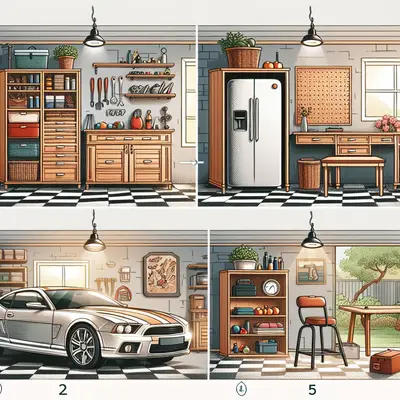
A garage is no longer a mere threshold between street and home; it is an extension of your living space, your security system, and your daily ritual. When thoughtfully upgraded, it becomes a quiet expression of precision—where function, safety, and aesthetics intersect. This guide is designed for homeowners who expect more than “good enough,” and who understand that the right garage upgrades don’t just solve problems; they refine the entire experience of coming home.
Below, you’ll find five exclusive, detail‑driven insights that move beyond generic advice—insights that respect both the realities of wear and the expectations of a premium home environment.
Elevating the Foundation: Re-Imagining the Garage Floor as Infrastructure
Before considering hardware, lighting, or storage, the floor deserves primary attention. It carries the load of vehicles, tools, seasonal storage, and foot traffic—yet it is often treated as an afterthought. The difference between a basic concrete slab and a thoughtfully upgraded surface is substantial, both in performance and in perception.
A high-quality epoxy or polyaspartic coating does more than dress up the space; it creates a sealed, chemically resistant surface that resists road salt, oil, and moisture intrusion. This matters for longevity: unsealed concrete is porous, which can allow de-icing salts and water to penetrate and accelerate spalling or cracking over time. In colder regions, addressing this proactively can significantly reduce future repair costs.
For homeowners intent on refinement, attention to detail is non-negotiable. That means specifying a system with proper surface preparation (mechanical grinding, not just acid etching), a vapor barrier primer where needed, and a topcoat with UV stability to prevent yellowing. Flake blends or metallic pigments can be selected to echo interior finishes, eliminating the visual disconnect between garage and home. The result is a floor that feels intentional, not improvised—and that stands up to daily use without looking perpetually “under construction.”
Intelligent Power and Wiring: Designing for Tools, Vehicles, and Tomorrow
Many garages are wired for what they were, not what they are becoming. Between power tools, pressure washers, EV chargers, and smart devices, electrical demands are increasing quickly. Treating the garage as an electrical hub—rather than a leftover circuit—places you ahead of the curve.
For homeowners with or anticipating electric vehicles, a dedicated 240-volt circuit with an appropriate EV charger is now a baseline expectation. Choosing an EVSE (Electric Vehicle Supply Equipment) with adjustable amperage, robust surge protection, and Wi‑Fi connectivity ensures compatibility with both your current vehicle and future models. An electrician should confirm your service panel’s capacity and, where necessary, coordinate load management solutions instead of relying on “it should be fine” assurances.
Even for non-EV users, structured electrical planning is transformative: multiple 20-amp dedicated circuits for tools, strategically placed outlets at bench height, weather-resistant receptacles near doors for outdoor gear, and a dedicated circuit for a refrigerator or freezer. Conduit routing, outlet placement, and the use of tamper-resistant or GFCI-protected outlets are not cosmetic details—they’re the difference between a workspace that supports your habits and one that constantly frustrates them.
By designing wiring infrastructure as if you are building a small workshop—rather than a storage shed—you future‑proof your garage against the next wave of technology, not just the current load.
Precision Climate & Moisture Control: Protecting More Than Just Your Car
Garages sit at the intersection of exterior and interior climates, which makes them vulnerable to temperature swings, condensation, and humidity issues. Yet climate control is often oversimplified to “add a heater.” For a refined solution, the emphasis should be on controlling moisture and stabilizing conditions, not just increasing warmth.
Insulation and air sealing form the first line of defense. Properly insulated garage doors, insulated walls adjoining living spaces, and weatherstripping around openings reduce heat loss and help maintain more consistent temperatures. However, without attention to moisture, insulation alone may not prevent mold growth or corrosion.
Homeowners storing high-value items—bicycles, tools, electronics, archival materials—benefit from a calibrated combination of modest heating/cooling and dedicated dehumidification. A garage-specific dehumidifier, properly sized to the space and drainage setup, can keep relative humidity in a range that protects metal from rust and prevents the musty, damp odor that undermines even the most meticulous organization.
Ventilation also matters: adding a quiet, controlled exhaust fan or integrating the garage into a broader whole-home ventilation strategy can help disperse fumes, off‑gassed chemicals, and lingering exhaust. The goal is not to replicate living-room comfort, but to create a stable, protective microclimate that respects the value of what you store and the air quality you live with.
Quiet Control: Door Systems That Balance Security, Acoustics, and Refinement
The garage door is often the home’s largest moving component—and its most frequently used entry. Yet many systems remain noisy, slow, or insecure. Upgrading the door assembly as a whole, rather than just replacing a single part, yields outsized benefits for safety, comfort, and daily experience.
A belt-drive or direct-drive opener with a DC motor and soft-start/soft-stop functionality dramatically reduces vibration and noise, particularly for garages near bedrooms or living areas. Pairing this with a properly balanced torsion spring system and nylon rollers results in a door that moves with a controlled, almost understated presence rather than a rattling announcement.
Modern openers with integrated smart features allow smartphone control, remote monitoring, and alerts if the door is left open. Battery backup capability ensures access during power outages—crucial not only for convenience but also for emergency scenarios. High-quality safety sensors and auto-reversing mechanisms are indispensable, and should be tested regularly instead of being treated as set-and-forget features.
For security-conscious homeowners, upgrading to a reinforced, insulated steel or composite door with tamper-resistant brackets and robust tracks narrows the most vulnerable perimeter point of many houses. Combined with an opener that uses rolling-code or encrypted communication, the result is a system that is not only quieter and more refined, but measurably more secure.
Discreet Organization: Storage That Respects Space, Safety, and Aesthetics
The most successful garage upgrades are often the least immediately visible. While large shelving units and pegboards have their place, a truly elevated garage anticipates how items are used, not just where they can be stashed.
Ceiling-mounted racks—when properly anchored into joists and professionally rated for load—can reclaim enormous volumes of unused space. However, they must be chosen with care to ensure that heavy items are not suspended above vehicles or walking paths, and that clearances for the garage door’s travel are respected to the inch. Low-profile, modular ceiling systems can store seldom-used items (holiday décor, rarely accessed luggage) while leaving accessible zones uncluttered.
Along the walls, consider a layered approach: closed cabinetry for visual calm and dust protection, open shelves for high-frequency items, and rail or slat systems for modular hooks and bins. The premium distinction lies in coherence—consistent finishes, hardware that matches interior design language, and a deliberate division between “clean” zones (sports gear, household items) and “dirty” zones (yard equipment, solvents, automotive fluids).
An often-overlooked refinement is zoning: defining distinct territories for vehicle care, gardening, tools, and household overflow. This does more than make the space look orderly; it simplifies maintenance, reduces the risk of damage (for example, bicycles leaning against vehicles), and supports a subtle yet powerful sense of control every time the door opens.
Five Exclusive Insights Homeowners Quietly Rely On
These five distilled insights move beyond the typical checklists and speak directly to the needs of homeowners who demand subtle excellence:
- The floor is not décor; it is a protective system. Treating the garage floor as infrastructure—sealed, chemically resistant, and properly prepared—prevents costly structural wear and elevates the entire space visually.
- Electrical planning is the new cornerstone of garage design. Upgrading wiring now for EVs, tools, and smart systems is significantly more cost-effective and elegant than piecemeal fixes after circuits are already overloaded.
- Moisture is the silent enemy of valuable storage. Controlled humidity and ventilation protect not only metal and finishes, but also the long-term air quality of adjoining living spaces.
- Door systems define both security and daily experience. Investing in quiet, smart, balanced door assemblies offers an immediate, tangible upgrade every single time you arrive home.
- Organization is a design discipline, not an accessory purchase. Cohesive storage, zoning, and load-aware mounting systems create a garage that feels curated, not crowded—supporting both safety and long-term order.
Conclusion
A garage that truly serves a modern home is not built on a single impressive feature, but on a series of disciplined, interconnected decisions. When the floor is engineered for resilience, the wiring designed for the future, the climate managed with precision, the door system tuned for quiet security, and the storage planned with intention, the garage stops feeling like a compromise space.
It becomes a controlled environment that protects your investments, reinforces your routines, and quietly reflects the standards you hold for the rest of your home. In that sense, the finest garage upgrades are not about spectacle; they are about the understated assurance that everything—from your car to your tools to the air you breathe—is exactly as it should be.
Sources
- U.S. Department of Energy – Insulation and Air Sealing – Guidance on proper insulation and air sealing practices, including garages adjacent to living spaces.
- U.S. Department of Energy – Electric Vehicles: Charging at Home – Detailed overview of home EV charging requirements and considerations for electrical upgrades.
- Occupational Safety and Health Administration (OSHA) – Garage Safety and Ventilation – Information on ventilation and air quality management in spaces with vehicle use and chemical storage.
- International Association of Certified Home Inspectors – Garage Inspection Guidelines – Professional insights on garage safety, door systems, and structural considerations.
- Consumer Reports – How to Choose a Garage Door Opener – Independent evaluation of opener types, features, and safety considerations for homeowners.
Key Takeaway
The most important thing to remember from this article is that this information can change how you think about Upgrades.